:focal(undefined))
The towing eye in your boot tightens the wrong way, and your car may not be allowed to use it
Nobody reads the towing chapter of the handbook until they are standing in the rain holding a rope.
Somewhere under the boot floor of your car, next to the jack and the wheel brace, there is a stubby steel eye with a thread on one end. Most drivers have seen it, very few have ever fitted it, and a surprising number who try give up because it refuses to go in. A large share of these eyes are cut with a left-hand thread, so they tighten anticlockwise, and turning one the way you turn every other fastener on the car simply spits it back out at you. That reversed thread is the clue to what the eye is for: it is cut backwards so a rope twisting under load cannot unscrew it, which tells you the engineers expected it to take a serious, snatching pull. What they did not expect is the thing most people reach for it to do. On a modern automatic, and on almost every electric car, dragging the vehicle home on its own wheels is not a cheap alternative to a recovery truck. It is a gearbox or a drive unit with a repair bill attached, and in Belgium it is illegal above 25 km/h and banned outright on the motorway anyway.
Where the eye lives, and why it feels cross-threaded
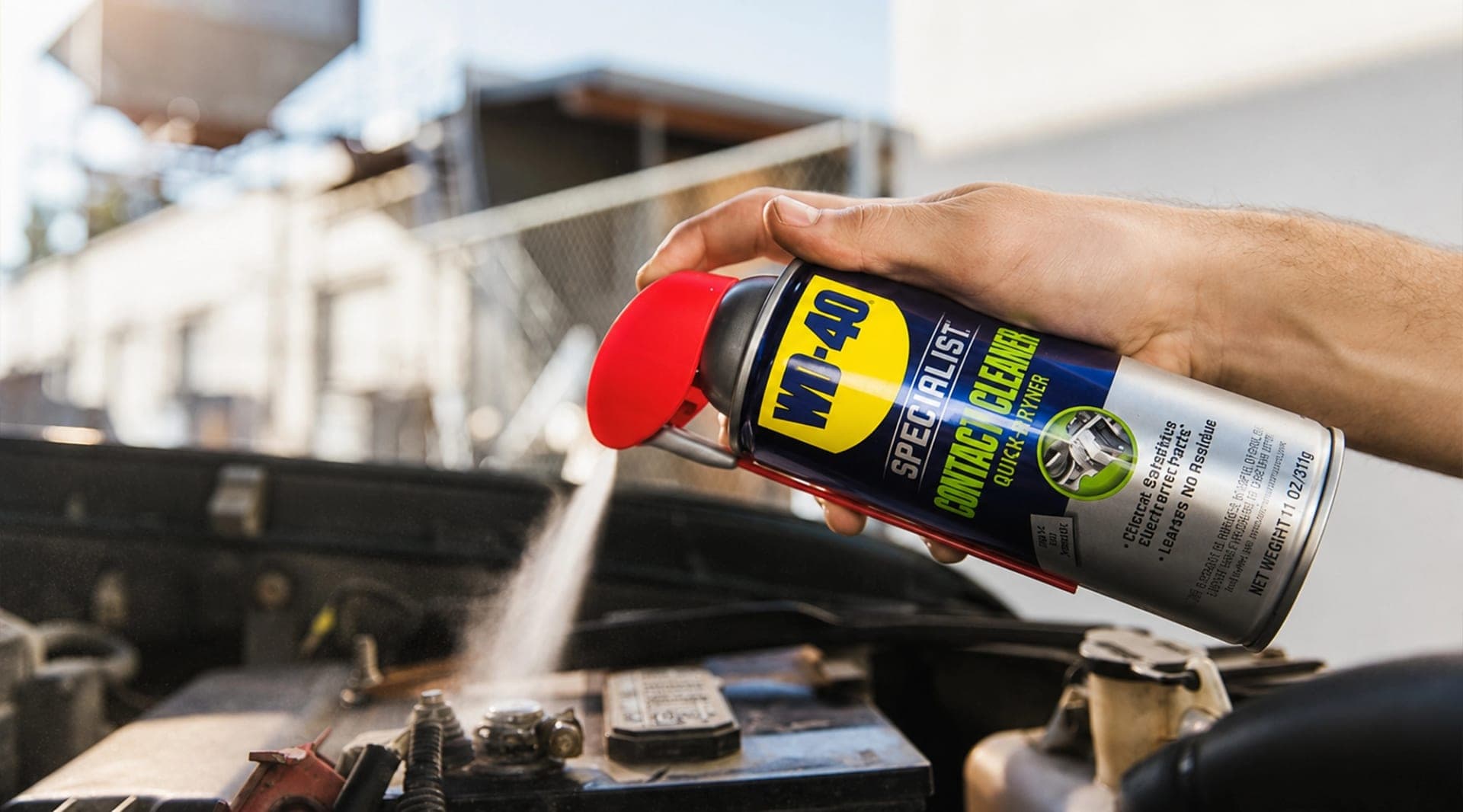
It travels with the tool kit under the boot floor, and on cars built without a spare wheel it can just as easily be in a side locker, the glovebox or under a seat. The sockets it screws into are hidden behind a small plastic cover in the bumper, front and rear, usually with a notch or a shallow arrow showing which edge to press or lever. Open that cover with a plastic trim tool or a key wrapped in a cloth rather than a bare screwdriver, because a slip on cold paint costs more than the tow. Then thread the eye in fully and tighten it properly, using the wheel brace through the eye for leverage if you need it. The eye that tears out under load is almost always the one that was left finger-tight. If the socket is packed with road salt and grit, what frees it is a penetrating spray, which is exactly what the multi-purpose can most people mistake for a lubricant genuinely is good at. And find both sockets, not just the front one: the rear one exists so a recovery truck can winch the car onto a flatbed, which is the use most owners will ever actually need.
The hard job is being towed, not doing the towing
The car on the end of the rope needs its ignition switched on, even though the engine is dead. That is what releases the steering lock and powers the hazard lights and the brake lights, and a car towed with a locked column goes straight on at the first bend, which is also the reason where you leave your wheels when you park matters more than it looks. Then there are the two systems that quietly stop working. The brake servo holds enough stored vacuum for roughly two or three assisted presses after the engine stops, and after that the pedal goes as hard as wood and needs a genuine shove with a straight leg. Steering assistance is either gone entirely or running off a 12 V battery that nothing is recharging. On top of that, the towed driver has the more skilled job of the two: keeping the rope taut with light braking the whole way, because a rope that goes slack and then snatches is what snaps ropes and rips eyes out of bumpers.
An automatic gearbox has no oil pressure when the engine is not running
In a conventional torque-converter automatic, the pump that circulates and pressurises the fluid is driven by the engine. Tow the car with the engine off and you have the opposite of the designed situation: the wheels are spinning shafts, clutch packs and bearings inside the box while almost no oil is being pushed anywhere near them, and heat builds fast. ADAC's guidance is neutral, low speed and a few kilometres at most, and plenty of handbooks are stricter than that, setting an explicit ceiling in distance and speed or forbidding it outright. Dual-clutch and CVT transmissions tend to be stricter again. The handbook is the authority here, and if you cannot find the page in the rain, the safe reading is that towing is not allowed. The same goes for all-wheel drive of any kind, where a recovery truck lifting only one axle leaves the other one turning a driveline that has nothing lubricating it.
Drag an electric car and its motor becomes a generator
This is the part that catches out people who assume an EV is mechanically simpler and therefore more tolerant. It is neither. ADAC puts it plainly: electric motors can generate current in an uncontrolled way when the wheels are turned during a tow, which can damage the drivetrain and cost you the manufacturer's warranty, and on some models the transmission is lubricated by an electric pump that only runs when the drivetrain is live. There is no universal rule, only manufacturer rules, and they diverge wildly. The BMW iX1 may not be towed on its own wheels at all and requires flatbed transport. The Kia Niro EV is permitted only with specialist equipment and the front axle raised. Volkswagen allows it for its electric models under three conditions: no all-wheel drive, a functioning 12 V system and a neutral gear you can actually select. That last condition is the one that ends most driveway rescues, because a flat 12 V battery can leave you unable to release the electric parking brake or select neutral at all, which is why recovery crews go looking for the jump terminals before they go looking for the towing eye. Moving any car a few metres out of immediate danger is a separate case and is accepted even with the wheels locked.
The rules change at the border, and the motorway is where they bite
Belgium is the strictest of the three big neighbours: the maximum speed while towing another vehicle is 25 km/h, which by itself makes towing on a motorway or expressway illegal, and it is separately forbidden there. The rope or bar may not exceed five metres, anything longer than three metres has to be clearly marked, and the towed car runs its hazard lights. The Netherlands allows 50 km/h, and on the motorway you may tow only far enough to reach the nearest safe place, an exit or a parking area, not the rest of the way home. Germany allows a rope on the Autobahn only if the breakdown happened on the Autobahn, and only as far as the next exit, with a fine for anyone who carries on past it. Read those three together and the practical conclusion is the same everywhere: a rope is a tool for getting off a road, never for completing a journey. On a motorway the sequence is the hard shoulder, hazard lights, high-visibility vest before you open the door, everyone behind the barrier, then the phone, which is the same roadside routine that applies after any incident.
What to actually do
Two minutes in your own driveway now is worth an hour at the roadside later, because everything below is far harder to work out in the dark with traffic going past.
Find the eye today, in daylight. Lift the boot floor, check the side lockers if there is no spare wheel, and read the recovery page of the handbook while you are at it.
Remember the thread may run backwards. Anticlockwise to tighten on a great many cars, and tighten it hard rather than finger-tight.
Open the bumper cover with a plastic trim tool or a cloth-wrapped key, pressing the marked edge, not by levering a screwdriver against the paint.
Switch the ignition on in the towed car so the steering unlocks and the hazards and brake lights work.
Expect two or three assisted brake presses and then a hard pedal, and leave far more distance than feels necessary.
The towed driver keeps the rope taut with light, constant braking. A slack rope that snatches is what breaks things.
Automatic: neutral, low speed, short distance, and only if your handbook explicitly allows it. If you cannot check, do not tow.
Electric, hybrid or all-wheel drive: assume flatbed. The only towing to do yourself is a few metres out of immediate danger.
Know the local limit before you need it: 25 km/h and no motorways in Belgium, 50 km/h and only to the nearest safe place in the Netherlands, next exit only in Germany.
Keep the rope or bar under five metres, mark it if it is longer than three, and run the hazard lights on the towed car.
Check what your breakdown cover actually includes: recovery of the vehicle to a garage, transport for the passengers, and any distance limit. For an EV, check that flatbed transport is covered.
Frequently asked questions
My towing eye will not screw in. Is it the wrong one?
Almost certainly not. Try turning it the other way first, because a left-hand thread is common on these and it is by far the most frequent cause. If that fails, look into the socket: many are fitted with a plastic plug or blanking cap from the factory, and after a few winters they fill with grit and salt that has to come out before anything threads in. What you must not do is force it, because a cross-started thread in an aluminium bumper mount turns a free fix into a bodyshop job. Clean it, spray it, start the eye by hand, and let the thread pull itself in.
Can I not just loop the rope around the towbar or a suspension arm?
No, and this is where a lot of avoidable damage comes from. The towing eye is the one point on the car engineered for a pull that can arrive from an angle and arrive suddenly, and it is bolted into structure chosen for exactly that. A towball is designed for a trailer coupling sitting on top of it, not for a loop of rope that can ride up and off under a sideways load. A suspension arm is designed to control a wheel and will happily bend, which you will discover later as tracking that will not hold. If the eye is missing, buy the right one for your car rather than improvising.
Is a rigid bar better than a rope?
Considerably, if you have the choice. A bar holds the gap constant, so the snatching that snaps ropes and tears out eyes never happens, and the towed driver no longer has to brake continuously to keep tension. It also makes the pair behave more predictably in a corner and when stopping. The same national rules apply to both, including the Belgian five-metre maximum, and a bar is the only sensible option if the towed car has poor braking or an inexperienced driver behind the wheel.
My EV is dead in a car park. Can a neighbour pull it clear with a rope?
Moving a car a short distance out of immediate danger is accepted for all models, so pulling it out of a bay and into a corner is a different question from towing it three streets home. The obstacle is usually not the rope but the car: with a flat 12 V battery you may be unable to release the electric parking brake or select neutral, so the first step is jumping or charging the 12 V, not attaching anything. Beyond those few metres, the answer for almost every electric car is a flatbed, and the handbook will name the exception if there is one.
Does towing another car need anything special on my licence or insurance?
A standard category B licence covers towing a broken-down car in the countries covered here, but the conditions attached to it are real and are where people come unstuck: the speed ceilings, the motorway restrictions, the length and marking of the coupling, and the hazard lights. Damage is the messier question. If the tow goes wrong, the liability picture involves two vehicles and two policies, and any damage to the towed car's own drivetrain caused by towing it against the manufacturer's instructions is a self-inflicted repair no policy is designed to absorb. That asymmetry, free tow versus five-figure drive unit, is the whole argument for the recovery truck.