Hyundai's bigger Tucson arrives with its home market down 15%
Hyundai's fifth-generation Tucson adds 60 mm, 245 hp and a rescue job in Korea
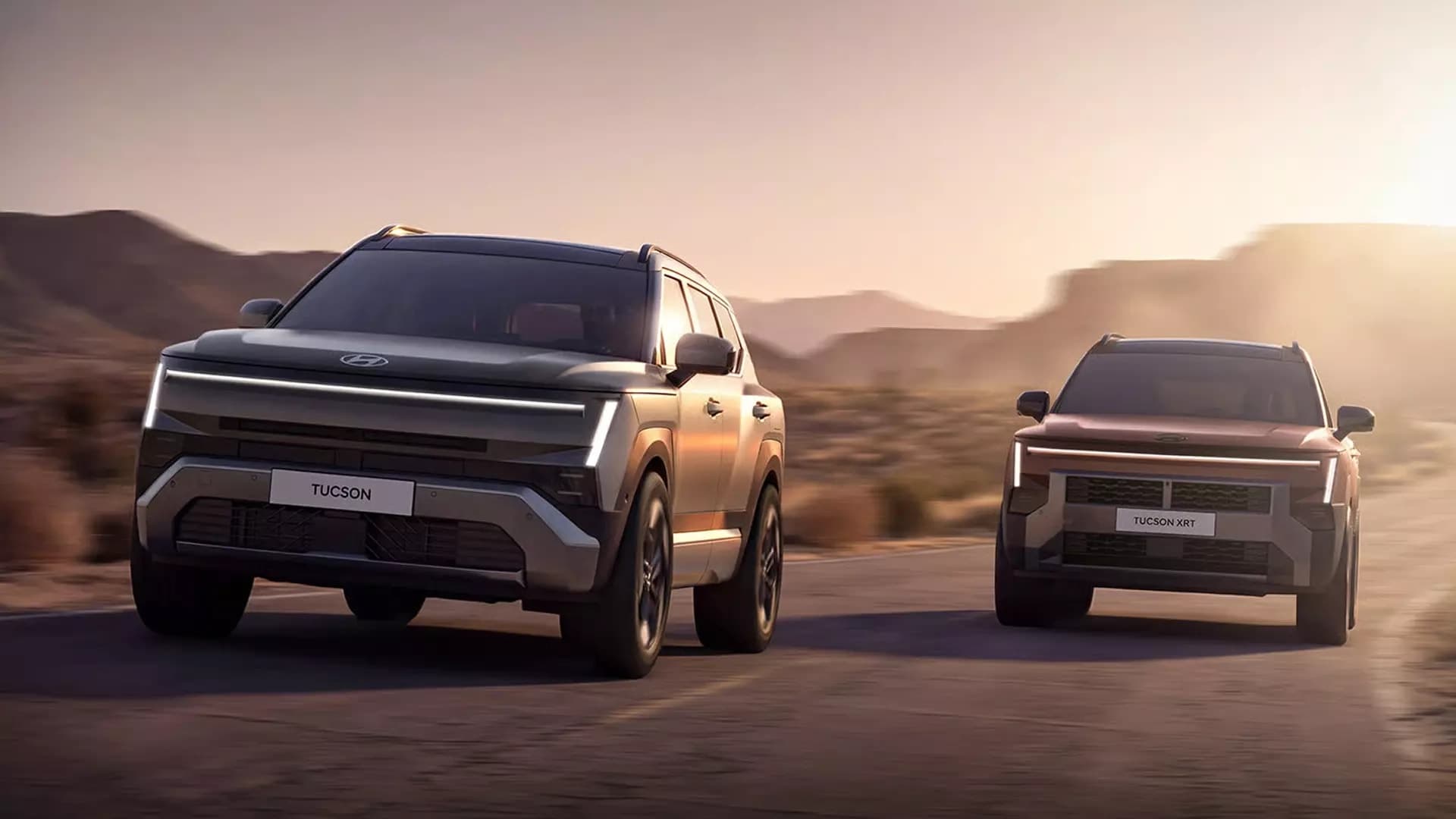
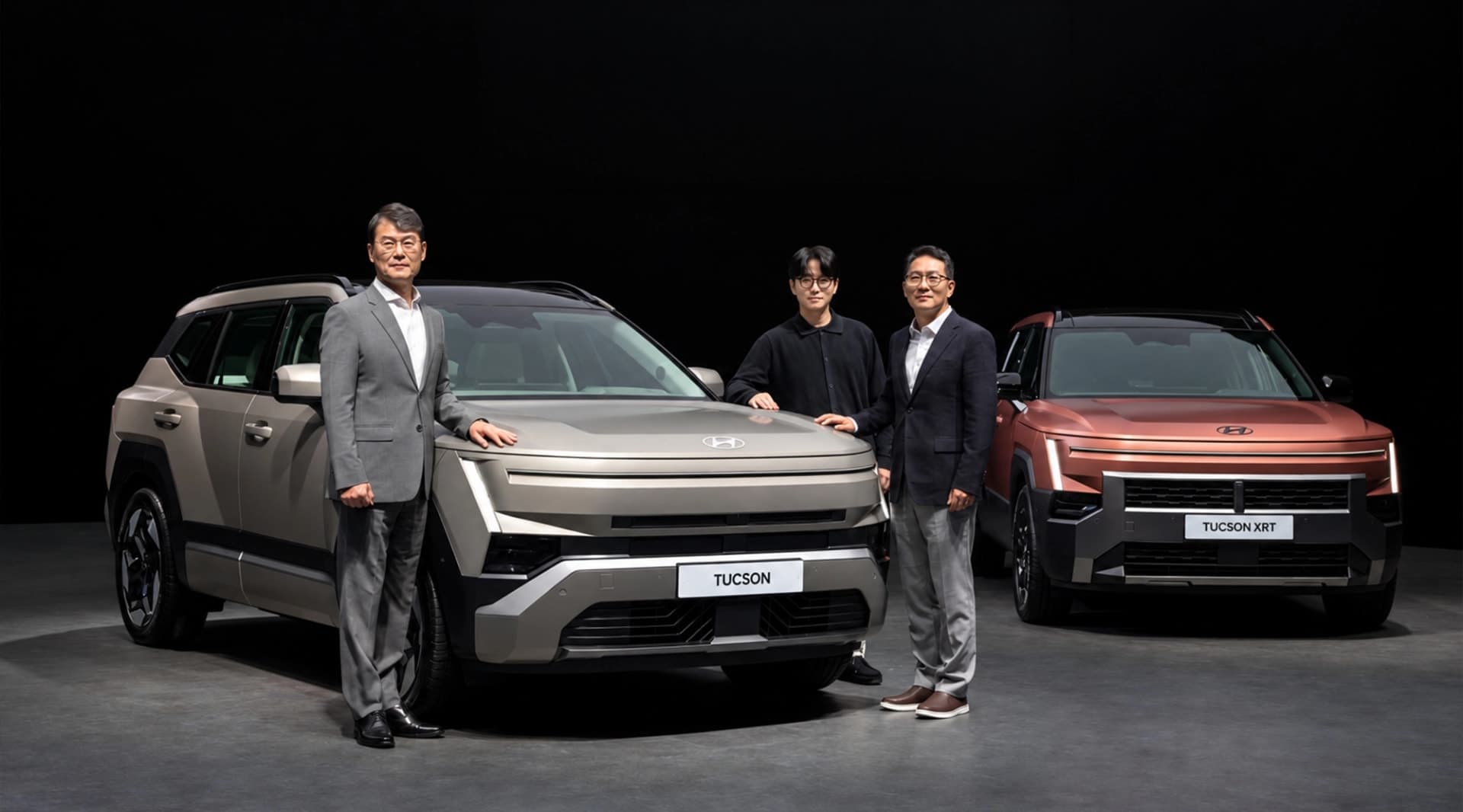
Hyundai has shown the production fifth-generation Tucson to Korean media in Paju, near Seoul, a month after releasing the first design photos. The car is 4,700 mm long, its 1.6 turbo hybrid now makes 245 hp, the petrol version swaps its dual-clutch gearbox for an eight-speed automatic, and it is the first Hyundai SUV to run the Pleos Connect software. Korean sales start in October, other markets follow in the fourth quarter, and Hyundai needs it: the brand sold 399,159 cars at home from January to August, 15% fewer than a year earlier.
The Tucson grows to 4,700 mm and a 2,785 mm wheelbase
The new Tucson measures 4,700 mm long, 1,905 mm wide and 1,685 mm high on a 2,785 mm wheelbase, which is 60 mm longer, 40 mm wider and 30 mm longer between the axles than the Korean car it replaces. Second-row headroom rises 29 mm to 1,031 mm, knee room gains 14 mm, and the rear doors open to 83 degrees instead of 73. The boxier body is also slipperier, with the drag coefficient falling from 0.33 to 0.30 thanks to active grille flaps, aero wheels, a reshaped roof spoiler and a new underbody spoiler at the rear. One caveat for Europe: the Tucson sold here today is the 4,510 mm short-wheelbase version on a 2,680 mm wheelbase, 130 mm shorter than the Korean and American car, and Hyundai has not yet said whether Nošovice will build the full-length body this time.
The 1.6 turbo hybrid makes 245 hp, the petrol 193 hp with an eight-speed automatic
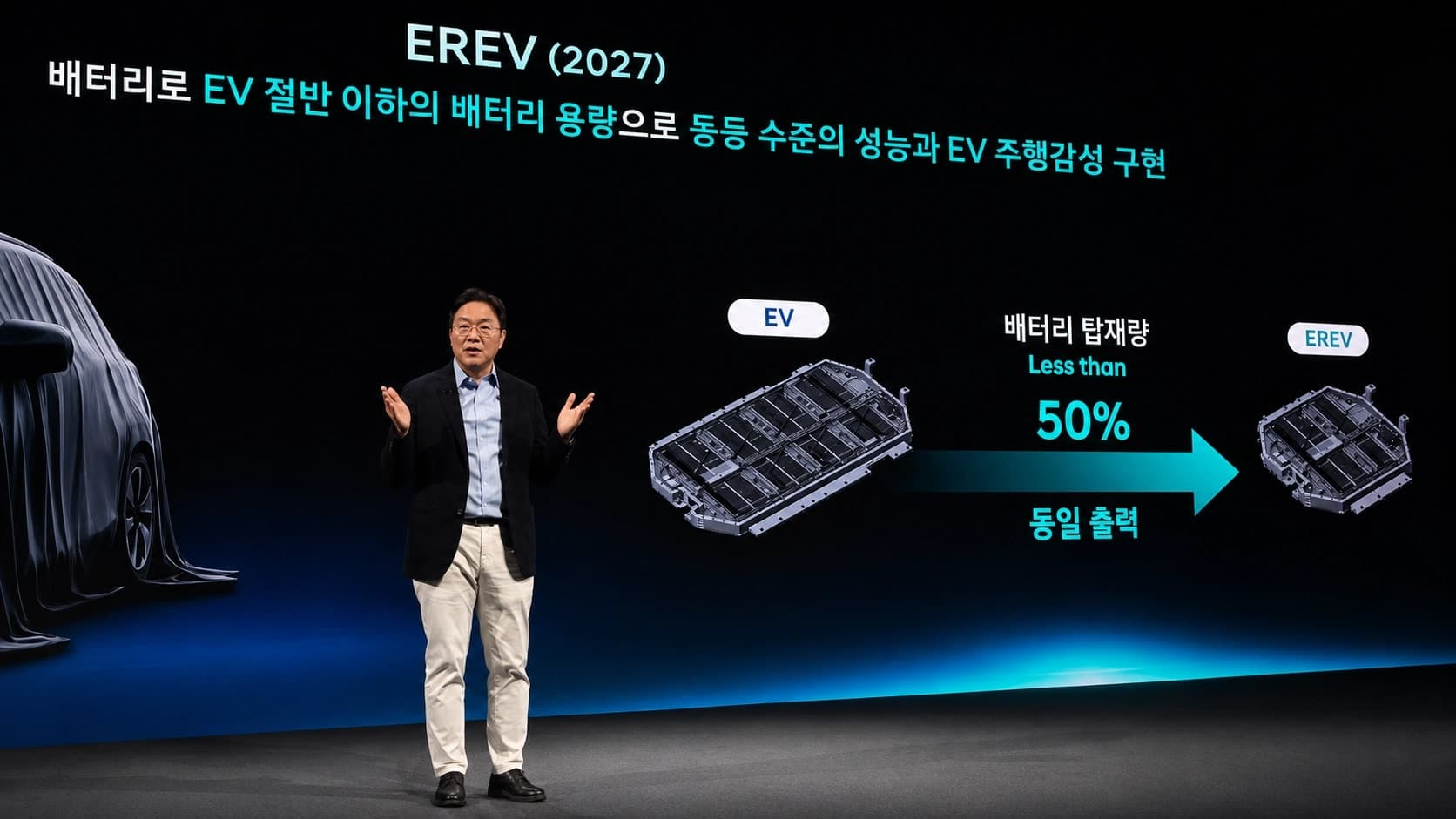
Two powertrains open the range, both 1.6-litre turbos. The hybrid uses Hyundai's next-generation system for a combined 245 hp, up 10 hp, and returns 17.4 km per litre on the Korean combined cycle against 16.2 for the old car. It gains a Stay Mode that keeps climate control and infotainment running with the engine off while parked. The petrol version rises 13 hp to 193 hp and drops the seven-speed dual-clutch for an eight-speed torque-converter automatic, a change that costs it fuel economy: the Korean combined figure falls to 12.2 km per litre. There is no plug-in hybrid in the Korean line-up yet, although Europe's current Tucson sells one, and the range-extender technology Hyundai showed on the Santa Fe in August is not part of this launch either.
Pleos Connect and Gleo AI arrive on a Hyundai SUV for the first time
The Tucson is the first Hyundai SUV with Pleos Connect, the group's Android-based operating system, and the first with Gleo AI, a voice assistant built on a large language model that handles vehicle settings, schedule suggestions and searches from natural speech. The screen is a 17-inch or 12.9-inch 16:9 tablet on the dash, with a small separate driver display set into the top of the dashboard, an app market for streaming and games, and USB ports rated at 100 W. The physical buttons promised at the August design reveal survive on the squared steering wheel and in a switch bank under the screen, the opposite direction to the Lexus NX, which just deleted its climate buttons.
Pedal misapplication assist and backup door power are standard on every trim
Pedal misapplication safety assist is standard across all trims: if the driver floors the accelerator instead of the brake while stopped or crawling, the car limits propulsion and stops itself, a response to a run of crashes involving older drivers in Korea. A door-unlock power backup, a first for the brand, keeps the doors openable after a crash even if the main battery is cut. Memory Reverse Assist records the path taken into a tight space and drives the car back out along it, Ground View shows the road under the nose on the 360-degree camera, and forward and reverse parking collision avoidance are both fitted. An XRT trim adds its own split grille, wheel-arch cladding with a forged-carbon pattern, skid plates and standard HTRAC all-wheel drive.
Korean sales start in October as Hyundai's home volume falls 15%
Hyundai will publish Korean prices in October, when sales begin; the current petrol Tucson sits around 28 million won and the Kia Sportage around 29 million, and Korean analysts already expect the new body, the eight-speed automatic and the Pleos hardware to push the sticker up. The stakes are high: Hyundai's domestic sales fell from 469,457 to 399,159 in the first eight months of 2026, and Tucson sales in Korea dropped from 55,257 in 2024 to 41,840 in 2025. Global markets follow in the fourth quarter. In Europe, where the Tucson led the compact-SUV private channel in 2025 with a 5.3% share and Nošovice's five-millionth vehicle was a Tucson Hybrid, Hyundai has not yet given a date.
AutoNext Take
Compact is doing a lot of work in Hyundai's description of a 4,700 mm car. That is 161 mm longer than a Volkswagen Tiguan, the car the Tucson is priced against in Europe, and 29 mm of extra rear headroom is the sort of gain that used to require moving up to a Santa Fe. The strategy is visible in the numbers Hyundai released: it has grown the Tucson into the space its home buyers are leaving, betting that a bigger, better-equipped car at a higher price recovers more revenue than a cheaper one recovers volume.
The question for Europe lands before the Paris show opens on 12 October: does Nošovice build this 4,700 mm body, or a shorter European Tucson again, as it did with the outgoing generation? If it is the full car, Hyundai will be selling a 4.7-metre SUV at Tiguan money and the headroom figure applies here. If Europe gets a cut-down car a second time, the 245 hp and Pleos Connect still transfer, but the 29 mm does not, and the Korean specification will have flattered a car Europeans cannot buy.