Five driverless race cars take on Imola, 1.58 seconds off Kvyat
Imola's Saturday race has five cars and not one driver
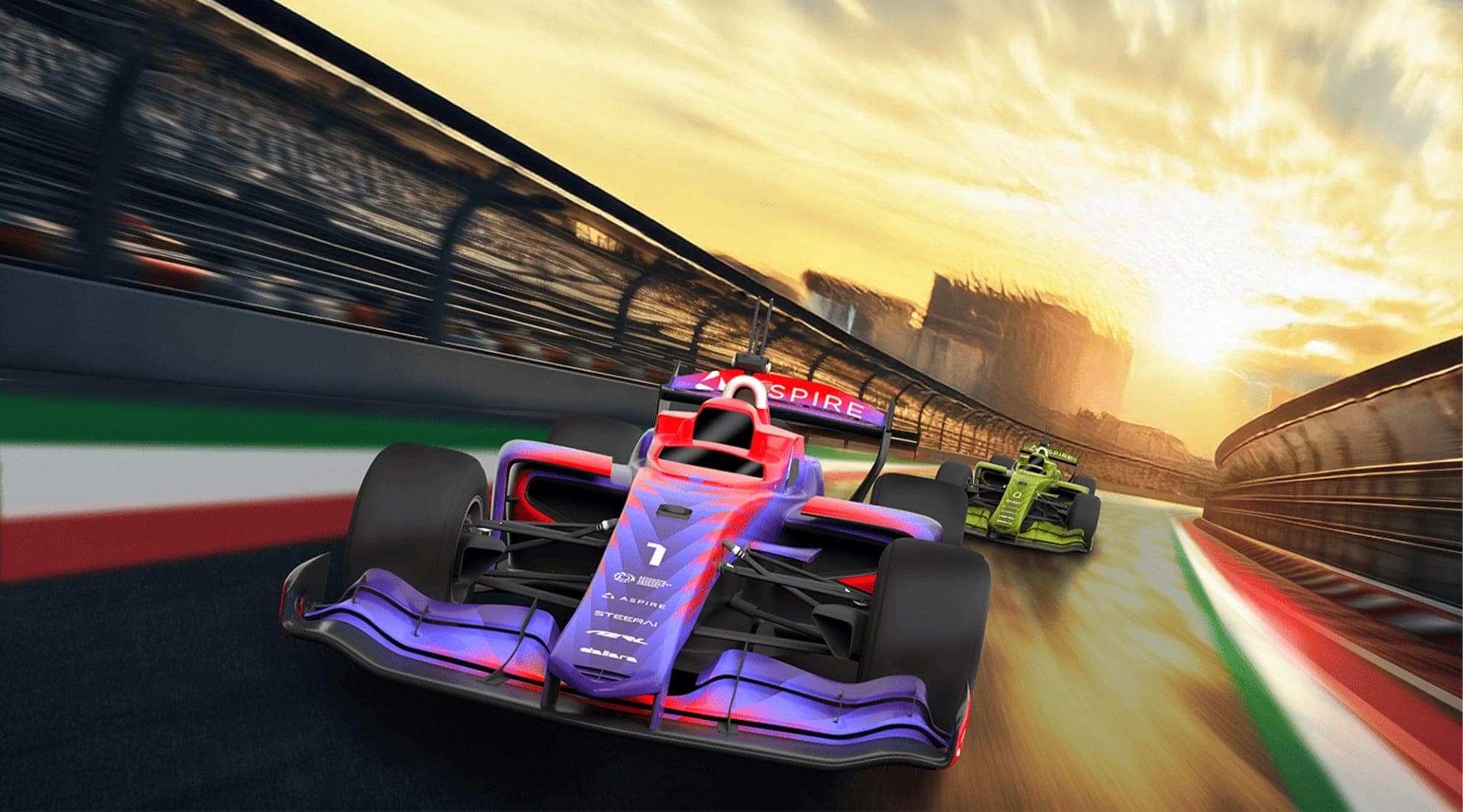
Five single-seaters will line up at Imola on Saturday evening with nobody in the cockpit, and they are not there to do demonstration laps. The Abu Dhabi Autonomous Racing League has spent two seasons proving the idea at Yas Marina, in front of a home crowd and on a circuit built with acres of run-off. Imola is where it leaves home, and Imola does not forgive the way a desert track does.
Five driverless Dallara SF23s take the Imola grid at 18:30
The race starts at 18:30 on Saturday 5 September and it is free to attend. A2RL has slotted itself into the ACI Racing Weekend, the Italian national meeting running from 4 to 6 September with five championships, 12 races and more than 180 cars entered. The autonomous machines are converted Dallara SF23s, the same chassis Japan's Super Formula uses, and A2RL runs them beyond 250 km/h. Race highlights go up on YouTube on Sunday.
Suzuka 2024 was a demonstration, with the cars capped at 80%
A2RL has left Abu Dhabi before, and the difference matters. In November 2024 it appeared at Suzuka alongside the Super Formula finale, but those were demonstration runs rather than a race, and the autonomous cars were deliberately held to 80% of their theoretical capability to protect Daniil Kvyat in the other car. Even then the Sunday session was abandoned when the car spun out of the Turn 11 hairpin during the warm-up. Imola is the first time these cars race each other outside the UAE.
TUM's HAILEY lapped Yas Marina 1.58 seconds behind Daniil Kvyat
The clearest measure of how far the software has come is a single lap in November 2025. Kvyat, A2RL's development driver and a former Formula 1 racer, set 57.57 seconds around the Yas Marina layout. TUM's autonomous car, named HAILEY, managed 59.15. Two years earlier the same programme had cars circulating three and a half minutes off a human reference in early testing. In qualification a month before the Kvyat run, Unimore's car went quicker than the human benchmark lap outright.
TUM, PoliMOVE and Unimore give Europe four of the five entries
The grid reads like a university league table. TUM, from the Technical University of Munich, arrives as champion of both previous seasons. PoliMOVE comes from Politecnico di Milano and Unimore Racing from the University of Modena and Reggio Emilia, which makes both Italian entries home teams in the Emilia-Romagna motor valley. Constructor Racing is German and Kinetiz is Emirati. TUM, PoliMOVE and Unimore qualified on 2025 season form, while the other two had to earn their places in qualification events beforehand.
Ten days of Imola track time, and the test ran in the rain
Preparation was thinner than the teams are used to. They had weeks at Yas Marina to learn the surface, where Imola gave them 10 days, and the test ran in the wet, a first for a series that has only ever worked in the desert. What they did have was a LiDAR scan of the circuit loaded into A2RL's digital twin, which the teams have been lapping virtually for months. Sitting inside a bigger race weekend bought back some of the deficit: head of operations Josh Roles puts daily track availability at around eight hours against the hour and twenty minutes of previous events.
AutoNext Take
1.58 seconds sounds close because it is: 2.7% off a former Formula 1 driver over a lap of under a minute. Hold that percentage at Imola and autonomous racing stops being a science fair. The reason to expect a bigger number on Saturday is not the software but the geography. Yas Marina forgives, while Imola has walls where Abu Dhabi has tarmac, a blind crest at Piratella and a compression at Acque Minerali that a perception stack has to read at full speed. A slower, scrappier race than Abu Dhabi would be the honest result here, not a failure.
The other number worth holding onto is four out of five. The teams are Munich, Milan, Modena and Bremen; the money, the platform and the trophy are Emirati. Europe is supplying the engineering talent for a championship it did not think to build, in the same year Volkswagen and Bosch walked away from their joint self-driving project. The perception and decision-making work being sharpened at Imola is what will decide whose robotaxis arrive in European cities first, and ten days on a wet circuit in Emilia-Romagna is cheap research by anyone's standard. Abu Dhabi is the one paying for it.