A Chinese robotaxi army is coming to Europe, and Uber is opening the door
Europe wanted to lead on robotaxis. It may end up hailing one built in China instead
Europe has spent years talking about autonomous taxis while America and China actually built them. That gap just narrowed in the most European way possible: not with a homegrown champion, but with a deal. Uber and the Chinese autonomous-driving specialist Pony.ai are expanding their partnership to put more than 2,000 robotaxis on the road across five European cities, the largest commitment of its kind the continent has seen.
From one city to five
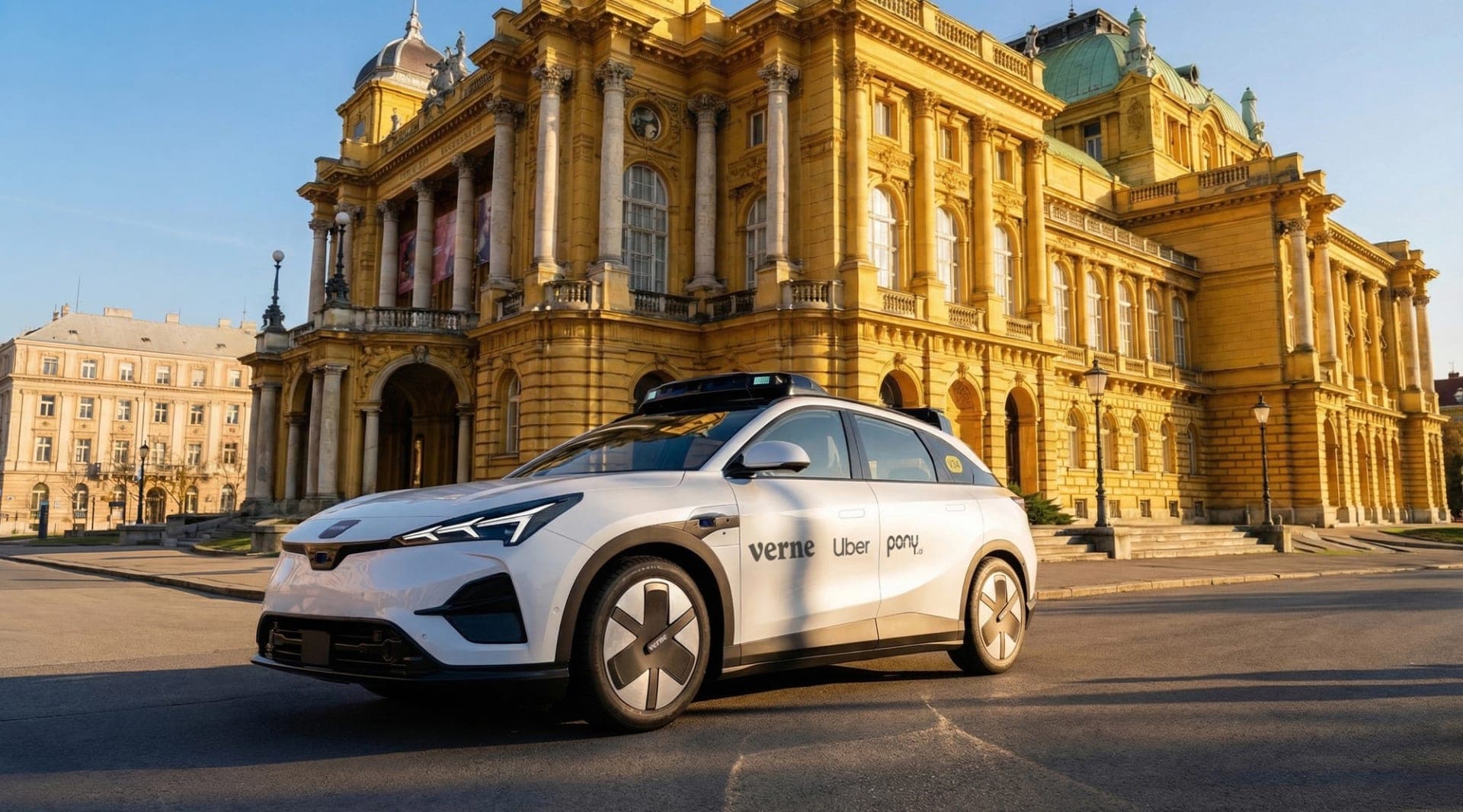
The plan builds on what the two companies already have running. Earlier this year, working with the Croatian operator Verne, they launched Europe's first commercial robotaxi service in Zagreb. That Zagreb fleet is now coming to the Uber app, and the expanded agreement takes the model to four more European cities, for a combined total of more than 2,000 vehicles. The companies have not yet named the four cities or given a firm timetable, but the direction is unambiguous: scale, and fast.
The partnership is not new. It dates to May 2025, and the Zagreb launch was its first proof point. What changed this week, announced on 13 August, is the ambition: from a single-city pilot to a continent-wide rollout, with the Middle East added to the plan on top of Europe.
Who does what
The division of labour is the whole point. Pony.ai supplies the hard part, an SAE Level 4 self-driving system that needs no human behind the wheel, along with the operational know-how from running robotaxi fleets in China and the Middle East. Uber supplies the demand: the app, the bookings, the payments and the customer service that millions of Europeans already use every day. Local companies such as Verne own and run the physical fleets. Nobody has to build all three legs alone, which is exactly why this can move quicker than a traditional carmaker going it alone.
A crowded, and largely non-European, race
Pony.ai is far from the only one circling Europe. Uber is also piloting WeRide robotaxis in Madrid, Waymo is preparing to bring its roughly 5,000-strong fleet to London and other markets, and Baidu's Apollo Go is pushing to enter the continent too. Europe's own answer is still warming up: Volkswagen has openly stated it wants to become the region's robotaxi champion, and Tesla's Full Self-Driving has only just cleared its first European regulatory hurdles. For now, the fastest movers on European streets are American platforms carrying Chinese technology.
AutoNext Take
There is a quiet lesson in this deal that Europe should not miss. The technology arriving on its streets is Chinese, the platform booking it is American, and the European contribution so far is mostly the local operator and the regulator signing off. That is not a disaster, robotaxis have to start somewhere and Zagreb passengers will not care where the code was written, but it is a pattern worth watching. When the most advanced mobility on your continent runs on someone else's software, you are a market, not a maker.
The counter-argument is that pragmatism beats pride. Uber and Pony.ai can put safe, driverless taxis in five cities faster than any single European carmaker could, and every kilometre they log builds the data and public trust the whole industry needs. If Volkswagen and others are serious about catching up, this is the wake-up call: the robotaxi era in Europe is no longer coming, it is being booked in an app right now, and it did not wait for Europe to be ready.