Driverless racing came to Europe, and the robots still crashed
Europe just held its first multi-car driverless race, and two of the five cars ended it by crashing into each other. That is not a failure. That is motor racing.
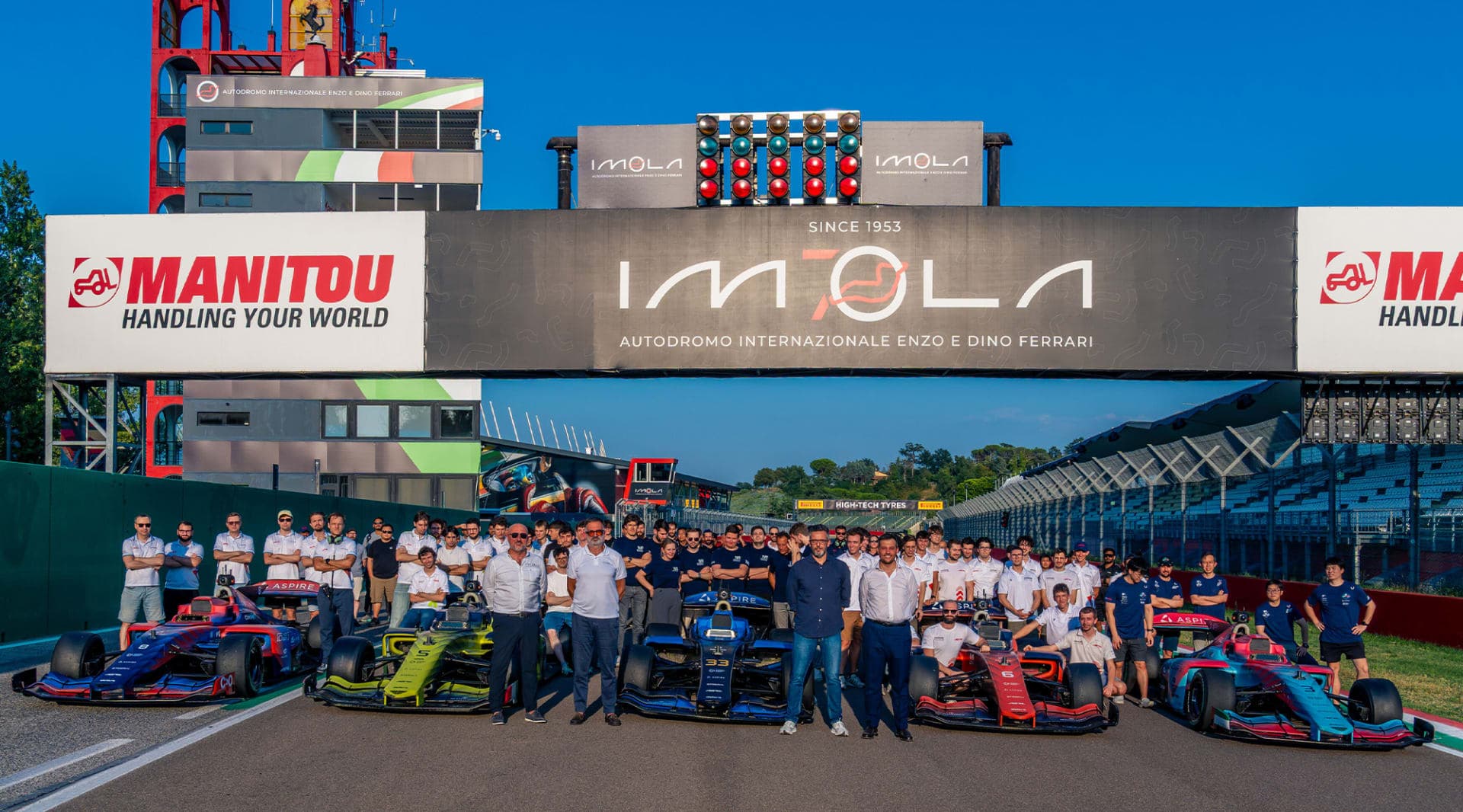
The Abu Dhabi Autonomous Racing League has taken its self-driving single-seaters out of the desert for the first time, and Imola gave them a proper initiation. Five fully autonomous cars lined up on 5 September for the first multi-car driverless race ever held in Europe, part of the ACI Racing Weekend. UAE team Kinetiz won. Getting there was chaos.
We previewed this race last week, and we said Imola would not forgive the way Yas Marina does. It did not.
How Kinetiz won without being the fastest
Kinetiz did not lead early. Pole and the pace belonged to Italy's Unimore, which set the fastest lap of the race at 1 minute 40 seconds. Behind it, PoliMOVE shadowed within a second and clocked the day's top speed of 252.3 km/h. Then Unimore hit a technical problem and slowed dramatically, PoliMOVE could not avoid it, and it struck the rear of the Italian car. Both were out. Kinetiz inherited the lead and held it to the flag, with Germany's Constructor Racing second, PoliMOVE classified third and Unimore fourth.
The reigning champions never really started. TUM, the German team that won in 2024 and 2025, struck a technical issue on the formation lap and returned to the pit lane before the rolling start. It finished fifth.
The hardware is identical, so the race is won in the code
This is what separates A2RL from any series you already watch. Every car is the same: an EAV-25 platform based on the Super Formula Dallara SF23, around 690 kg, built from bio-composite materials and carrying a 15-sensor suite of GPS, LiDAR, cameras and radar. Nobody has a power advantage or a tyre advantage. The entire performance difference lives in software, in how each team's AI reads the track, plans a line, controls the car and makes decisions in real time. When Unimore slowed, the question was not whether PoliMOVE had the grip to avoid it, but whether its code saw the problem early enough. It did not.
Why Imola was the real test
Two seasons at Yas Marina gave A2RL a controlled environment with generous run-off. Imola offers none of that generosity. Elevation changes, narrow racing lines, limited run-off and awkward overtaking zones force an autonomous system to manage grip, traffic and positioning under sustained pressure, and to keep re-deciding when to attack and when to back out as the race shifts around it. The preparation was punishing too: nine days of physical testing through rain and even hail, a newly fitted wet-weather kit, and more than 5,000 hours of simulation during 2025 using digital twins of Yas Marina, Suzuka and Imola.
“Imola put that approach to the test, with five autonomous cars navigating the uncertainty and pressure of a live race,” said H.E. Faisal al Bannai, Secretary General of the Advanced Technology Research Council. He called Kinetiz's win an important moment for the UAE, but pointed to the wider value in “what the race revealed about reliability, resilience and real-time decision-making.” Kinetiz Team Principal Omar Hanif Alqassim called it “a very proud moment,” adding that representing the UAE “on an international stage” mattered as much as the result.
AutoNext Take
It is easy to be cynical about a race where the two quickest cars removed each other and the winner won by attrition. Resist it. A2RL is not selling a clean spectacle yet, it is selling data, and a messy race at an unforgiving circuit generates far more of it than a tidy procession around Yas Marina ever could. Every failure here, TUM on the formation lap, Unimore's mechanical halt, PoliMOVE's inability to react in time, is a lesson that feeds straight back into autonomous systems destined to leave the track.
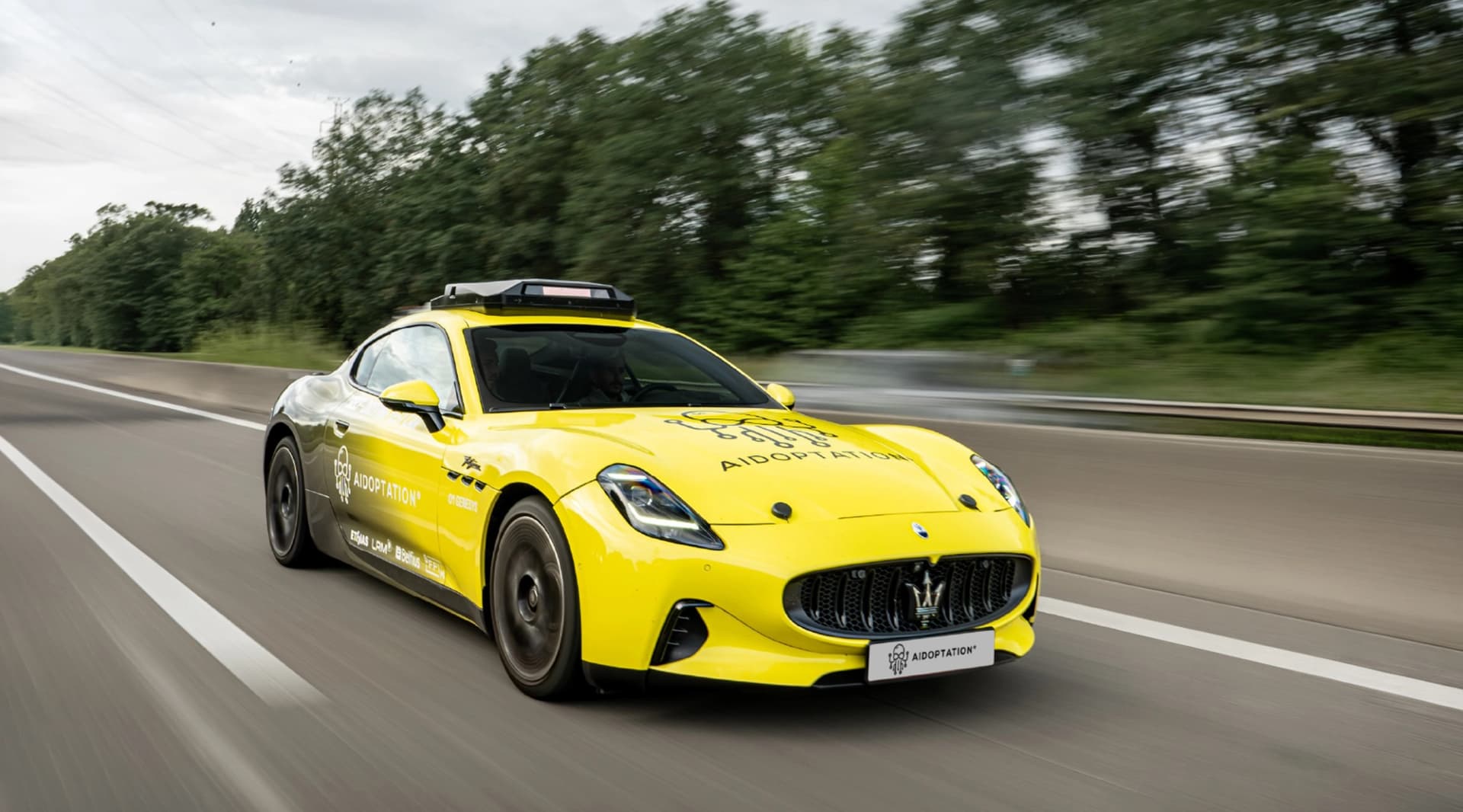
That is the real prize. By A2RL's own measure, the gap between its AI and a professional human is already down to 1.58 seconds, and the league is closing it in public, at speed, with the cameras running. We have watched the same technology arrive on the road from other directions, whether that is Waymo launching in Munich or a Belgian firm testing a self-driving Maserati on the motorway. Racing is simply the version that fails in front of a grandstand instead of quietly in traffic.
For now, Kinetiz gets a genuine milestone, Europe's first driverless win, and the rest of the grid gets homework. The series heads back to Yas Marina next. On this evidence, the interesting question is no longer whether the cars can race. It is how they cope with the moment the plan falls apart.