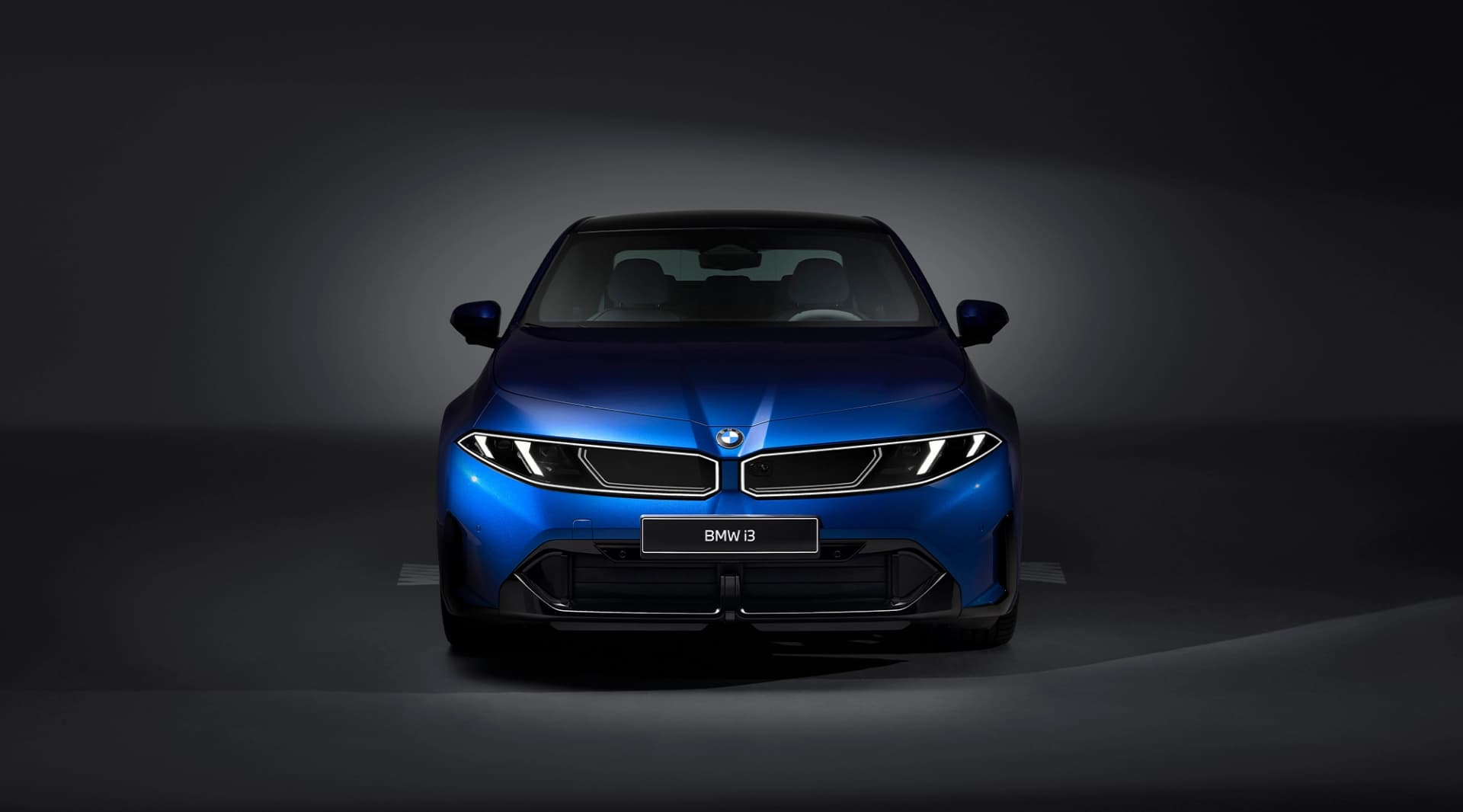
BMW unveils the new i3: the all-electric 3 Series that could redefine the segment
This is the moment BMW redefines its most important car: the 3 Series.
A few days after it accidentally leaked its own design, BMW has now officially unveiled the new BMW i3, the second model of its highly anticipated Neue Klasse. And this is not just another EV.
The 3 Series goes fully electric and fully serious
For over 50 years, the 3 Series has been the backbone of BMW. Now, with the new i3, that DNA is translated into a fully electric future. The launch version, the i3 50 xDrive, immediately sets the tone:
469 hp (345 kW)
645 Nm of torque
Dual-motor all-wheel drive
But numbers alone don’t tell the full story. BMW positions this car as a “technological quantum leap”, and for once, that claim feels justified.
Up to 900 km range: a new benchmark?
Let’s address the headline figure. BMW claims a WLTP range of up to 900 km. If this holds in real-world conditions, it fundamentally changes the conversation around EV usability, especially in Europe, where range anxiety still plays a role despite growing infrastructure.
Charging performance is equally aggressive:
Up to 400 kW DC fast charging
Up to 400 km range in 10 minutes
Combined with 800V architecture and next-gen battery cells, this puts BMW directly in competition with (and potentially ahead of) the current EV leaders.
Design: familiar, but clearly a new era
Visually, the BMW i3 walks a fine line. It’s instantly recognisable as a 3 Series, but clearly part of something new. Key elements include:
A modern 2.5-box silhouette
A reinterpreted “four-eyed” front with integrated light signature
Wide stance with pronounced wheel arches
Clean, horizontal rear lighting
This is BMW trying to evolve without alienating its core audience. And compared to some recent design experiments, this feels… more controlled.
Interior and tech: the real revolution
Inside, BMW introduces a completely new interface philosophy. The Panoramic iDrive stretches across the dashboard, redefining how information is presented. But the real story lies deeper.
At the core sits the “Heart of Joy”, a high-performance computer that processes driving inputs up to ten times faster than previous systems. Combined with three additional “superbrains”, it forms the foundation of BMW’s next-gen software architecture.
This is where BMW is clearly taking inspiration from the tech-first approach we’ve seen from Tesla and others but translating it into a more driver-focused experience.
Add to that:
BMW Symbiotic Drive (next-gen assisted driving)
Bidirectional charging (V2L, V2H, V2G)
A fully reimagined driver-centric cockpit
And it becomes clear: this car is as much software as it is hardware.
Built in Munich, built for the future
Production of the new i3 will start in August 2026 at BMW’s historic plant in Munich. A symbolic move.
Because this same factory, which has been producing cars for over a century, will transition to fully electric Neue Klasse production within a year. This isn’t just a new model. It’s a structural shift.
AutoNext Take
Let’s be honest. This is one of the most important cars BMW has launched in years. Not because it’s electric, but because it replaces the 3 Series as we know it.
And BMW seems to understand the stakes. Where some brands rushed into electrification with compromises, BMW took its time. The result? A product that doesn’t feel like an adaptation, but like a ground-up rethink.
And if the real-world performance matches the claims (especially that 900 km range) this could become the new benchmark in the premium sedan segment. And for the first time in a long time, the electric future of the 3 Series actually feels… exciting.