Chevrolet Equinox EV sales fall 92% as Cadillac's EVs hold up
A year without the $7,500 credit has hit GM's cheapest electric cars hardest
General Motors sold 25,473 electric cars in the United States between July and September, 61.7 percent fewer than the record 66,501 a year earlier. The Chevrolet Equinox EV, GM's best-selling EV of 2025, fell 92.4 percent to 1,905. The figures arrive one year after Washington ended the $7,500 federal tax credit on 30 September 2025.
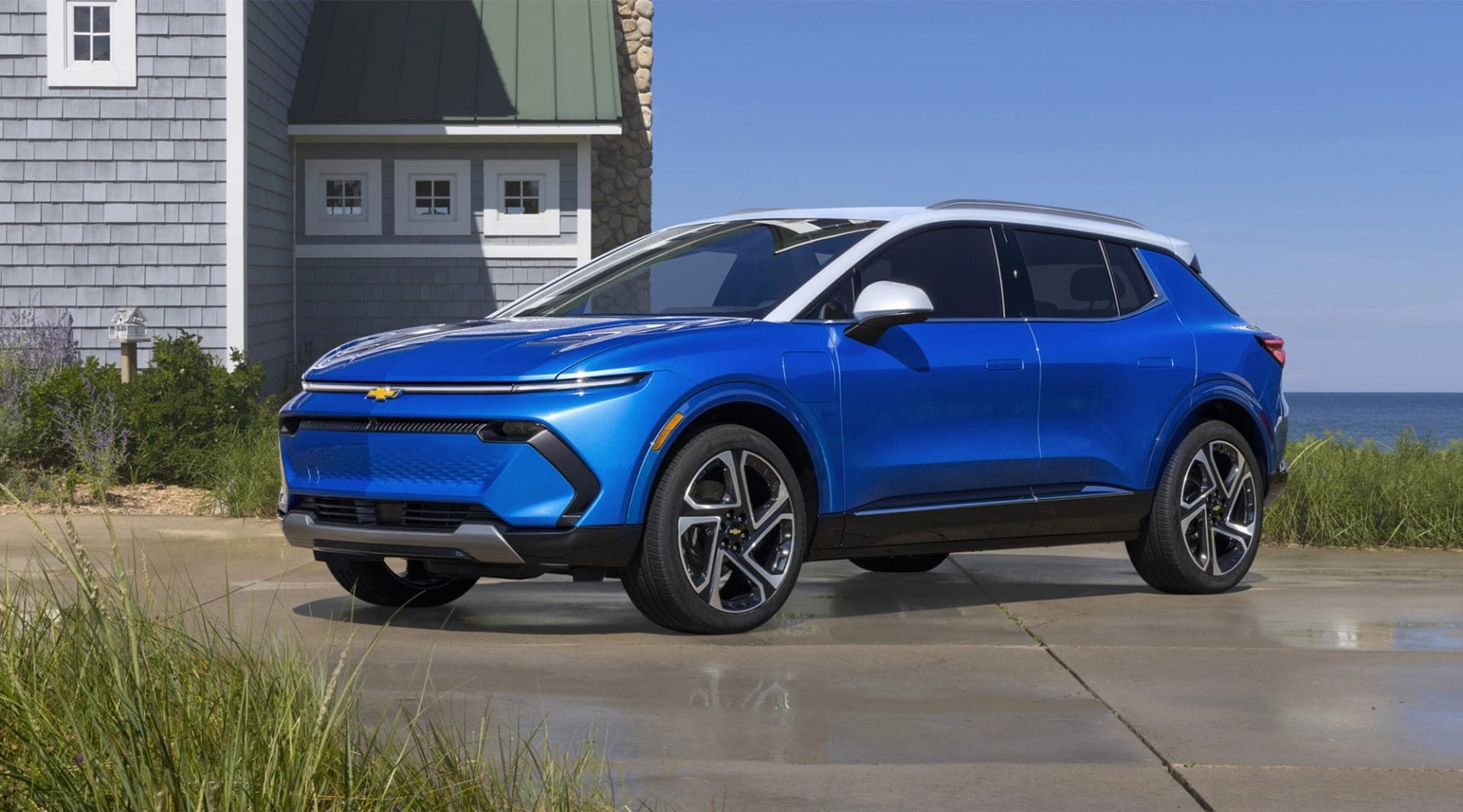
Chevrolet Equinox EV: from 25,085 sales to 1,905 in a year
The Chevrolet Equinox EV sold 25,085 units in the third quarter of 2025 and 1,905 in the same quarter of 2026. Over nine months it still leads GM's electric range with 18,154 sales, but that is 65.6 percent below the nearly 53,000 of 2025. Part of the gap went to a cheaper sibling: the new Chevrolet Bolt added 3,866 sales. The Blazer EV fell 84.4 percent to 1,261 and the Silverado EV 58 percent to 1,655.
Cadillac now sells more EVs than Chevrolet
Cadillac sold 12,358 electric cars in the quarter, nearly half of GM's total and more than every Chevrolet EV combined, which add up to 10,031 including the discontinued BrightDrop vans. The Optiq barely moved, down 6.9 percent to 4,550. The Lyriq fell 50.2 percent to 3,617, the Vistiq 34.1 percent to 2,587 and the Escalade IQ and IQL 29.2 percent to 1,604. At GMC, the Hummer EV dropped 72.9 percent and the Sierra EV 50.8 percent.
Why the $7,500 credit mattered most on a $35,000 EV
GM's losses track price: the $7,500 credit was worth more than a fifth of an Equinox EV that started at about $35,000. The Escalade IQ, at around $130,000, sat far above the $80,000 price cap for SUVs and never qualified for the purchase credit, so its buyers lost nothing when it ended. Luxury buyers kept buying. Budget buyers went back to petrol and hybrids, whose US sales are up almost 27 percent in a year, according to Edmunds.
US EV market steadies at 6% while GM's share slips
The wider US market fell less than GM did. Cox Automotive forecasts about 239,000 new EV sales in the third quarter, down roughly 45 percent on the 437,000 deadline rush of 2025 but only 3 percent below the second quarter, with EVs steady at around 6 percent of new cars all year. On those figures GM's share of American EV sales slipped from about 15 percent to under 11 percent. Reuters reports GM will now build about 35,000 Bolts, roughly 75 percent fewer than planned, before production ends in early 2027.
Europe's 25.7% EV share took the other route
Europe is running the opposite experiment. Battery-electric cars took 25.7 percent of new registrations across sixteen European markets in July, pulled along by affordable models such as the Renault 5 and Citroën ë-C3 as much as by subsidies. Italy, the market that cut its incentives, slipped back below 6 percent, which is where the US sits now. Even American fuel prices at around $4.50 a gallon have not changed that, because the cheapest electric cars, the Chinese ones, face a 100 percent tariff in the United States.
AutoNext Take
The $7,500 credit turned out to be a subsidy for Chevrolets, not for Cadillacs. Its removal took 92 percent of Equinox EV sales and 6.9 percent of Optiq sales, and it left the American EV market smaller but stable. The headline collapse also flatters the drama: the 2025 comparison was inflated by a deadline rush, and the market has barely moved since January.
GM's real problem is narrower and fixable: once the Bolt ends in early 2027, it has nothing cheap left to sell. Expect Cadillac to outsell Chevrolet in electric cars again when GM reports fourth-quarter sales in early January. For European buyers the lesson is reassuring, because our growth comes from cars like the Renault 5 that make sense without a cheque.