At a Monterey full of nostalgia, the Czinger 21C Spyder arrived from the future
Every other hypercar at Monterey looked to the past. This one came from the future
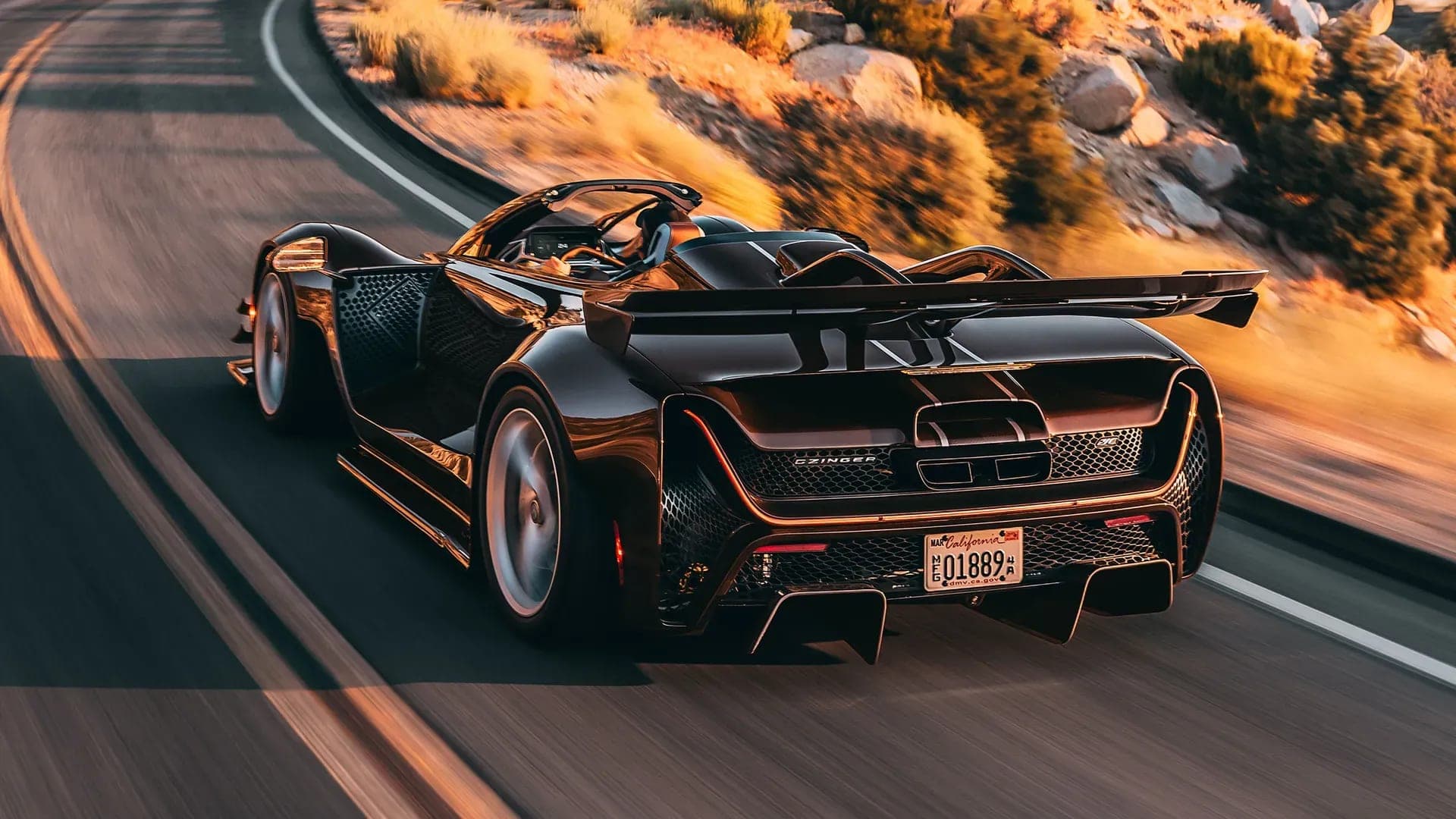
Monterey Car Week has been a festival of nostalgia this year, one-offs and tributes mining a glorious past. The Czinger 21C Spyder is the exact opposite. Its skeletal, alien structures were not drawn by a designer at all; they were generated by artificial intelligence and built by 3D printers, producing shapes no human hand would sketch and no ordinary factory could make. It looks like nothing in history because, in a real sense, it comes from a place history has not reached yet.
What the 21C Spyder is
As a car, it is spectacular. The 21C Spyder is the open-top version of Czinger's hypercar, powered by a 2.88-litre twin-turbo V8 hybrid that screams to 11,000 rpm and makes a combined 1,250 hp with around 937 Nm of torque. It reaches 100 km/h in roughly two seconds and tops out near 330 km/h. Its cabin is stranger than its speed: the seats are arranged in-line down the centre, with the passenger sitting directly behind the driver like a human backpack. And despite having no roof, it is claimed to generate 1,482 kg of downforce at 240 km/h, which Czinger says is the most of any open-top road car. Just 30 will be hand-built in Los Angeles, from 2.75 million dollars, with a 2028 model designation.
The real product is not the car
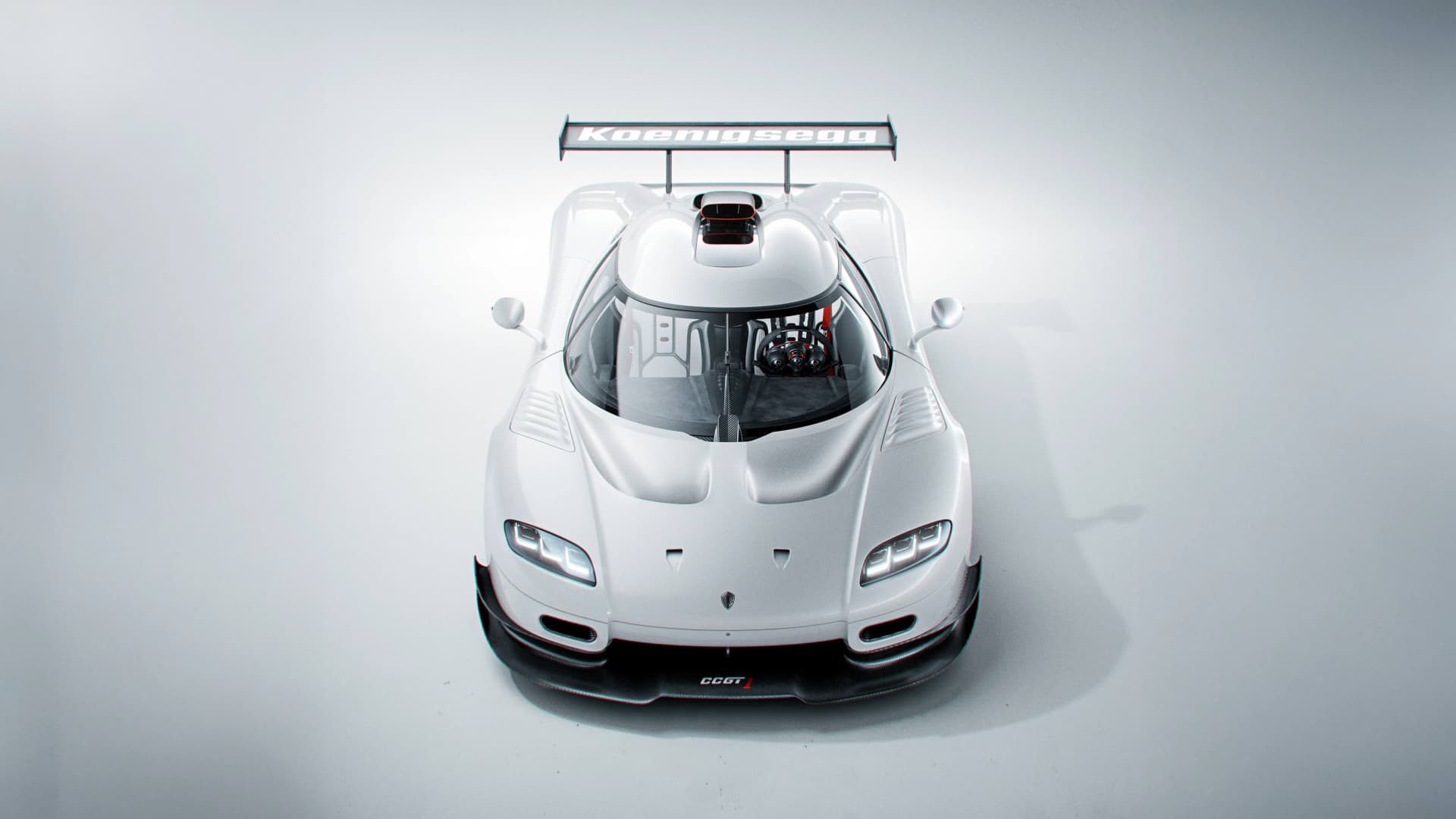
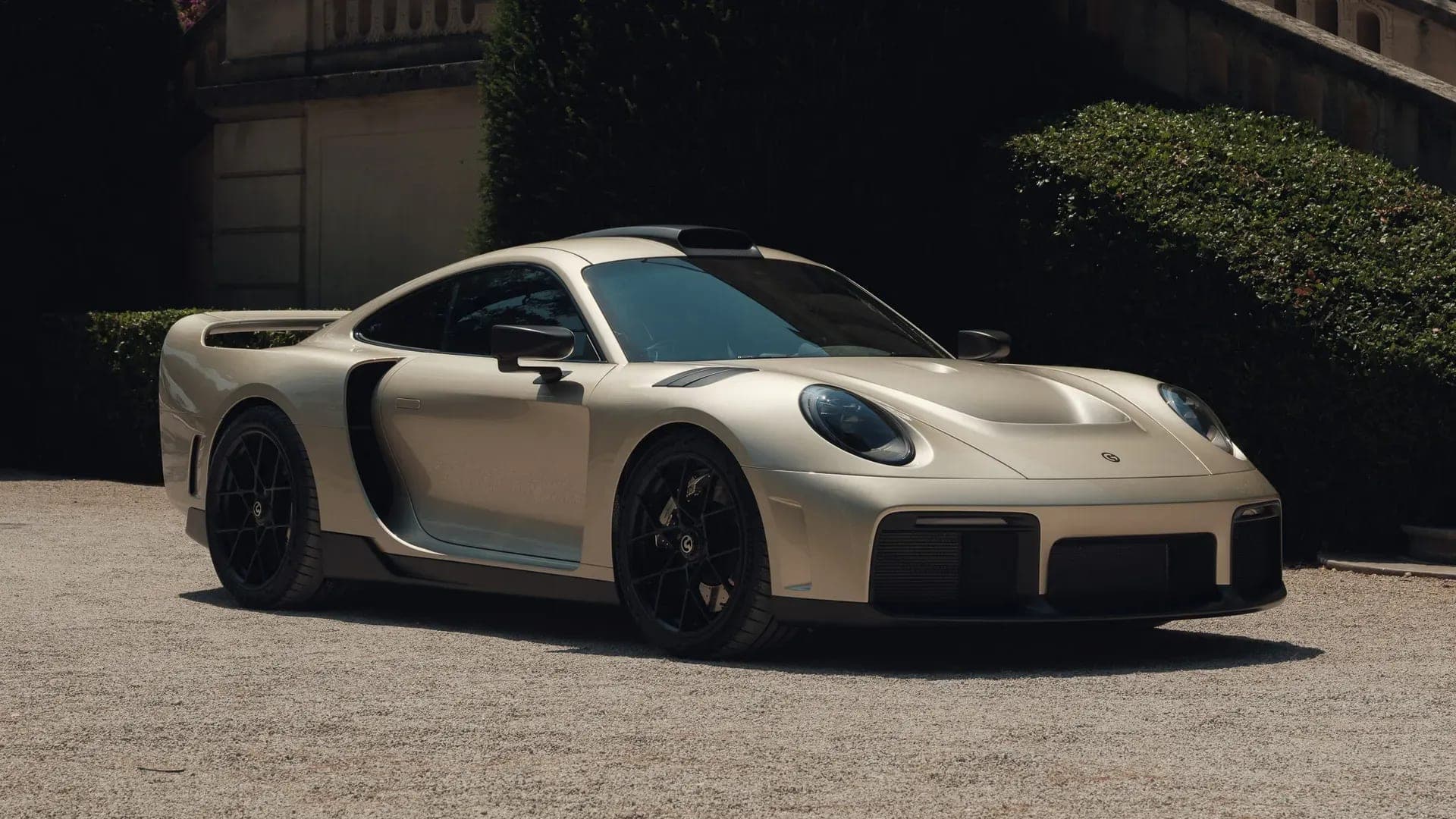
Here is what separates Czinger from every other name at Pebble Beach, from Koenigsegg finishing a decades-old racing dream to Gemballa rebuilding a Porsche 959. Those cars are the product. The 21C is closer to an advertisement. Czinger's structures are conceived by its own AI-driven design system and built by its sister company Divergent, using printers that sinter powdered metal into finished, load-bearing parts. That additive-manufacturing platform, not the hypercar, is the actual business, and Divergent is already pitching it to the wider car and aerospace industries. The 21C Spyder is the shop window. The printer behind it is what Czinger is really selling.
Form follows the printer
This is why the 21C looks the way it does, and why it matters. When a machine prints your load-bearing structure, you are freed from almost every constraint of a traditional stamped-and-welded car. You can build around any layout, which is how you end up with a fighter-jet central seating position, and you can let the parts take the organic, web-like shapes an algorithm decides are strongest and lightest, whether or not they look normal. The 21C is not styled to look futuristic; it looks the way it does because it was made in a fundamentally new way. That is genuinely novel, and far more interesting than any single power figure, including this one's, or the theatre of a beautifully hand-built modern supercar.
The promise, and a decade of hype
A note of realism is owed. The idea that 3D printing will revolutionise how cars are built has been promised for the best part of a decade without arriving at any mass scale, and a 2.75 million dollar, 30-unit hypercar is a very long way from an affordable, printed everyday car. The hypercar world is also littered with grand technological promises that never quite land, from paper hypercars that stay on paper for years onward. Czinger deserves the same scepticism. But it is also the most convincing, most tangible proof of concept the printed-car idea has yet produced, an actual, running, absurdly fast demonstration that the method works. That counts for something.
AutoNext Take
The 21C Spyder will get its attention for the things that photograph well: the 11,000 rpm V8, the roofless bodywork, that oddball backpack seat. And it deserves them; it is one of the most genuinely exciting cars at Monterey. But focus only on those and you miss the whole point, because the car is almost the least interesting thing Czinger is showing.
What it is really demonstrating is a way of designing and making things, computers deciding the shape and machines printing it, that could one day touch far more than seven-figure toys. Most of Pebble Beach this week was a loving look at where the car has been. Czinger, almost alone, showed a glimpse of how the car might actually be built from here. If additive manufacturing ever scales, we may look back at this strange printed hypercar as the first clear sighting of it. Watch the factory, not the horsepower.