Honda and Nissan will share one car operating system from 2029
Nissan and Honda are building one computer instead of one company
The joint development agreement announced on Monday does not put Nissan and Honda under one roof. It puts the same electronic control units, the same in-vehicle operating system and the same core control software inside both companies' next-generation cars from fiscal 2029. Everything above that layer, the styling, the chassis tuning, the badge on the nose, each brand still does alone.
Main ECUs, zone ECUs and the operating system are all in scope
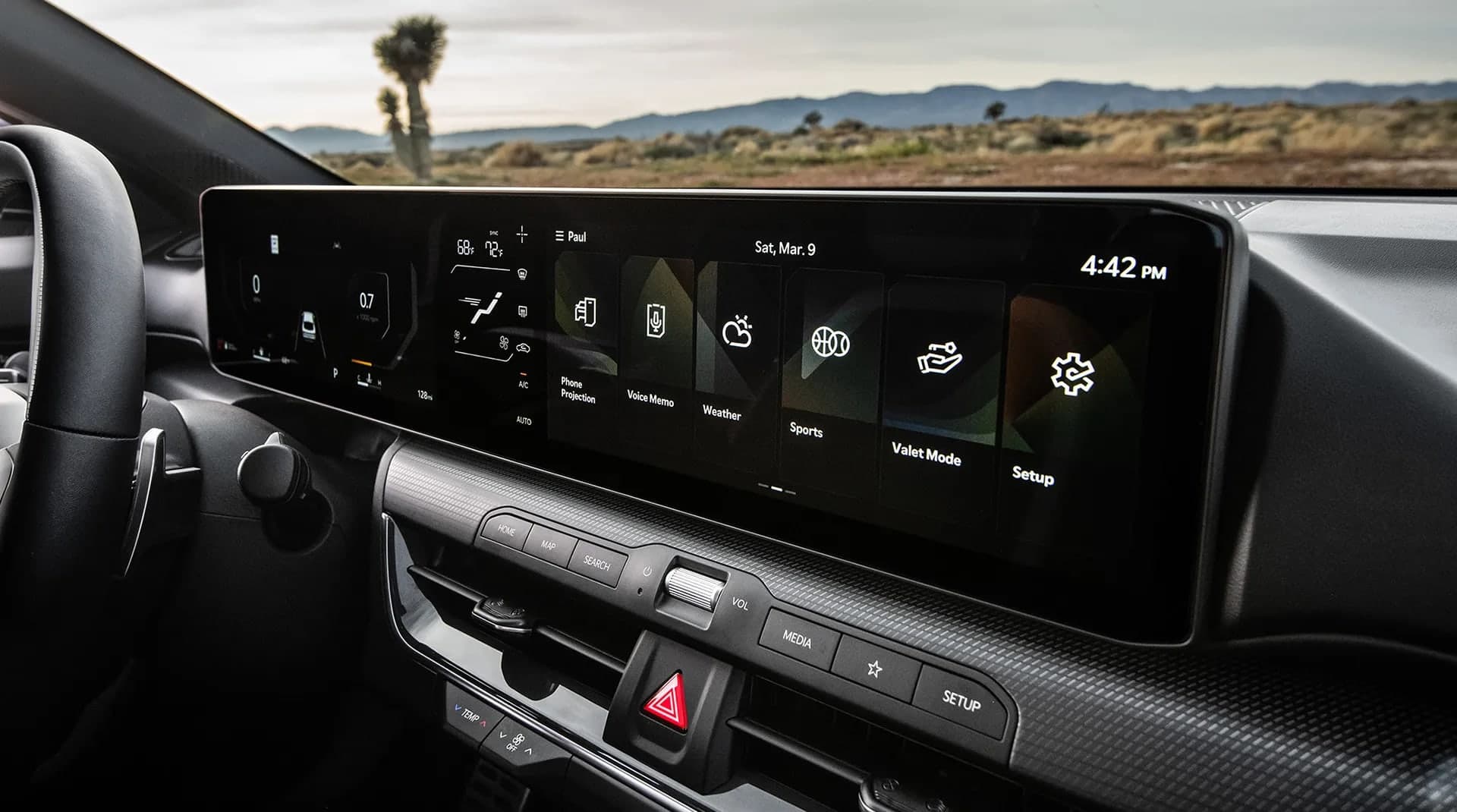
The agreement standardises the high-performance main ECU built around a system-on-chip, the zone ECUs that manage discrete areas of the car, and the in-vehicle operating system, key middleware and vehicle control software running on top of them. The resulting electrical architecture goes into both companies' software-defined vehicle platforms from fiscal 2029, which runs from 1 April 2029 to 31 March 2030. Neither firm put a number on what it is spending, and neither said whether the shared stack could later be licensed to anyone else. Folding that many functions into a handful of controllers also folds together the failure modes, in a market where software has become a leading cause of recalls.
The software work started in August 2024, before the merger talks did
Nissan and Honda opened a feasibility study on a strategic partnership on 15 March 2024. By 1 August 2024 they had agreed to jointly research the fundamental technologies for a next-generation software-defined vehicle platform, and Mitsubishi Motors joined the wider partnership the same day. The merger memorandum, valuing the combination at roughly $60 billion, only followed on 23 December 2024, and the talks were terminated on 13 February 2025. The corporate deal is the part that failed. The software strand never stopped, even as the product plans around it changed, including the 0 Series flagship Honda cancelled before it reached showrooms.
Monday's agreement names Nissan and Honda, and not Mitsubishi
Mitsubishi Motors signed both the August 2024 partnership and the December 2024 memorandum on collaborative considerations, yet it does not appear on this joint development agreement. The omission is not cosmetic. A shared ECU set is a hardware and software roadmap several years deep, and Mitsubishi already builds cars on Nissan architecture, including an Outlander that shares its underpinnings with the X-Trail. Sitting outside the standard means paying for your own electronics on a chassis somebody else designed.
Nissan is standardising with Honda, not with Renault
Renault and Nissan have been allied since 1999, and Renault still runs its own software-defined vehicle programme through Ampere, with Qualcomm's Snapdragon Digital Chassis and Google, a cooperation set out in November 2022. Nissan is not joining it. The company it is standardising electronics with is a rival it holds no shares in and no board seats at. That says something about where the Alliance's centre of gravity now sits, and the electrical architecture of the car is no longer part of it.
Volkswagen paid Rivian $5.8 billion rather than split a bill
Every full-line carmaker has the same problem and each is buying a different answer. Volkswagen, worn down by CARIAD's delays, launched a joint venture with Rivian in November 2024 worth up to $5.8 billion, and by May 2026 a $1 billion software milestone payment had made Volkswagen the largest shareholder in Rivian with 15.9 percent. Nissan and Honda have picked the cheaper route: no equity, no new company, just an agreement to write one set of foundations once rather than twice. For Nissan, which only returned to profit this year on cost cuts rather than sales, cheaper is not a preference.
AutoNext Take
The engineering logic is unarguable and the calendar is the problem. Nissan and Honda began researching this platform in August 2024. The first car carrying it goes on sale in fiscal 2029. That is five years from research to showroom for the layer of the car that Chinese manufacturers now revise annually, and a specification frozen in 2026 has to still look modern in 2030.
There is a clean way to judge it when it lands. If a shared-stack Nissan and a shared-stack Honda can both take a meaningful over-the-air update to the vehicle control layer, and not merely to the infotainment skin above it, the five years will have bought something. If updating still means booking a dealer visit, the two will have standardised the part of the car nobody sees while the part everybody touches improves at exactly the speed it does now. Volkswagen spent $5.8 billion to skip that risk. Nissan and Honda are betting that patience is cheaper.