A digger company just hit 593 km/h on hydrogen, and it is not a fuel cell
A digger company just went 593 km/h, and it did it by burning hydrogen, not storing it
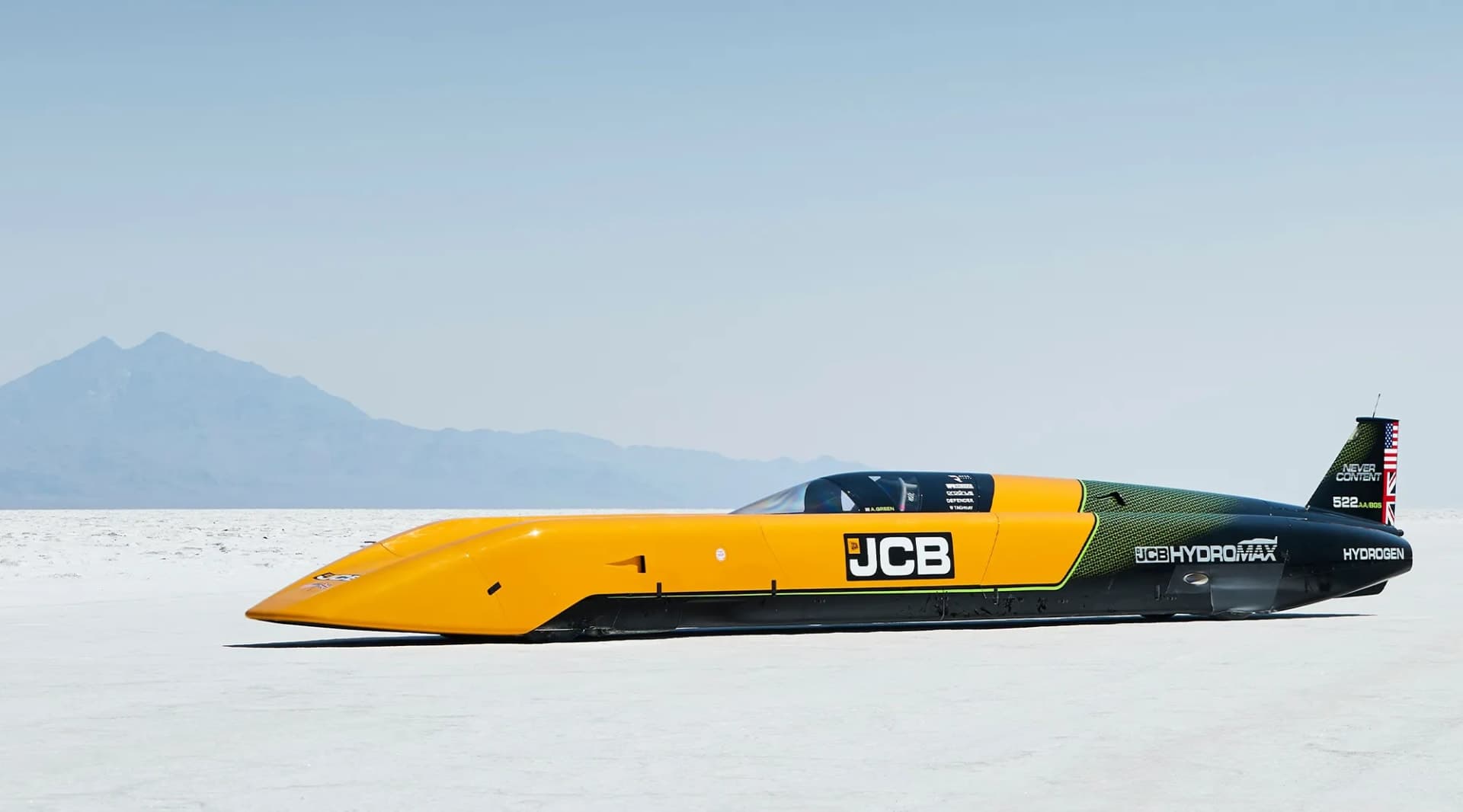
JCB, the British firm best known for yellow diggers, has just set a speed record at the Bonneville Salt Flats, and the interesting part is not the number, striking as it is. It is what was under the bodywork. The Hydromax streamliner hit 368.347 mph, roughly 593 km/h, powered not by a battery and not by a hydrogen fuel cell, but by a piston engine burning hydrogen. The internal combustion engine, it turns out, is not dead. JCB has just put it on a different diet.
What actually happened at Bonneville
The run took place during Bonneville Speed Week and was ratified by the Southern California Timing Association, making the roughly 9.75-metre Hydromax the first hydrogen-engine car to set a US speed record. The powertrain is a hydrogen combustion engine producing 800 hp, uprated by engineering firm Ricardo from a JCB production unit that started life making just 75 hp, then lightened by 100 kg and re-engineered to sit horizontally for a lower, slipperier body. Prodrive handled the aerodynamics and the high-altitude, high-temperature engineering. It is only the start: the team plans to chase the FIA world record for the fastest hydrogen-engine vehicle the following week.
Hydrogen, but not the hydrogen you were promised
This is the distinction that matters. When people say hydrogen car, they usually mean a fuel cell, the quiet, electric-like technology behind the Toyota Mirai that has largely stalled for passenger cars. The Hydromax does something different and, for enthusiasts, far more appealing: it burns hydrogen inside a conventional piston engine. That means it still makes noise, keeps mechanical character, can be built on existing engine production lines, and emits mostly water vapour rather than carbon dioxide. Hydrogen combustion is the scrappier, cheaper cousin of the fuel cell, and it just went 593 km/h.
Why a construction giant is chasing land-speed records
The obvious question is why a company that sells diggers and telehandlers is at a salt flat at all. The answer is that JCB is one of the biggest believers in hydrogen combustion as a way to decarbonise off-highway machinery, the diggers, generators and loaders where batteries are too heavy and too slow to recharge, and fuel cells too delicate and expensive for a muddy building site. It has poured serious money into hydrogen engines for exactly that world. The Hydromax is not really a car project; it is a rolling billboard, a headline-grabbing way to prove that JCB's industrial hydrogen engine works, and works spectacularly.
The engine is not dying. It is changing its diet
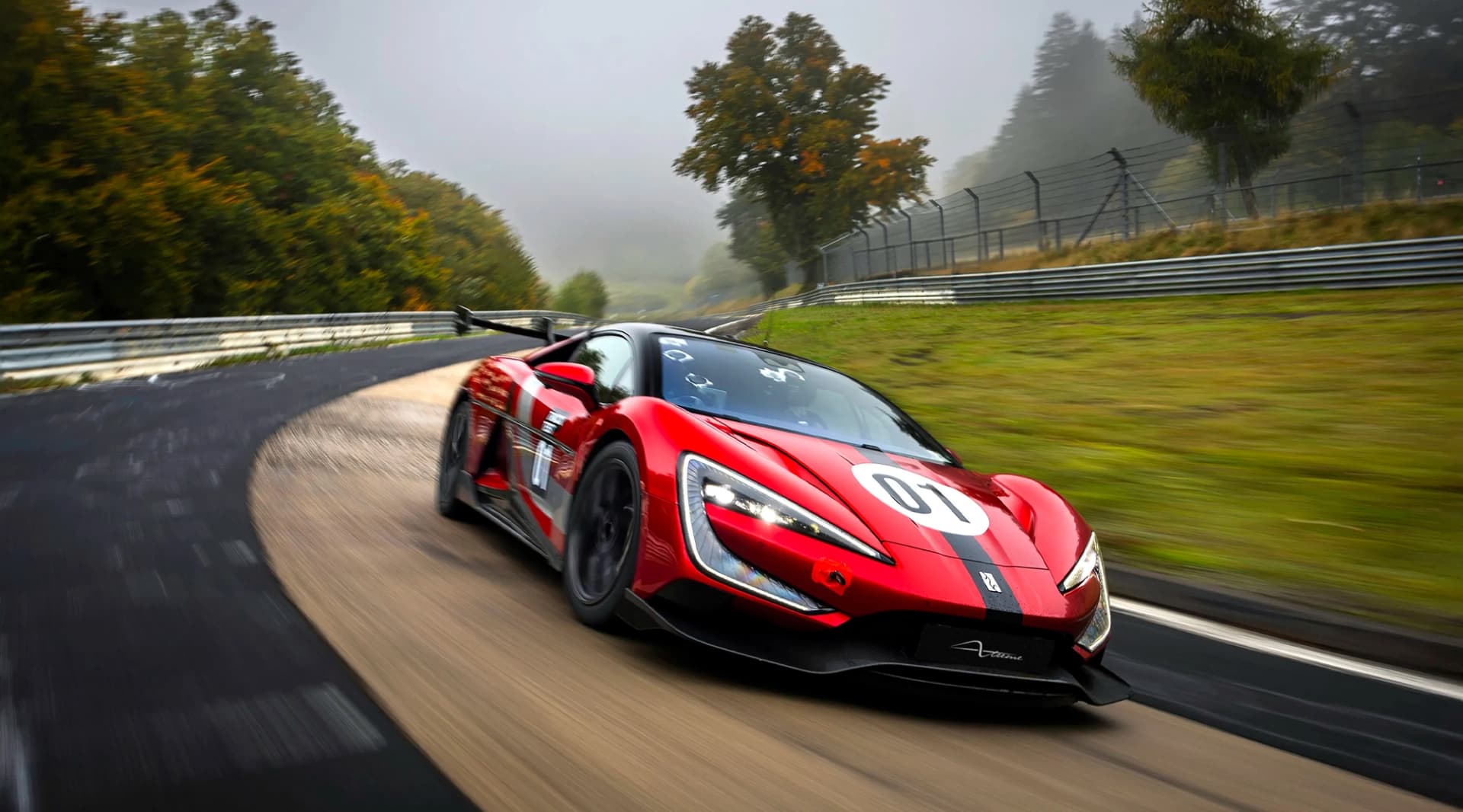
Step back and the Hydromax joins a broader fight to keep the internal combustion engine alive in a decarbonising world, just fed on something other than petrol. It sits alongside Ferrari making a biofuel case for keeping the V12 and the wider e-fuel movement, even as Porsche hedges on whether petrol survives at all. It is a very different vision of fast-and-clean from the electric top-speed arms race, where BYD's Yangwang U9 Xtreme is chasing 500 km/h on batteries. Two philosophies, one salt flat's worth of ambition: keep the engine and change the fuel, or bin the engine altogether.
AutoNext Take
Treated as a stunt, 593 km/h on hydrogen is a great one, and worth enjoying on its own terms. But the reason it matters is who set it and why. A digger company burning hydrogen faster than most supercars will ever travel is making a serious argument that the combustion engine has a decarbonised future, just not necessarily in the passenger cars everyone obsesses over. It might live on instead in the machines that build roads, dig foundations and keep sites running, where nothing else fits as neatly.
Whether hydrogen combustion scales, and whether the fuel ever gets cheap and clean enough to matter at volume, is genuinely unproven, and it would be wrong to pretend otherwise. But as a statement of intent it is hard to ignore, and frankly more interesting than another battery going quickly in a straight line. The engine has spent a decade being written off. JCB just drove its obituary to 593 km/h. Watch the FIA attempt next week.