Kia's 800-volt PV7 charges in 25 minutes and reaches Europe in 2027
Kia brought 800 volts to Hannover, and a 96.2 kWh battery that needs them
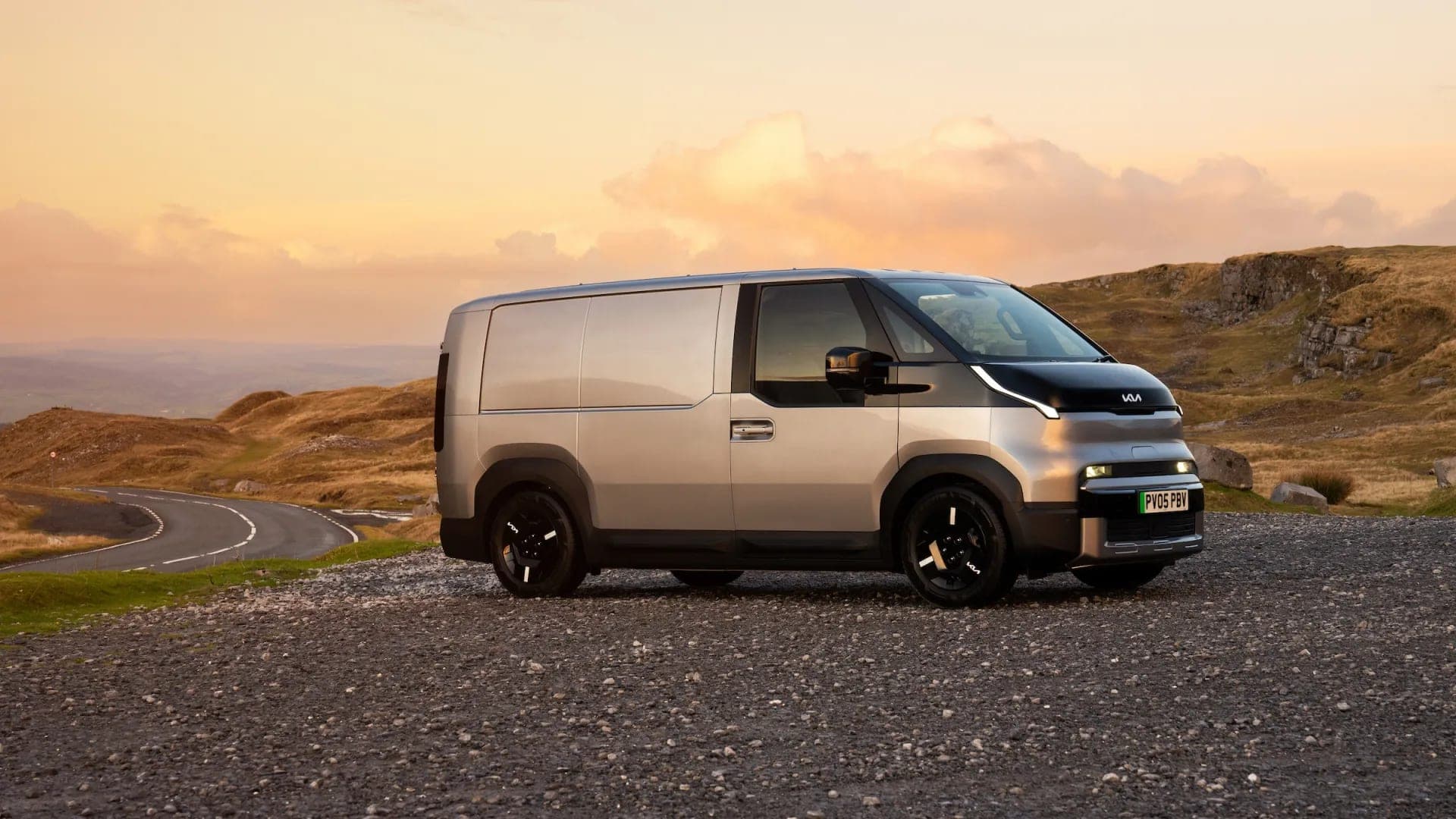
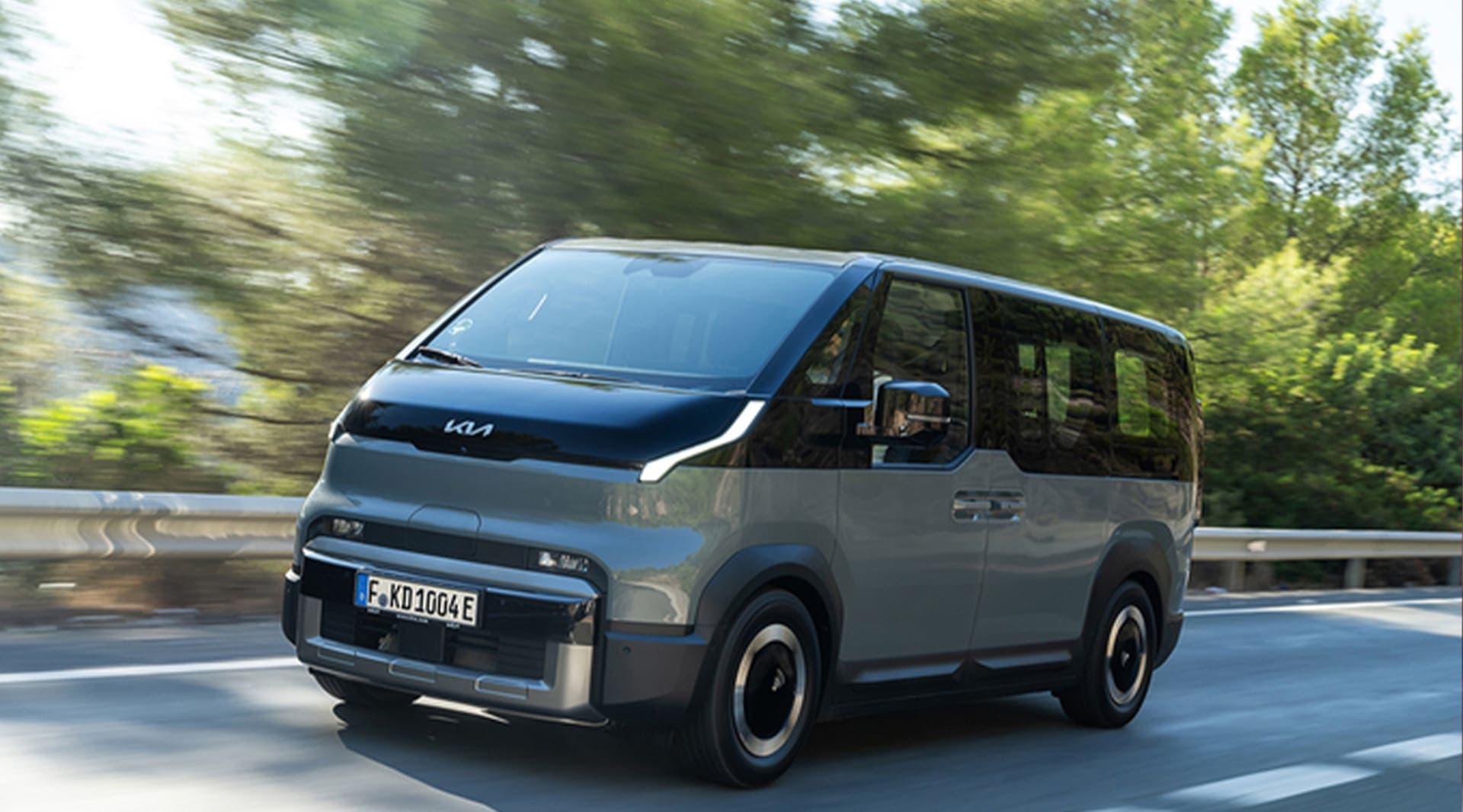
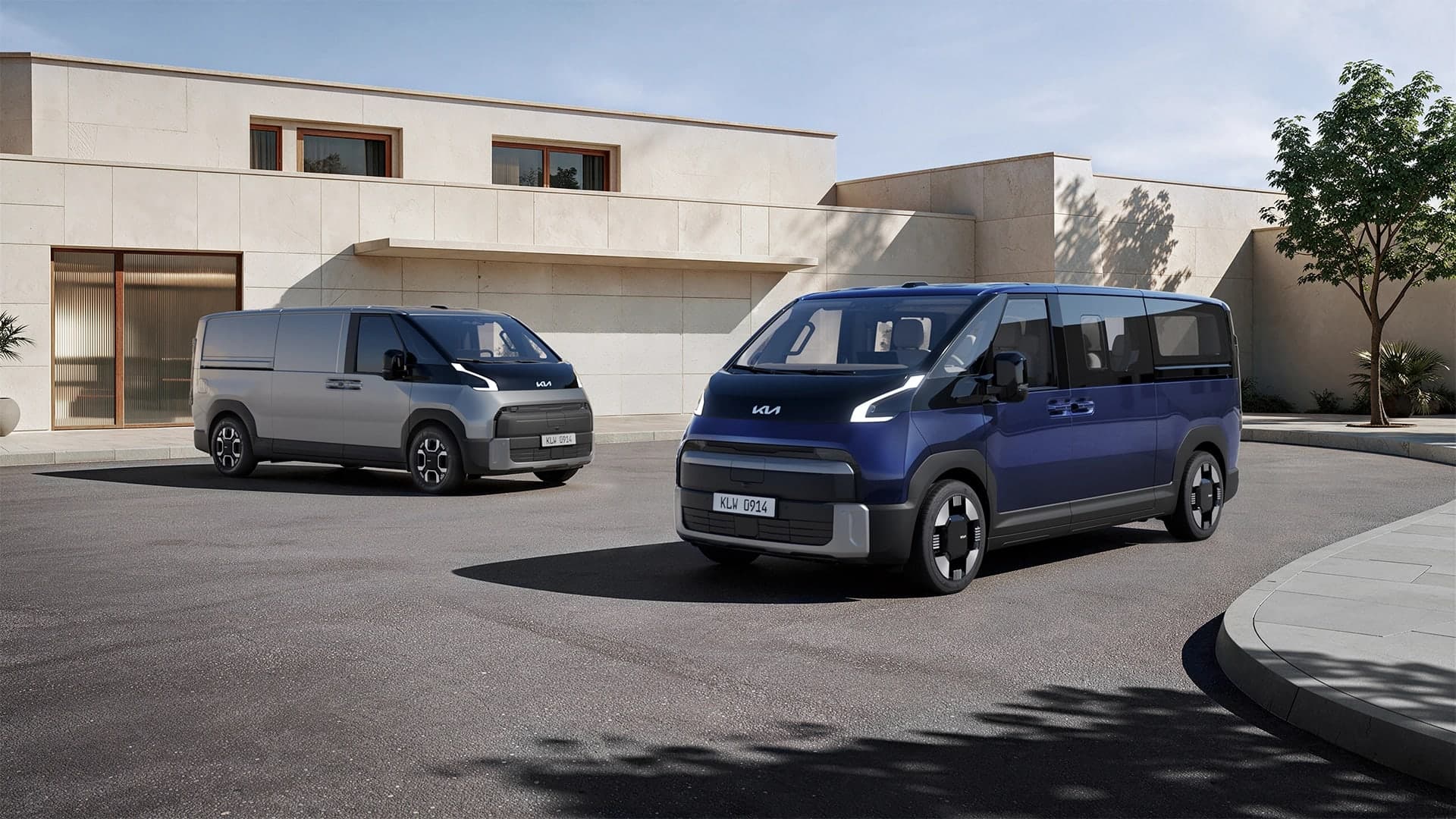
The production Kia PV7 stood on the IAA Transportation stand in Hannover on Monday with the one figure its two-week teaser had withheld: 800 volts. The system the PV5 does without runs a 96.2 kWh battery, a 200 kW motor rated at 272 hp, 350 kW DC charging and a 25-minute stop from 10 to 80 percent. Europe gets the van, as a Cargo and a nine-seat Passenger, in the second half of 2027.
350 kW charging refills the 96.2 kWh pack from 10 to 80 percent in 25 minutes
Kia's preliminary figure for the 96.2 kWh PV7 is 25 minutes from 10 to 80 percent on a 350 kW charger. That is 67 kWh in 25 minutes, an average of about 160 kW. The useful comparison is the PV5, whose 71.2 kWh battery takes about 30 minutes for the same 10 to 80 percent at 400 volts, roughly 100 kW on average. The PV7 puts 35 percent more energy into its battery and does it five minutes faster. The AC/DC socket stays in the nose; the rear flap in the teaser is an optional second AC port. Vehicle-to-load runs at up to 9.2 kW, enough to run tools on a site with no supply.
272 hp, 420 Nm and 460 km WLTP for the PV7 Cargo Long Range
Every launch PV7 uses one front-mounted motor, 200 kW for 272 hp and 420 Nm, with a choice of two NMC batteries, 71.5 or 96.2 kWh; all-wheel drive follows later. The only range Kia has quoted is the Cargo Long Range, at more than 460 km WLTP, about 21 kWh per 100 km from the bigger pack. The PV5's 71.2 kWh battery is rated at up to 416 km, so the PV7 buys 44 km with 25 kWh more battery in a body 655 mm longer. There is no figure yet for the 71.5 kWh van or for the Passenger.
5,350 mm long, three Euro pallets and 1,165 kg of payload in the Cargo Long
The launch body is 5,350 mm long on a 3,500 mm wheelbase, 655 mm longer than a PV5 and almost 400 mm longer than a long-wheelbase ID. Buzz. The Cargo Long takes 6.1 m³ and three Euro pallets over a 550 mm loading sill, with 1,165 kg of payload; the coming High Roof takes 8 m³ and the Compact carries 1,200 kg. Barn doors or a tailgate, a bulkhead that lets long items slide under the passenger seat and a powered sliding door that closes itself when the driver walks off with the key are on the list. The Ford E-Transit Custom the PV7 is aimed at carries a 64 kWh battery, two thirds of the Kia's larger pack.
Nine seats in Europe, eleven in Korea, next to a Staria Electric already on sale
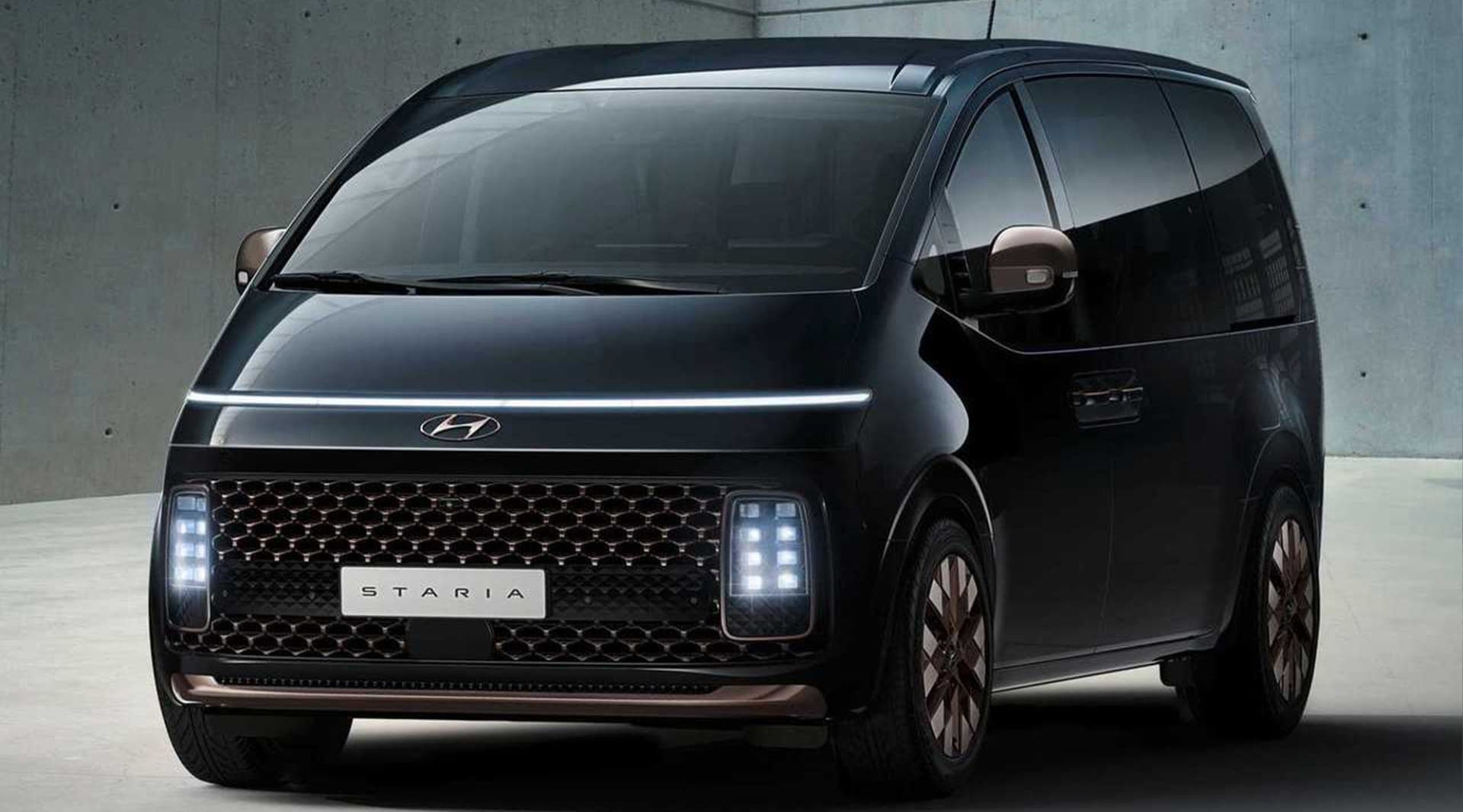
The PV7 Passenger comes with seven, nine or eleven seats in three or four rows, and the eleven-seater stays in Korea. The seven-seat layout puts its rear seats on long floor rails so they slide, swivel or lift out, and the rear rows get their own climate controls and 100 W USB-C ports. The awkward neighbour is in Kia's own group. Hyundai's Staria Electric already seats nine on an 84 kWh battery and an 800-volt system of its own, with 430 km WLTP, a 20-minute charge from 10 to 80 percent and a €57,450 German price, and it is on sale now. A PV7 Passenger will arrive a year later with 12 kWh more battery and no range figure yet.
Europe and Korea get the PV7 in the second half of 2027, the PV9 in 2029
Kia will put the PV7 Cargo and Passenger on sale in Korea and Europe in the second half of 2027, and final European specifications and prices are promised before the end of this year. The line-up eventually runs to 23 variants, including a chassis cab and a shorter body to close the gap to the PV5, and the larger PV9 follows in 2029. A 12.9 or 14.6-inch touchscreen runs Pleos Connect on Android Automotive, with physical buttons kept under the screen. The PV5 took 37 percent of Europe's small electric van market in the first half of 2026, and the PV7 is being asked to repeat that in a class where the E-Transit Custom will have been on sale for three years by the time it arrives.
AutoNext Take
Two weeks ago the open question on the PV7 was voltage, and 800 volts turns out to buy a shorter stop with a bigger battery, not a short stop. Twenty-five minutes for 67 kWh is an average of 160 kW, less than half the figure on the stand, and it only happens at a 350 kW public charger the van will see on the odd long day. At the 50 to 150 kW depot chargers where one-tonne vans spend their nights, 800 volts changes nothing, because the charger sets the rate. What the architecture really does is let Kia fit 96.2 kWh without the PV7 standing at the plug longer than a PV5, a fair trade rather than a breakthrough.
Kia has promised European specifications and prices before the end of 2026, and the line to read first is the nine-seat Passenger's WLTP range. Hyundai's Staria Electric gets 430 km from 84 kWh. If the PV7 Passenger cannot clear 480 km from 96.2 kWh, the extra 12 kWh went into carrying the van's own weight, and the Staria stays the smarter buy for a year after the Kia arrives.
Follow us on Google News.
Set AutoNext as your preferred source on Google Discover.