Lucid cuts production 38% to sell the cars it already built
Lucid built 2,376 more cars than it delivered this year, and Europe is next
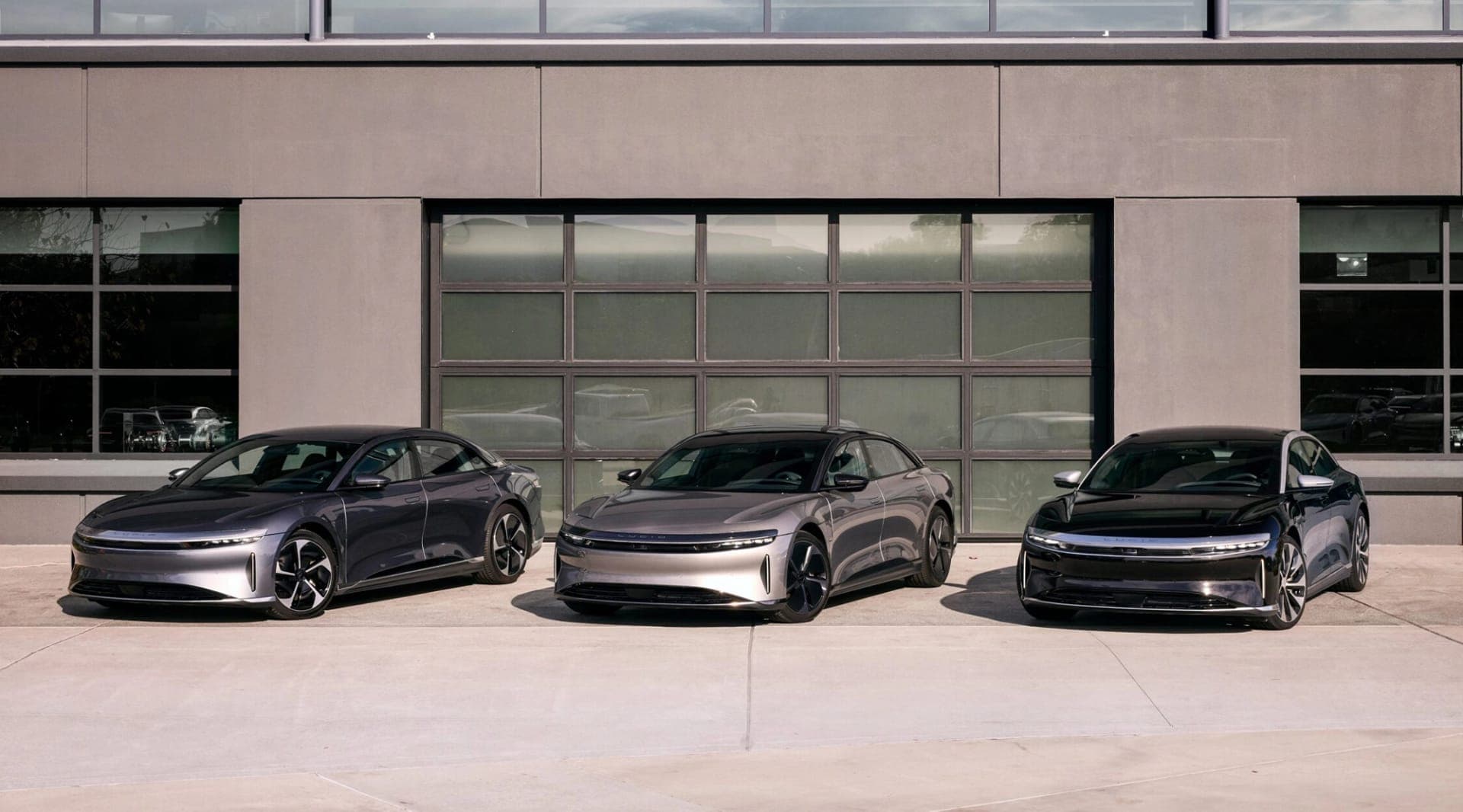
Lucid's third quarter of 2026 is the first this year in which it hands over more cars than it builds: 3,806 deliveries against 2,954 produced. Output falls 38 percent from the second quarter after the American EV maker cut a shift at its Arizona plant in June. Next week the Air and Gravity go on show to French buyers in Paris.
Lucid's Arizona plant built 2,954 cars on a single shift
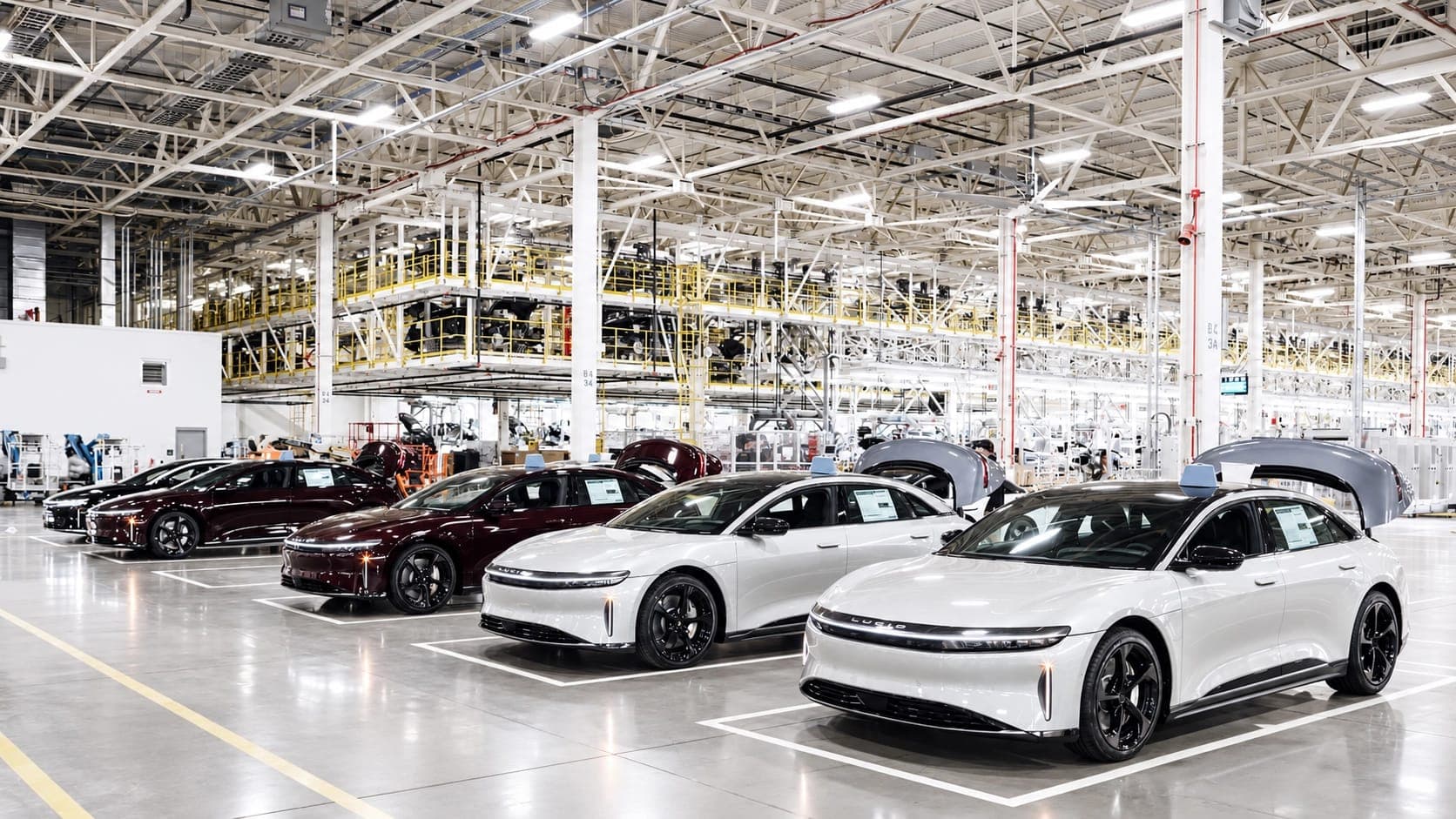
Lucid's Casa Grande factory in Arizona built 2,954 cars in the third quarter, down from 4,774 in the second and about 5,500 in the first. The fall is deliberate. In June the company dropped the plant's second shift, laid off 18 percent of its staff and withdrew its target of 25,000 to 27,000 cars for 2026. The quarter is its lowest output since early 2025, and a long way from the roughly 7,900 cars it built in the final three months of last year, when it was still producing for demand that had not arrived.
Lucid deliveries slip 7% from a year ago to 3,806
Lucid delivered 3,806 cars between July and September, 4 percent fewer than the 3,953 of the second quarter and 7 percent fewer than the 4,078 of a year earlier. That comparison overstates the slide, because the third quarter of 2025 was when American buyers rushed to claim the federal EV tax credit before it expired on 30 September 2025. Across the first nine months, deliveries are up 3.4 percent at 10,852. Lucid says demand for the Gravity 'continued to regain momentum' after a seat problem halted deliveries of the SUV for close to a month earlier in the year.
Lucid's $1.4 billion cash plan leans on a 2,376-car surplus
Lucid has built 13,228 cars this year and delivered 10,852, a gap of 2,376 that opened almost entirely in the first half, when production ran 3,228 cars ahead of deliveries. Closing it sits at the heart of the operational reset chief executive Silvio Napoli announced in August, which targets $1.4 billion of cash-flow improvement in 2026. Between $600 million and $800 million of that is meant to come from inventory, about $500 million from lower capital spending and around $200 million from operating costs. Full third-quarter results follow on 9 November.
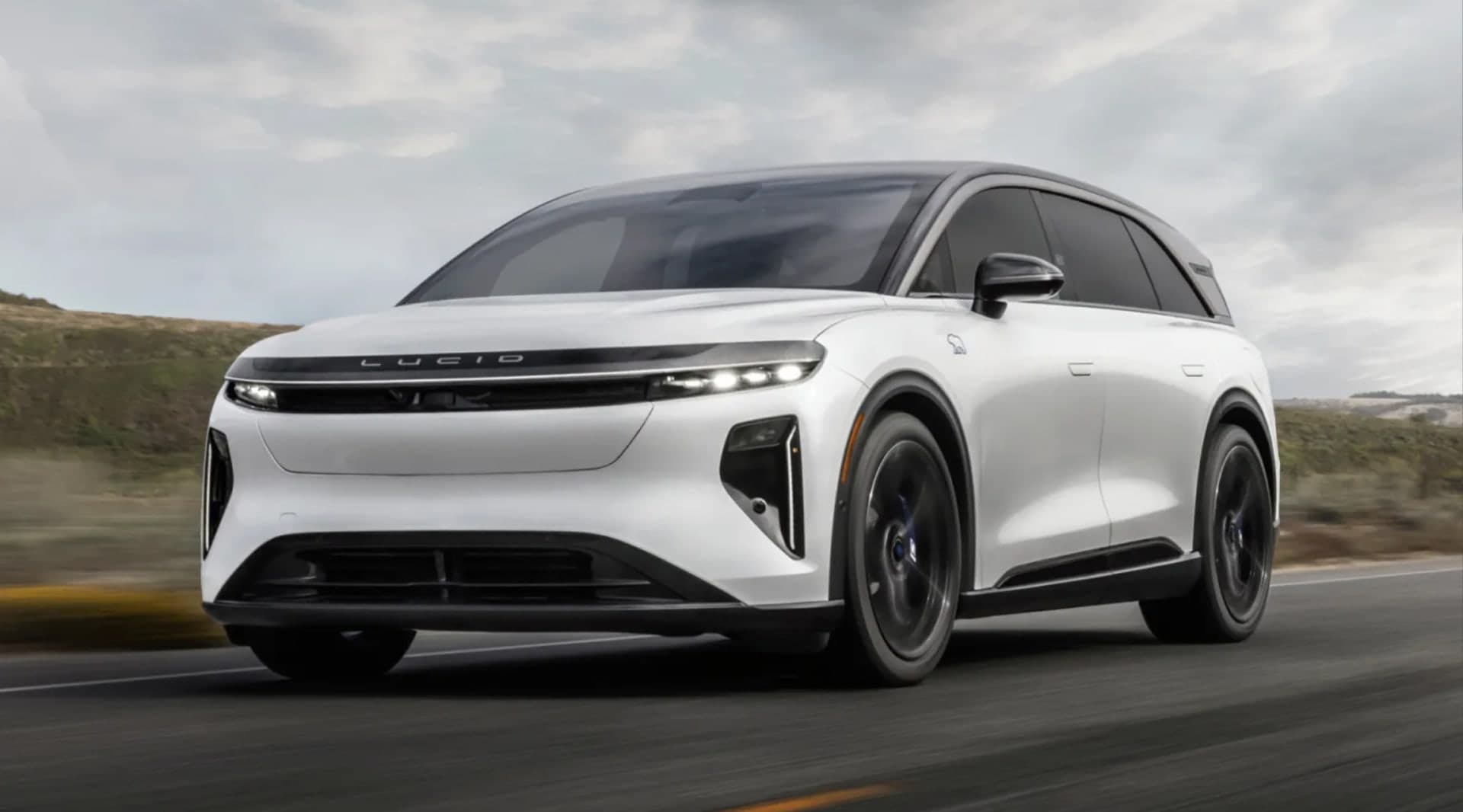
Lucid's Gravity meets French buyers at the Paris Motor Show from €97,900
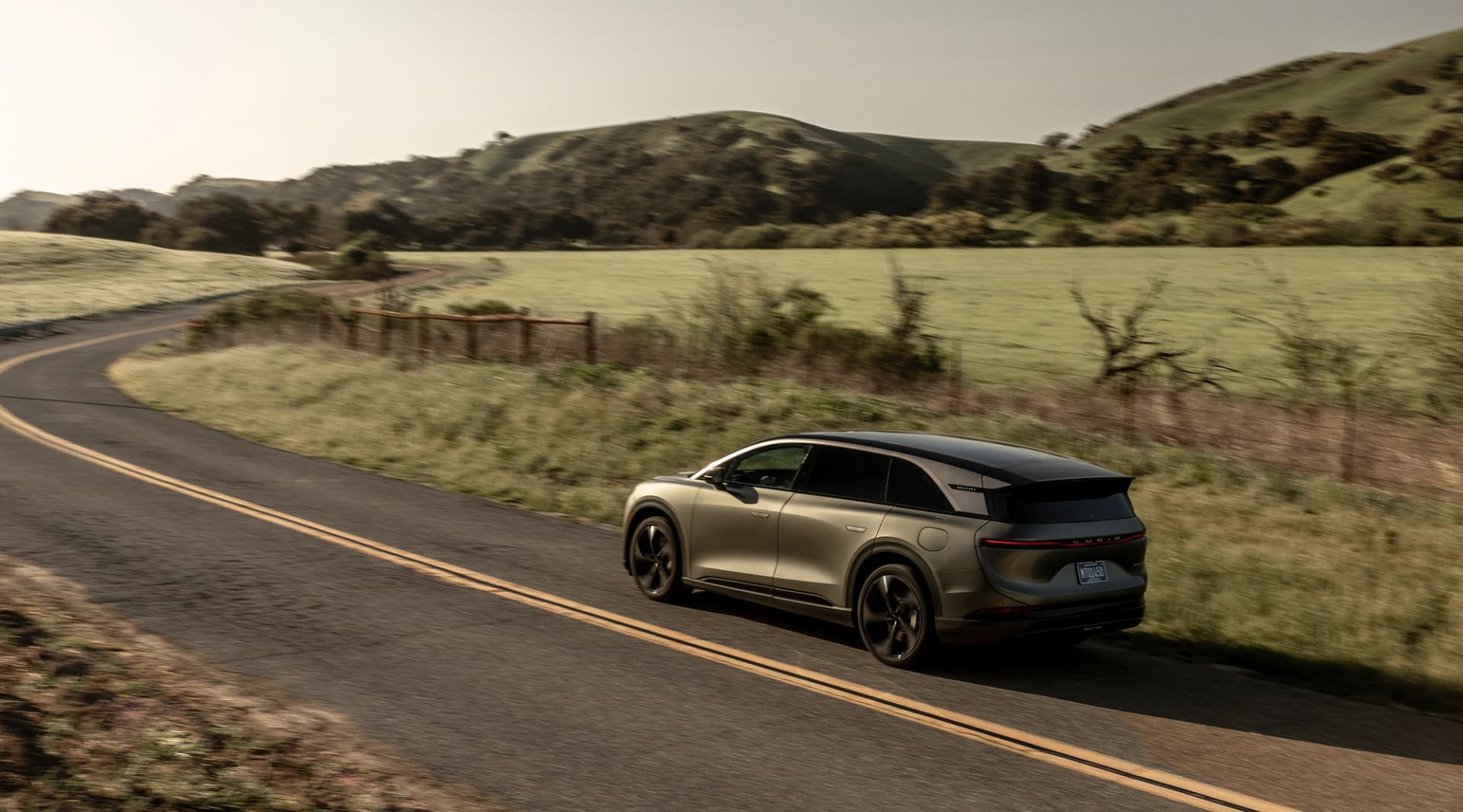
Lucid shows the Air and Gravity to French buyers for the first time at the Paris Motor Show, which opens on 12 October. Lucid keeps its own import company there, with Emil Frey France running operations behind it. In the Netherlands, Munsterhuis now sells the cars in Hengelo alongside Lucid's studio in Hilversum, after a similar deal with Wackenhut in Germany. The European Gravity range opens with the 568 hp Touring, rated at 545 km WLTP, from €97,900, while the 839 hp Grand Touring stretches to 739 km.
Lucid's mid-size Cosmos waits until late 2027, so two models carry the brand
Lucid's cheaper mid-size model, the Cosmos, is now due in the second half of 2027, which leaves the Air saloon and the Gravity SUV to carry the brand for at least another year. The robotaxi deals arrive later still: Uber has committed to at least 35,000 Lucids, and Bolt wants 25,000 for Europe with a first batch from 2028. Those orders will help fill Lucid's planned Saudi plant, but they will not add a single delivery in 2026. Until then, volume rests on two expensive cars and on new markets such as France.
AutoNext Take
Building fewer cars than it sells is the most disciplined thing Lucid has done this year. A company that posted an adjusted EBITDA loss of $901 million in the second quarter gains nothing from filling car parks in Arizona, and the third quarter shows the cut working: 852 cars out of the surplus in three months, with deliveries holding close to 4,000 on one shift. That is a smaller Lucid, not a failing one, and Europe's new showrooms give those cars somewhere to go.
If Lucid keeps clearing 852 cars a quarter, the surplus drops below 1,000 by the time it reports first-quarter 2027 deliveries in April. France and the Netherlands should make that pace easier to hold. Should the gap still be above 2,000 when the fourth-quarter figures arrive in January, the reset will have shrunk the factory faster than it found buyers, and a second shift will stay a conversation for 2028.