Porsche patented a manual gearbox with nothing behind the clutch pedal
Porsche's answer to the hybrid manual problem is an interface, not a gearbox
Porsche has filed a patent for a dual-clutch transmission that can be driven as a full automatic, as a paddle-shift sequential, or as a manual with a working clutch pedal and an H-pattern gate. Nothing in that third mode is mechanically connected to the gearbox. The filing was published at the European Patent Office on 20 September, and it explicitly covers hybrids.
Filing DE102025109563A1 gives one gearbox three driving modes
The patent describes a dual-clutch automatic with three selectable configurations. The first behaves like any modern automatic, asking nothing of the driver beyond Drive, Reverse, Neutral and the accelerator. The second unlocks sequential shifts through the paddles or the lever, which most dual-clutch cars already offer. The third converts the monostable gear selector into a multi-stable one, so the lever stays where the driver puts it instead of springing back to centre, and brings the third pedal into use. It expands an earlier Porsche filing for a shift-by-wire selector, which covered the lever but not the clutch.
Porsche says the system suits combustion and hybrid cars
The filing states the technology can be applied to a combustion car or a hybrid, and the hybrid half is what makes it more than a curiosity. In August, Porsche Cars North America chief executive Timo Resch said the 911's T-Hybrid and the manual gearbox "are not compatible", because one electric motor sits inside the PDK housing, and he added that he would not be surprised if engineers eventually found a way round it. A by-wire clutch is a way round it, and a notably cheap one. Porsche would not have to build a new transmission at all. It would change what the driver touches and leave the hardware alone.
Ferrari already sells this for €590,000, in 1,499 cars
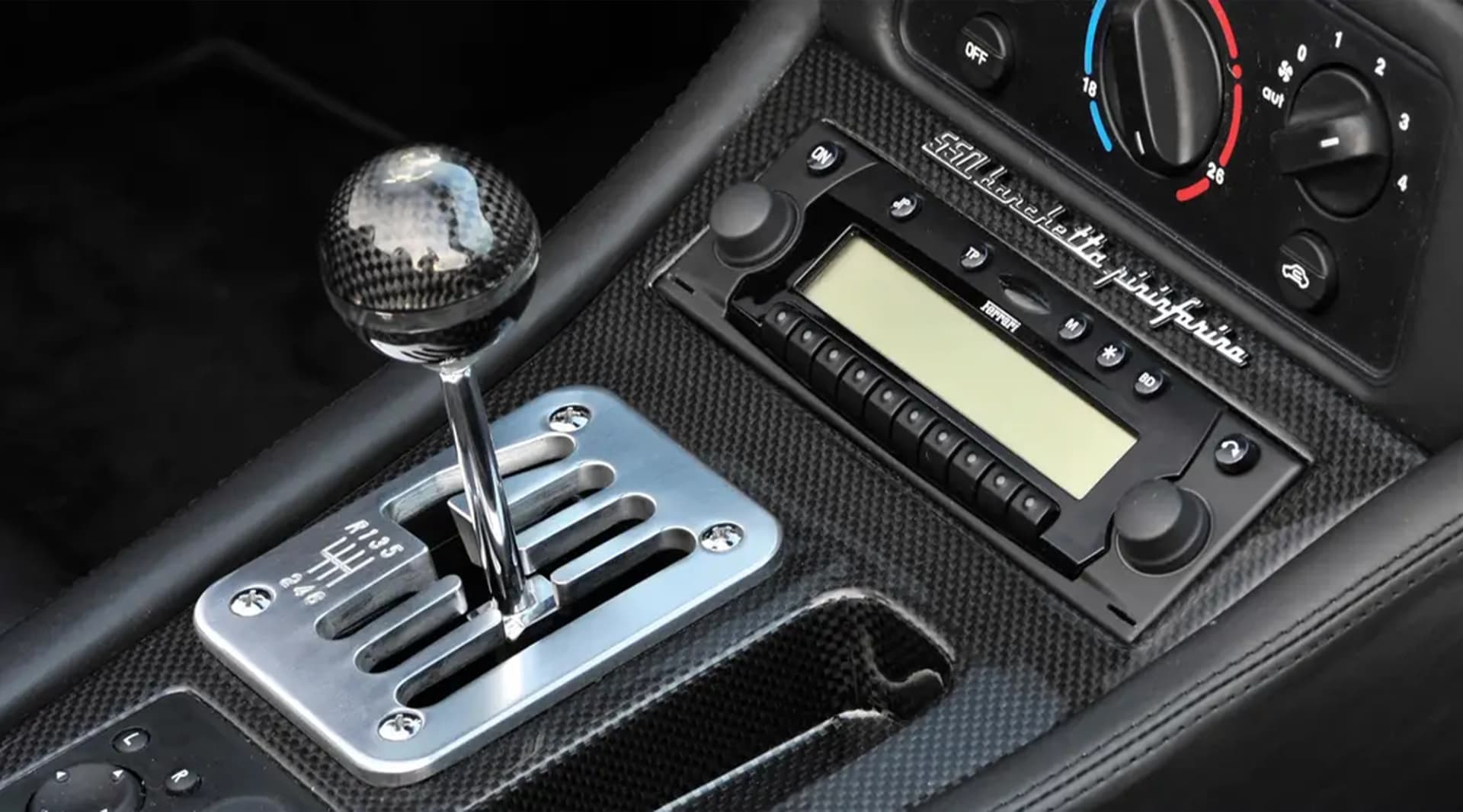
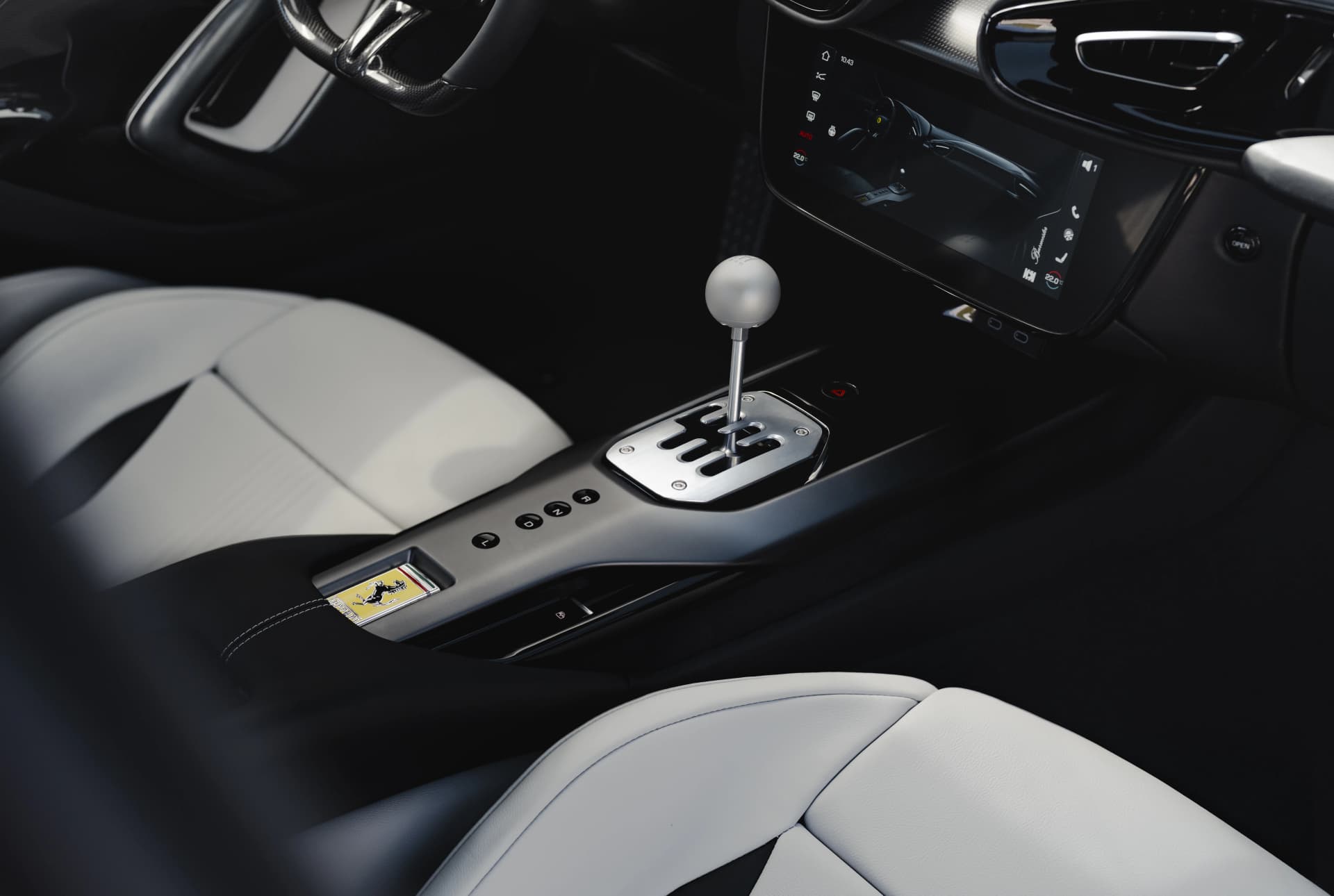
The production proof exists and it is expensive. Ferrari's 12Cilindri Manuale has a real clutch pedal and a real gated lever with no mechanical link to anything: Hall-effect sensors read the lever, a stroke sensor reads the clutch, and the driver shifts the first six ratios of the same eight-speed dual-clutch gearbox fitted to the standard car. Ferrari deliberately built it to punish poor technique, so it jolts, bucks and stalls. Production is capped at 1,499 units, a number chosen for the 1,499cc of Ferrari's first V12 in 1947, at €590,000 in Italy before options. Ferrari patented the interface before it built the car.
Hyundai's Ioniq 5 N has faked a gearbox since 2024
Porsche is late to this, and the cheapest version of the idea has been in showrooms for two years. Hyundai's Ioniq 5 N ships with N e-Shift, which simulates an eight-speed dual-clutch by cutting and restoring motor torque in deliberate stumbles, using paddles the car already carried for brake regeneration. There is no clutch pedal and no way to get it wrong. Koenigsegg sits at the far end of the same idea: its Light Speed Transmission holds a nine-speed automatic and a six-speed manual inside one casing, with a clutch pedal that is genuinely doing something. Porsche's patent lands nearer Koenigsegg than Hyundai.
Porsche still builds seven manual 911s, one of them a GT3
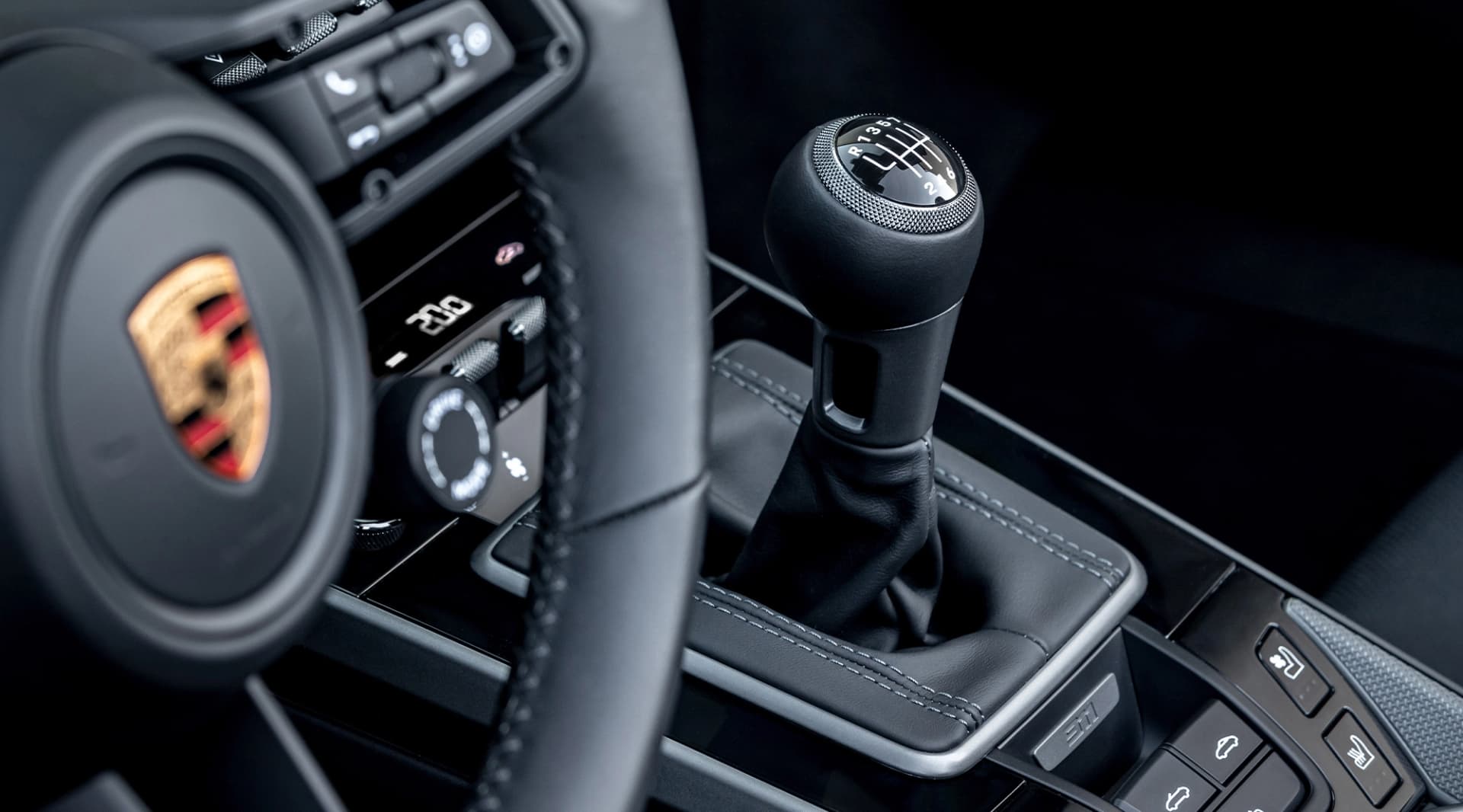
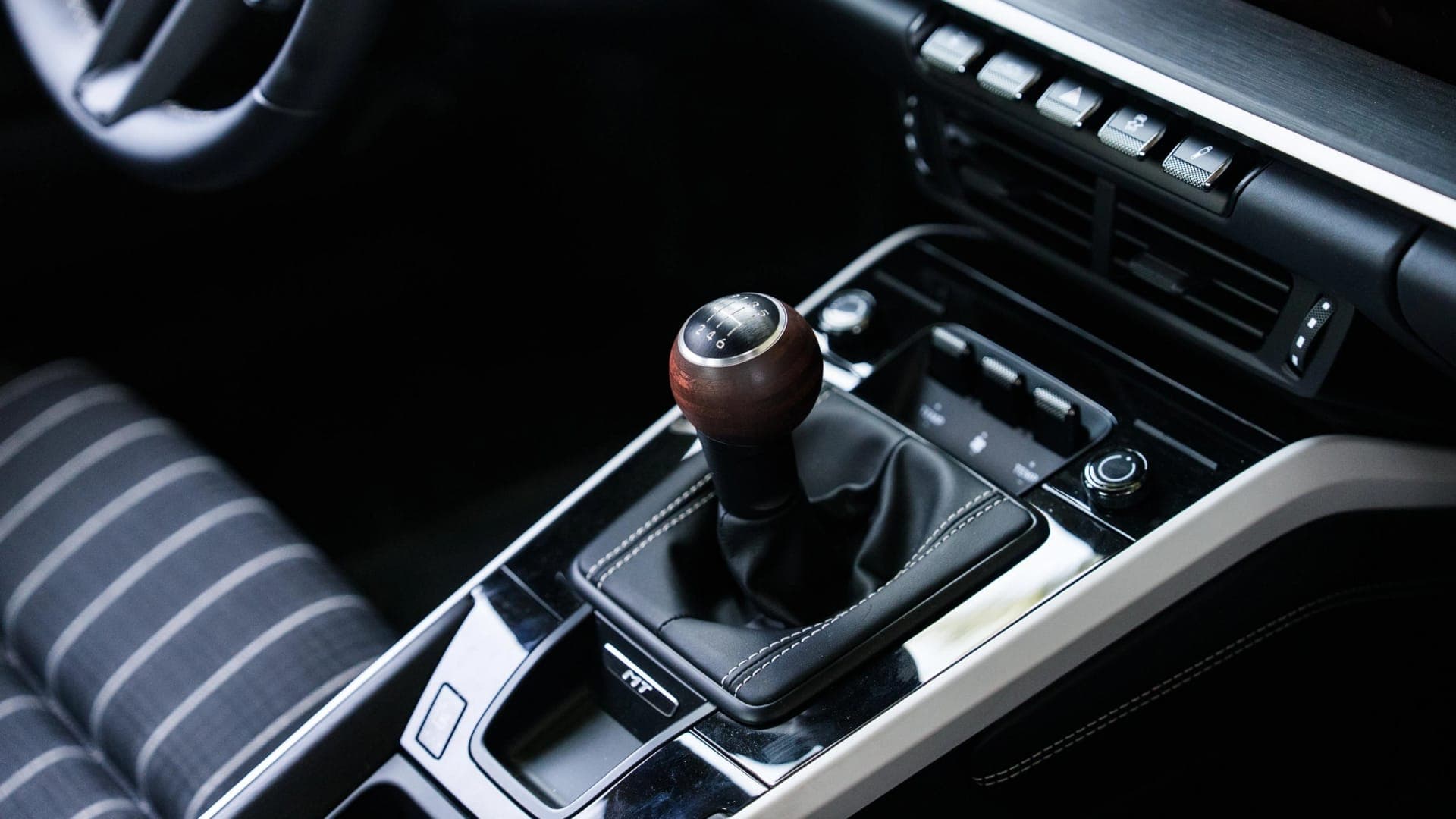
None of this replaces the real thing yet. Porsche's manual line-up runs to seven configurations, covering the Carrera S coupe and cabriolet, the Carrera T in both bodies, and the GT3 as coupe and Touring, and around 80 percent of GT3 Touring buyers order the stick. The six-speed manual returned to the 2027 Carrera S with roughly 480 hp as a North American option, and Porsche has promised to keep selling three-pedal cars for as long as it is legally allowed. This patent is what happens once that promise runs out.
AutoNext Take
Three companies have now built a manual with nothing behind the clutch, and only one of them lets you fail. Ferrari's Manuale jolts, bucks and stalls on purpose, which is the entire point: a gearbox that cannot punish you is a costume rather than a transmission. Hyundai's e-Shift asks nothing of the driver, because paddles fitted for brake regeneration cannot be fluffed or missed. Porsche's filing lands on the right side of that line, since a multi-stable lever and a working third pedal are only worth the engineering if getting them wrong costs you something. Credit where it is due: this is the least cynical version of the idea anyone has drawn, and an interface is cheap enough to reach a Cayman instead of a 1,499-car halo.
Porsche has committed to nothing, which is why the hybrid line in the filing is the part to watch. The company spent August promising manuals until the law ends them, while its own T-Hybrid had already ended them without any help from a regulator. If the next hybrid 911 arrives with three pedals and a gearbox that can stall, Porsche will have kept the thing it said legislators would take away. If it arrives with two, the filing was insurance.