Renault E-Space concept puts six equal seats on one flat floor
Forty-two years after the first Espace, Renault draws a one-box family car again
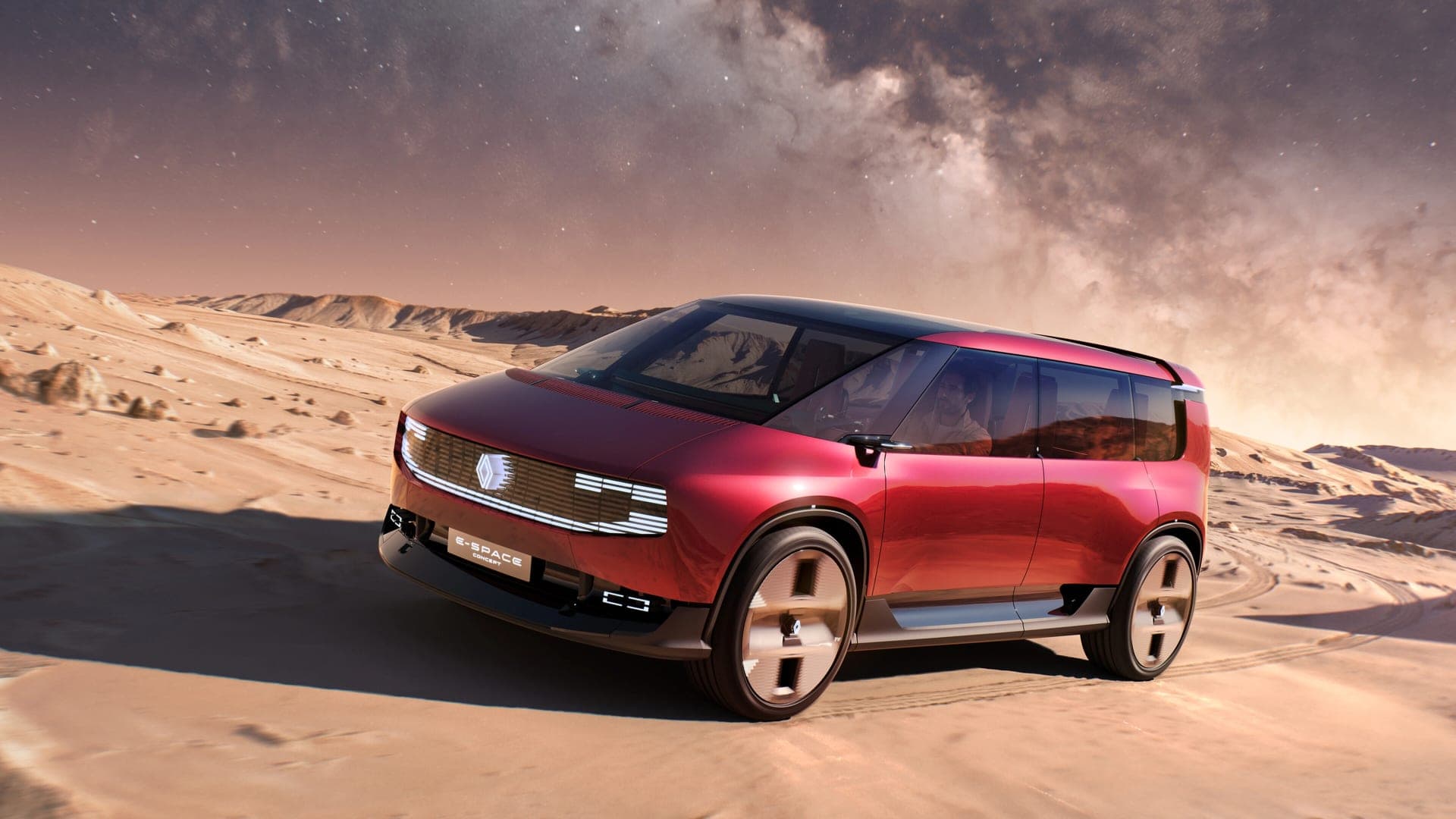
Renault has released the details of its E-Space concept ahead of the car's world premiere at the Paris Motor Show on 12 October. The electric one-box is 4.70 metres long, seats six on a completely flat floor and borrows the shape of the 1984 Espace, the people carrier Renault itself turned into an SUV in 2023. Renault says no production version is planned.
Renault E-Space measures 4.70 m long, 2.02 m wide and 1.67 m tall
The E-Space is 4.70 metres long, 2.02 metres wide and 1.67 metres high, and its 23-inch wheels sit at the four corners of the body. The length is about 45 centimetres more than the first Espace and almost exactly the 4.72 metres of today's Espace SUV, but the shape is the opposite: low ground clearance, a low beltline and a windscreen that runs straight on from a bonnet that barely exists. A U-shaped light strip traces the front and rear around a floating illuminated diamond, on bodywork painted black rubé.
Six identical E-Space seats sit in three rows on a flat floor
Inside are six individual seats in three rows, all the same size and design, on a completely flat floor. They rotate slightly to make getting in easier, and some layouts turn the cabin into a lounge around a large table. That is the 1984 idea taken further. When Matra's design reached Renault, Renault's main demand was an entirely flat floor behind the front seats, which made the original's removable seats possible. The first Espace found only nine buyers in its first month in July 1984, then defined a European class.
OpenR Panorama, a 1,130 mm screen, is the E-Space part heading for production
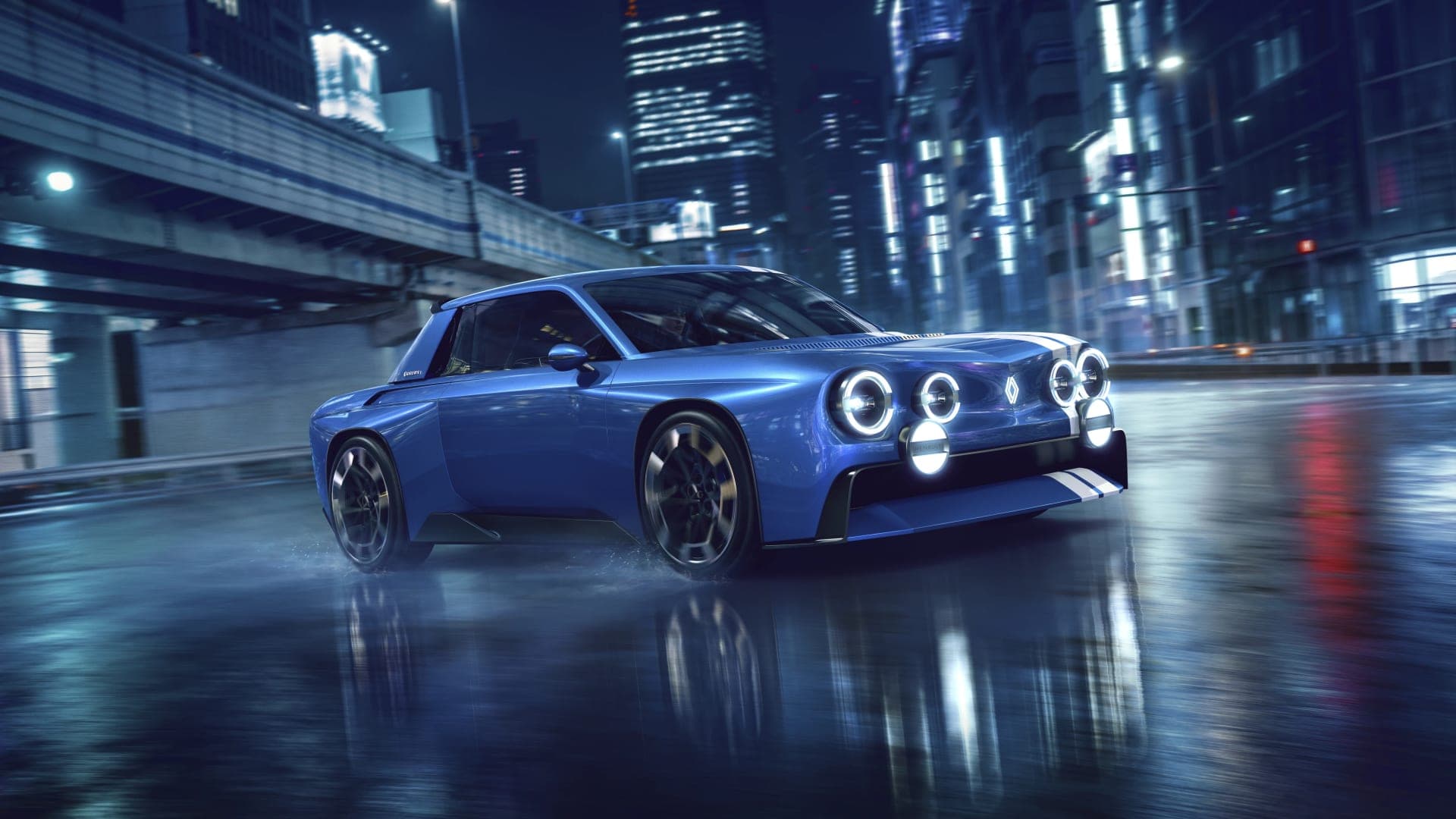
Renault has committed to building one part of the E-Space: its dashboard. OpenR Panorama is a curved display spanning the full width of the cabin, 1,130 mm wide and 110 mm tall, and Renault says it will appear in its future upper-range electric models. The car itself is a different matter, because Renault states there are currently no plans for a production version. In Paris it stands beside the 8 Gordini concept, a 270 hp two-seater Renault has also ruled out building, and the Renault 4 JP4x4 concept.
Ford, Volkswagen and Renault left the large MPV class by 2023
Volkswagen ended Sharan production in Portugal in October 2022, and Ford stopped building the S-Max and Galaxy in April 2023 with no successor. Renault replaced the fifth-generation Espace, the last one shaped like a people carrier, with a seven-seat version of the Austral SUV in 2023. Seat had already dropped the Alhambra, the Sharan's twin. The segment the Espace founded in Europe was emptied by its own pioneers, who moved families into SUVs that carry seven seats on a higher floor with less glass. The E-Space is the first time one of them has even drawn the way back.
Kia's PV5 and the Volkswagen ID. Buzz show one-box EVs sell
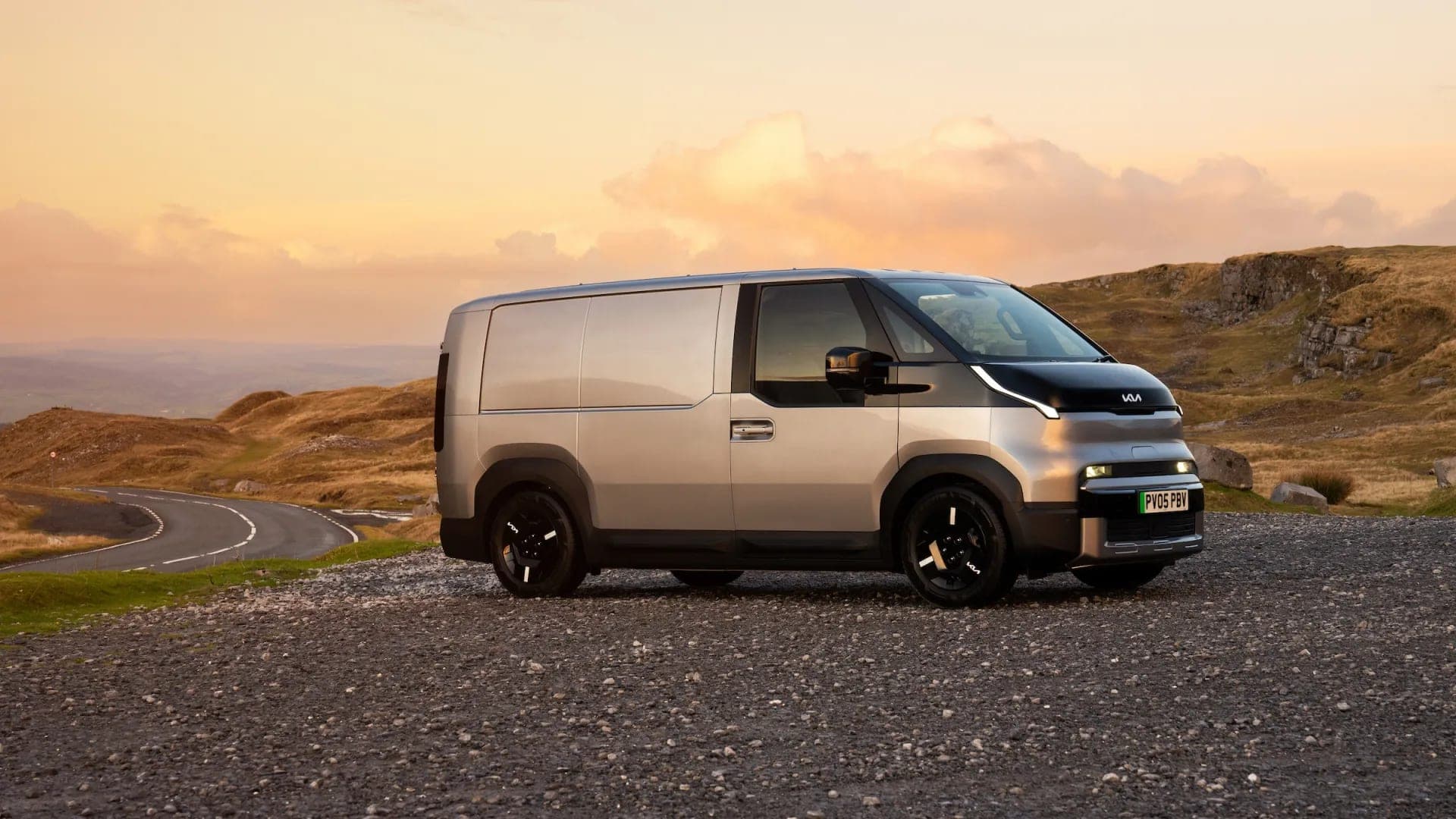
Kia's PV5 took 37 percent of Europe's small electric van market in the first half of 2026, with 13,116 units, and its passenger version is the same length as the E-Space. The Volkswagen ID. Buzz, 4.71 metres in short-wheelbase form, has turned a van platform into a premium family car. Both sit on dedicated electric platforms with a flat floor, which is exactly the packaging argument the Espace made in 1984 with a combustion engine in the way. The one-box shape has come back through vans. Renault has now drawn the way back through a car.
AutoNext Take
An electric platform hands Renault, for free, the flat floor it had to insist on in 1984. With no engine to package and no transmission tunnel to hide, the one-box shape stops being a compromise around a combustion layout and becomes the most efficient way to fill 4.7 metres with people, which is why Kia and Volkswagen reached it from the van side. Renault is the one maker with both the name and the history to sell that idea to car buyers rather than to fleets, and the E-Space looks like a company that knows it.
Renault says it has no plans to build the E-Space, and that answer should not survive the show. The OpenR Panorama screen is already promised to its future upper-range EVs, so part of this cabin is a product already, while a flat floor and six identical seats cost an electric platform almost nothing. If Renault's next large electric family car still arrives as an SUV by the end of 2028, it will have drawn the best answer to its own question and chosen not to sell it.