Belgian and Dutch Teslas finally get Grok, months after the rest of Europe
Your car can now argue with you about the fastest route
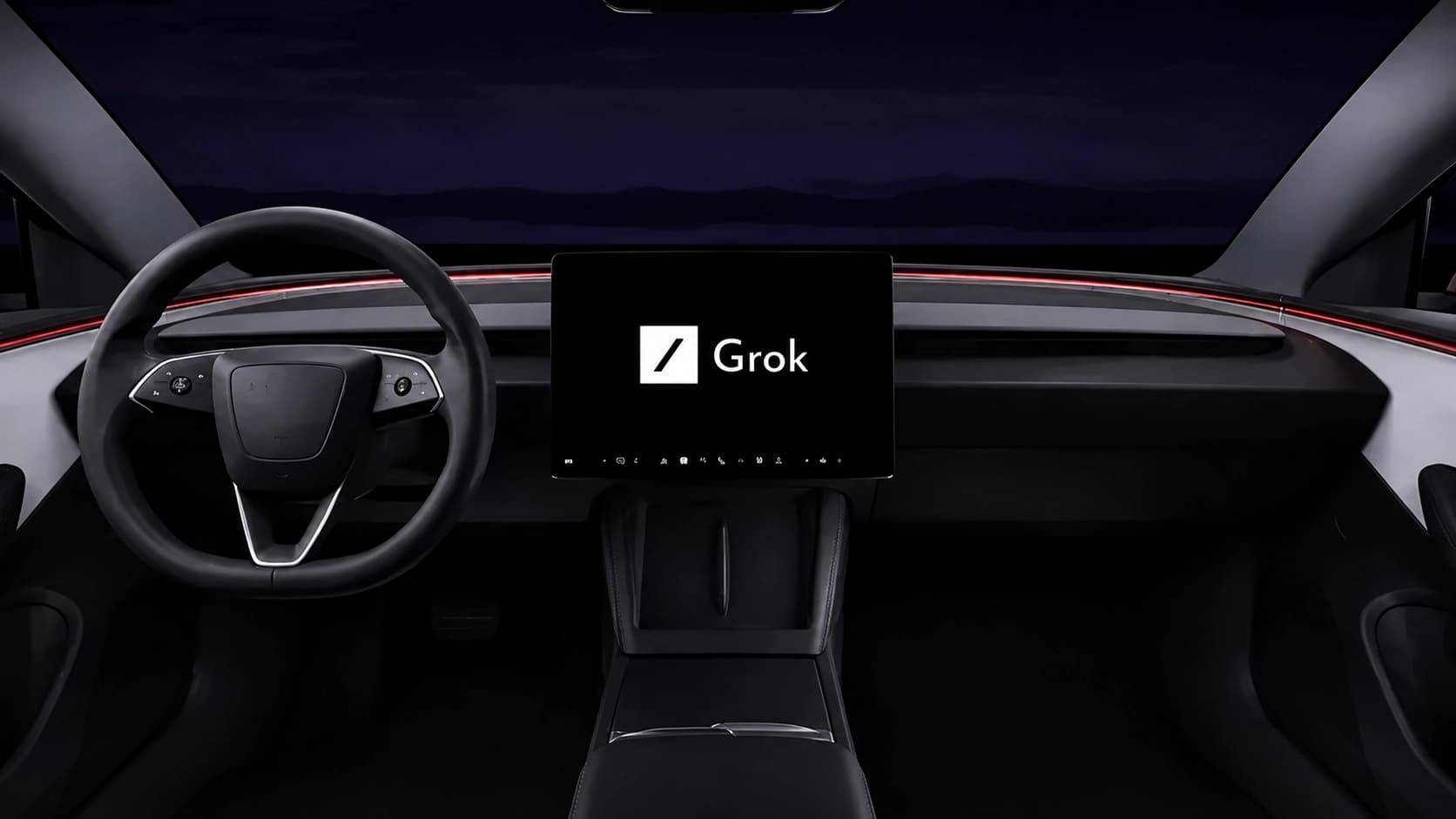
Tesla's in-car voice control has been functional but rigid for years: a list of commands you had to phrase correctly or repeat louder. Grok replaces that with something closer to a conversation, and with the Summer Release it is finally switched on for Belgian and Dutch cars. Tesla says the assistant is now available across the whole of Europe, which makes this a catch-up rather than a launch.
Which cars get it
Grok is available on eligible versions of the Model S, Model 3, Model X and Model Y, delivered over the air as part of the Summer Release. The hard requirement is an AMD infotainment chip, which Tesla has fitted since roughly 2021 depending on the model. Owners of older cars with the previous Intel-based hardware are out of luck, and no software update changes that.
What it actually does
The headline function is navigation: you can set a destination by describing it rather than by dictating an address. Beyond that, Grok can consult the car's owner's manual and give advice on using and maintaining the vehicle, answer general questions, look up music and podcasts, and adjust the climate control. The manual function is quietly the most useful of the lot, because almost nobody reads a modern car's manual and almost everybody has a question it would answer.
Voices and personalities
Grok ships with five different voices and a range of personalities. Alongside the sensible ones, such as assistant, language coach and therapist, there are options aimed at children and a set of NSFW personalities restricted to adults, including modes Tesla describes as unhinged or sexy. Whether any of that belongs on a dashboard is a fair question, and one that European regulators may yet take an interest in.
What you need
Activating and using Grok requires either a Premium Connectivity subscription or a stable Wi-Fi connection. In practice that means most owners who want to use it while driving will be paying for connectivity, since Wi-Fi in a moving car is not much use.
One thing it does not do
Grok is an assistant, not a driving system. It does not take over any part of Autopilot or Full Self-Driving, and none of the functions listed above touch the way the car is driven. It talks, it searches and it sets destinations.
AutoNext Take
The interesting thing about Grok in a car is that the genuinely useful features are the boring ones. Asking what a warning light means and getting a straight answer from the manual, or setting a destination without pronouncing a street name perfectly, solves real irritations. The personalities, the five voices and especially the adults-only modes are the part that will get the attention, and they are the part that matters least while you are driving.
It is also worth noting how long Belgium and the Netherlands waited. Europe is a slower market for this kind of feature because privacy and AI rules are stricter here, and that is not a bad thing. A voice assistant in a car that listens continuously is exactly the sort of product that deserves the scrutiny.