Toyota recalls 8,521 electric C-HRs. Europe's C-HR+ is the same car
A regen bug found in an unnamed future Toyota EV has reached the C-HR
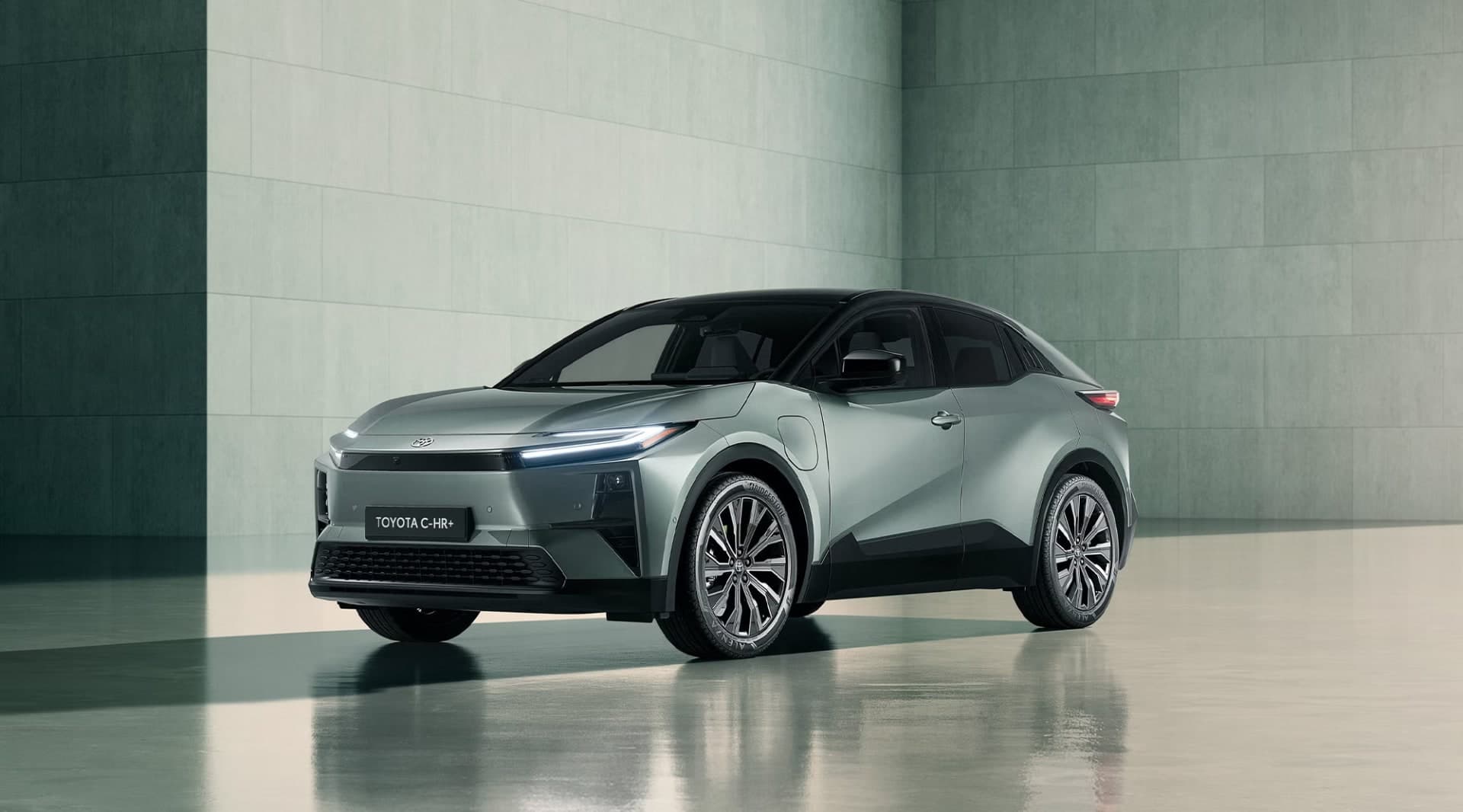
Toyota told the US safety regulator on 2 September that it is recalling the 2026 C-HR, its newest electric crossover, for a software error in the battery electronic control unit. The fault surfaced in April, during testing of a future battery-electric model Toyota has not named, and a review of the control units in its other EVs traced the same logic to a car already in customer hands.
The C-HR's battery ECU can overcharge a full pack on a long regen descent
The BEV ECU is meant to cap charging when the pack is near full. Because of the programming error it does not always do so, and the battery can be overcharged when three things coincide: a high state of charge, low ambient temperature and a long stretch of regenerative braking. A cold morning, a car charged to 100 percent overnight and a downhill run into town is the scenario Toyota's filing describes. When it happens, warning lights and a buzzer come on and the electric drive system shuts down, which NHTSA records as a loss of motive power and an increased crash risk. Toyota says it has no warranty claims or field reports tied to the fault. The campaign, NHTSA number 26V570000 and Toyota code 26TA17, covers 8,521 cars built between 6 February and 10 July 2026.
Toyota found the fault in April while testing a future EV it has not named
The chronology in Toyota's filing runs backwards from the recall. The fault showed up in April on a prototype of an undisclosed future BEV, which prompted a review of the electronic control units across Toyota's electric line-up, and that review identified the C-HR as carrying the same logic. Toyota's first notice on 2 September put the count at roughly 10,000; the 9 September letter to NHTSA settled it at 8,521. Toyota has not said which car exposed the problem. Its electric Highlander missed a second launch deadline this month, this time with no new date, and Toyota has drawn no link between the two.
It is Toyota's second battery-ECU recall in three months, after 20,991 bZ, RZ and Solterra
On 18 June Toyota filed campaign 26V393000 for 20,991 examples of the 2026 bZ, Lexus RZ and Subaru Solterra, whose high-voltage battery ECU could fault and cut drive power; those owners got their letters on 17 August. Add the C-HR and 29,512 Toyota-group EVs have been recalled for the same symptom in under three months, both times cured with a software update. The June filing bundled Subaru's version under its own campaign number, WRG26. The September filing names only the C-HR, and the Subaru Uncharted, the C-HR's twin from the same Takaoka line and on sale in America since the spring from $34,995, has no recall against it in NHTSA's database as of 13 September.
No over-the-air fix: every C-HR goes back to a dealer for the BEV ECU update
The remedy is a software update, but NHTSA's record lists the over-the-air option as no. Each of the 8,521 cars goes to a dealer, where a technician reflashes the BEV ECU free of charge, and the owner letters go out on 18 October, six weeks after the filing. The C-HR can update its multimedia over the air; the controller that manages the battery is not on that list. That is now the unusual position. Volvo switched on EX30 V2L in cars it had already sold with a remote push, and our look in August at nearly 30 million recalled cars found software an increasing share of the cause and, for the carmakers set up for it, the cure.
Europe's C-HR+ comes off the same Takaoka line, priced from €41,990 in Germany
The American C-HR and the European C-HR+ are one car with two badges, both built at Toyota's Takaoka plant in Aichi. Europe gets 57.7 kWh and 77 kWh packs with 167 hp, 224 hp or 343 hp, priced from €41,990 in Germany and from €42,500 to €53,860 in Belgium, against an American line-up that is 74.7 kWh and all-wheel drive only, from $37,000. Toyota's filing states that not all cars built in the February-to-July window were sold in the United States, and that is as far as it goes. We could find no corresponding notice for the C-HR+ from Toyota Motor Europe by 13 September. The hybrid C-HR we tested is unaffected: it shares a name and nothing under the floor.
AutoNext Take
Toyota's filing in Washington tells European C-HR+ owners more than Toyota Motor Europe has told them. It says which weeks the affected cars were built, that some of those cars left for markets other than America, and that the trigger is a full battery at the top of a cold hill, which describes a February morning in the Ardennes or the Alps better than a Californian one. A Belgian buyer paying €42,500 has a car built on the same line in the same weeks as the American paying $37,000, and has not been told whether the same logic is in it.
18 October is the date to hold Toyota to. That is when the American letters go out, and by then Toyota Motor Europe either opens a campaign for the C-HR+ or states that European cars carry different battery ECU software, and why. A cold-weather, full-charge, long-regen fault left unanswered into a European winter would be a stranger outcome than the recall itself.
Follow us on Google News.
Set AutoNext as your preferred source on Google Discover.