Volkswagen's 50,000 job cuts passed unanimously, and four plants got until 2027
The 12 seats that could have killed this plan all voted for it
Volkswagen's supervisory board has 20 members, and employee representatives together with the state of Lower Saxony hold 12 of them. That is a blocking majority, and on 2 September we wrote that it would probably be used. It was not. On 3 September the board approved Future Plan 2030 unanimously. Working out what labour got in exchange explains what was actually decided, which is not quite what the headlines say.
Future Plan 2030 was approved on 3 September with 12 initiatives
The board signed off the whole package in one resolution. Volkswagen calls it the most strategically profound transformation programme in its history, built on 12 initiatives, and chief executive Oliver Blume promised to invest what the company describes as a three-figure billion sum over the coming years. The financial targets are specific: annual sales of nine million vehicles, an operating margin of nine percent by 2030, which the group puts at roughly 31 billion euros of operating profit, and 135 billion euros of capital expenditure and research spending across 2027 to 2031.
Emden, Zwickau, Hanover and Neckarsulm got a deadline, not a closure
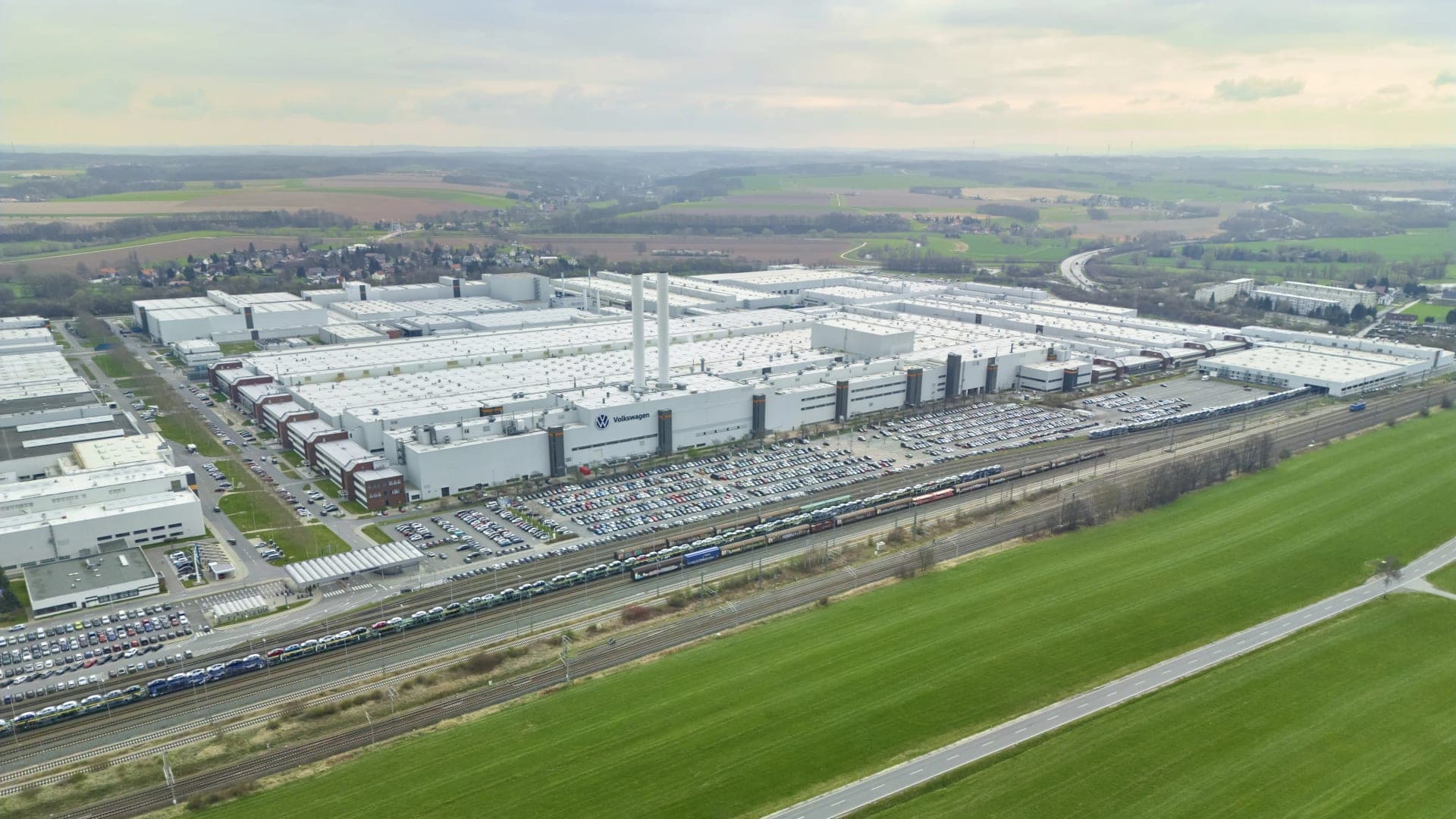
Nothing has been shut. The resolution says the board acknowledges that European capacity exceeds demand by more than 500,000 units, and that competitive future production allocation for those four plants cannot currently be secured on a staggered basis from 2031 to 2034. Those are the same four sites and the same dates as the leaked 147-page report we covered last week, but the wording is an admission rather than a decision. A concept for a competitive European production structure is to be developed by the end of June 2027, and alternative uses for the four plants are being assessed in parallel.
Half the model range goes by 2035, and 75 percent of the complexity
This is the part that reaches showrooms. Volkswagen will streamline its model portfolio by around 50 percent by 2035 and cut offering complexity by around 75 percent, the argument being higher volumes per surviving model and better economies of scale. Platforms, electronic architectures, driver assistance and software are to be split along Western and Eastern hemisphere lines rather than engineered once for everywhere. The brand consequences are already visible in the same programme, which is where the plan to retire Seat by 2029 sits.
The 50,000 posts include management, and the shareholdings shrink by a third
The workforce figure is group-wide and explicitly includes management roles, which is new. Volkswagen says its analysis points to a further adjustment of roughly 50,000 positions on top of existing programmes, and this lands on a company whose chief executive called its position more than critical in August. The portfolio of shareholdings and businesses is to be cut by around a third, with non-strategic activities sold or realigned and the property portfolio reviewed. Overheads are targeted at 37 billion euros.
IG Metall's Christiane Benner says the deal covers all plants
The labour quotes in Volkswagen's own release explain the unanimous vote. Benner, deputy chair of the supervisory board and first chairwoman of IG Metall, said the union fought hard for good solutions and that the plan explicitly includes developing future scenarios for all plants. Works council chair Daniela Cavallo said the transformation would not be carried by employees alone, and that job security and economic viability carry equal weight. Lower Saxony's minister-president Olaf Lies talked about developing long-term prospects for the sites. None of them had to tell members that a factory had closed, because none has.
AutoNext Take
We got this wrong two days ago, and the reason is more interesting than the miss. We expected the labour bloc to vote the plan down as it had resisted the same restructuring in July. Instead it voted yes, because the version that reached the table decides nothing about the four plants. Volkswagen admitted the overcapacity, named the sites, and then handed itself 22 months to work out what happens to them. That is how a board with a 12-vote labour majority reaches unanimity: Cavallo can tell 120,000 members that no plant has been closed, Blume can tell investors the transformation is approved, and both statements are true at the same time.
The number that decides this is 500,000, not 50,000. That is Volkswagen's own admission of how far European capacity exceeds demand, while the four plants under review can build roughly 750,000 cars a year between them by the leaked report's count. The overcapacity does not require all four to go. If the June 2027 concept closes fewer than four, this vote will read as the moment labour traded a bad headline for a year and a half of leverage. If it closes all four anyway, the deferral bought nothing except a quieter September, and the blocking majority will have spent it on a form of words.