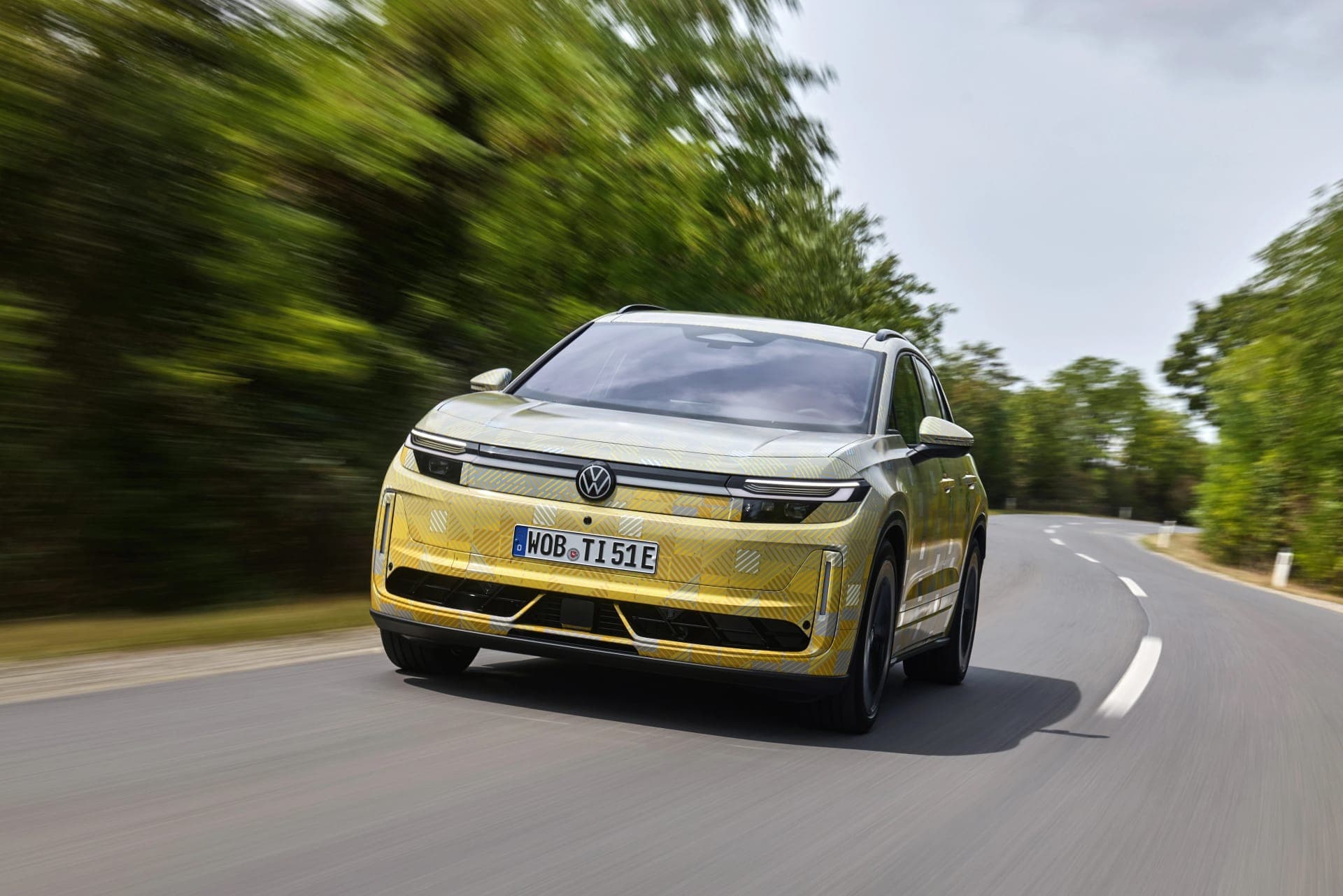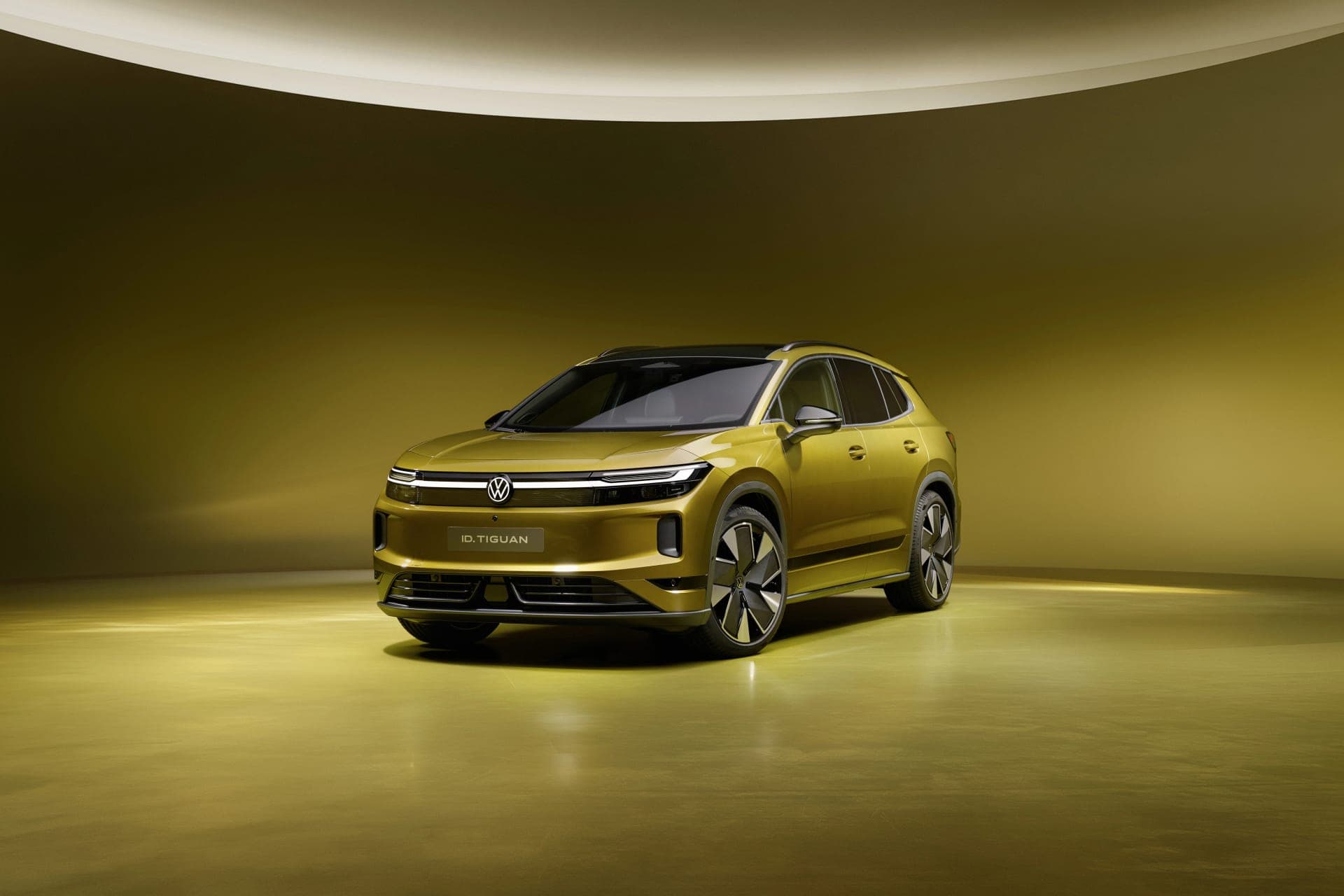
VW ID. Tiguan fixes everything on the ID.4 except its charging
Six years of ID.4 complaints were about the cabin, and Volkswagen has rebuilt it
Volkswagen presents the ID. Tiguan, which replaces both the ID.4 and the ID.5 from early 2027. Pre-sales open in Germany and most of Europe on 13 October, at €42,695 in Germany and €40,990 in the Netherlands. The body, the interior and the controls are new. The batteries, the motors and the charging hardware come straight from the car it replaces, which has been on sale since 2020.
VW ID. Tiguan keeps the ID.4's 58 kWh and 77 kWh batteries and motors
The ID. Tiguan uses the same two batteries and three power outputs as the outgoing ID.4: a 58 kWh LFP pack with 190 hp, or a 77 kWh NMC pack with 286 hp at the rear or 299 hp with a second motor at the front. It still sits on the MEB platform, now called MEB+, and keeps the ID.4's proportions. That makes it a thorough facelift rather than a new car, which is how Volkswagen could revise everything a driver touches without touching the drivetrain.
ID. Tiguan charging stays at 105 kW and 165 kW, 29 minutes to 80 percent
The ID. Tiguan charges at up to 105 kW with the 58 kWh battery and 165 kW with the 77 kWh battery, the same limits as the ID.4, and needs 26 and 29 minutes to go from 10 to 80 percent. Volkswagen's launch release lists range, towing and screen sizes but no charging power at all. There is no 800-volt system, and AC charging stays at 11 kW. Hyundai's Ioniq 5, on sale since 2021, makes the same 10 to 80 percent stop in 18 minutes, and BMW's new iX3 charges at 400 kW, though at a far higher price.
Volkswagen brings back physical buttons and adds a 12-inch passenger screen
The ID. Tiguan replaces the ID.4's touch sliders with a row of physical climate buttons under the central vents, and its steering wheel, taken from the ID. Polo, swaps haptic pads for real switches. Four separate window switches return to the driver's door, and a rotary controller handles the volume. A 10-inch driver display and a 15-inch central screen sit beside an optional 12-inch passenger display with a privacy filter, a first for a European Volkswagen. A Retro mode recreates the blue and red dials of the Golf IV.
ID. Tiguan range reaches 600 km as drag falls from 0.27 to 0.26
The ID. Tiguan's WLTP range is 450 km with the 58 kWh battery, 600 km with the rear-driven 77 kWh car and 560 km with four-wheel drive, helped by a drag coefficient that drops from 0.27 to 0.26. Towing capacity is 1,800 kg with the small battery and 2,000 kg with the large one. The boot holds 534 litres, nine fewer than the ID.4, and a 32-litre frunk now takes the cables. Classic pull-style door handles return on the outside.
ID. Tiguan replaces 950,000 ID.4 and ID.5 cars and is built in Emden
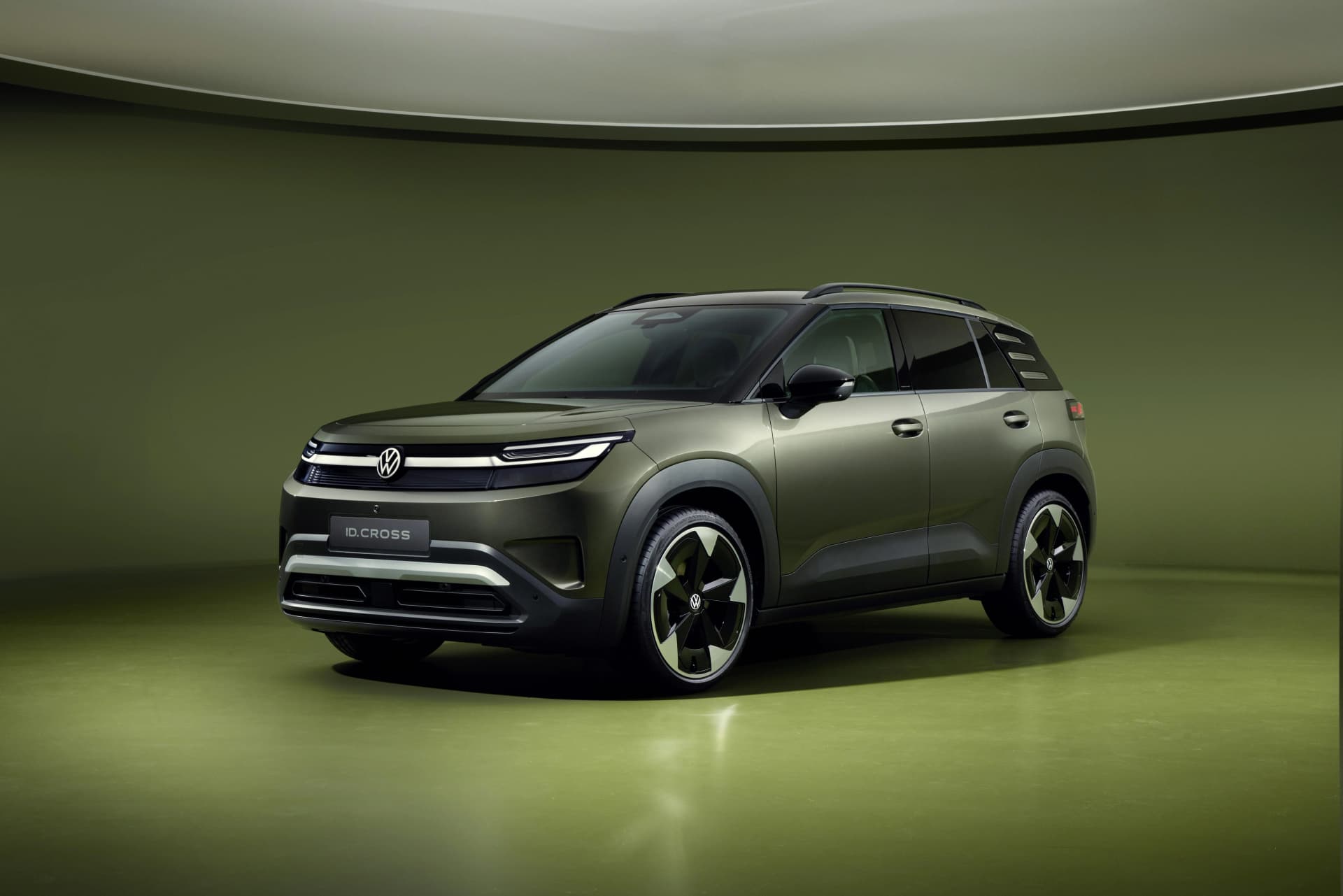
Volkswagen has built more than 950,000 ID.4 and ID.5 models, and the ID. Tiguan replaces both, a change from the name confirmation in September, when the coupé-roofed ID.5 looked set to end without a successor. The new car comes from Emden, a plant a leaked board report gave a 2031 end date, and is sold beside the petrol, diesel and hybrid Tiguan from Wolfsburg. The ID.4 GTX has no direct successor: R-Line tops a range of Trend, Life, Style and R-Line.
AutoNext Take
ID.4 owners spent six years complaining about touch sliders, haptic steering-wheel pads and a shape that looked like a tall hatchback, and the ID. Tiguan answers every one of those complaints. The drivetrain was never the main grievance, so carrying it over holds the price at €42,695 while the cabin moves up a class. Charging is the exception: 29 minutes from 10 to 80 percent was acceptable in 2020 and now trails the Ioniq 5 by 11 minutes, so this is a better car for families who charge at home than for drivers who cross Europe on fast chargers.
Expect the 58 kWh Trend to be the version that sells in the largest numbers through 2027. With 450 km of range and a 26-minute fast-charging stop, it is the configuration where the carried-over hardware costs least, and the cabin it shares with the R-Line is the part Volkswagen has improved the most.