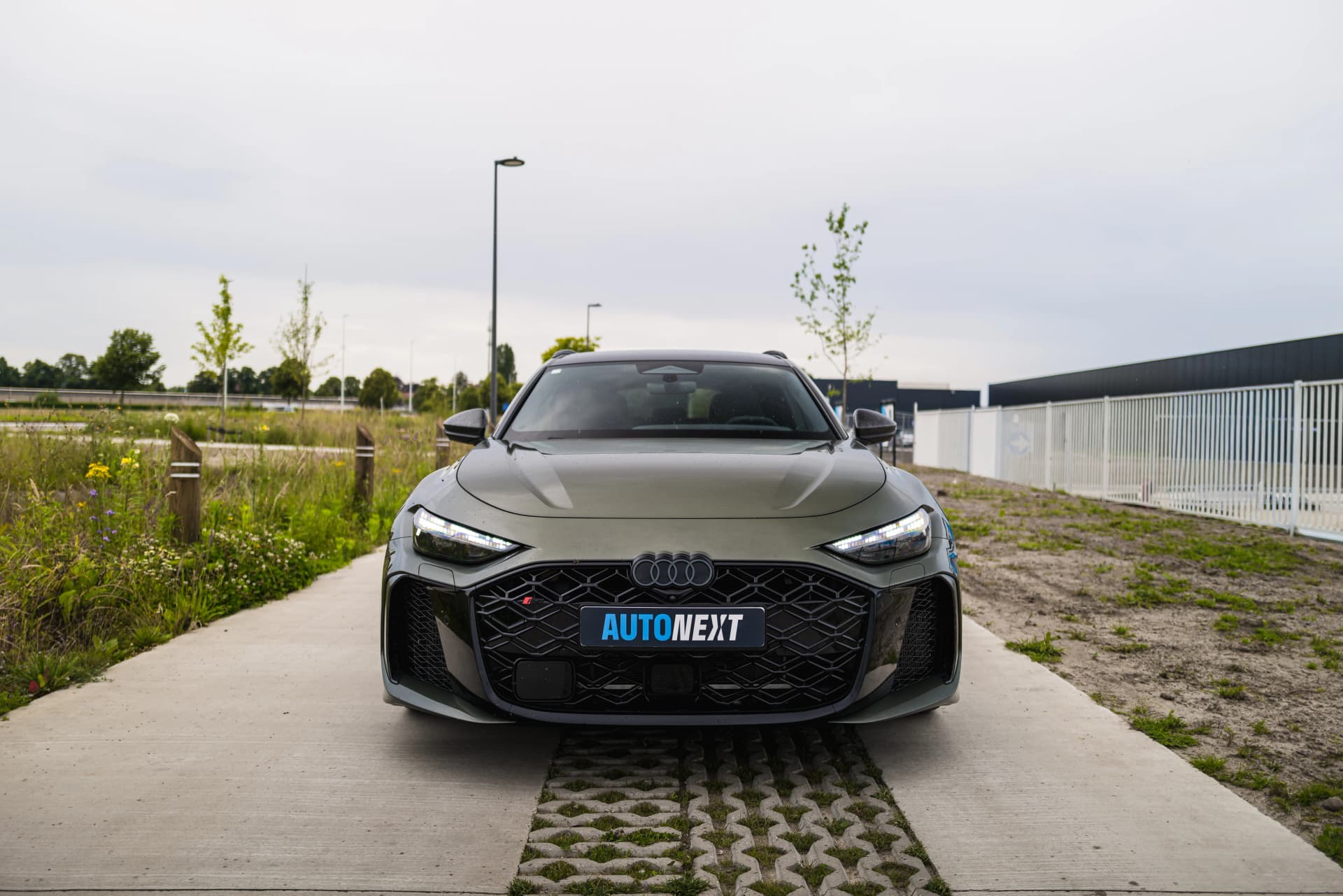
2026 Audi RS5 Avant
The internet wrote off the plug-in RS5 Avant before anyone had driven it
The brand-new Audi RS5 Avant is a slightly bizarre thing, and we mean that as a compliment. It has real RS presence, and to our eyes it actually looks tougher than its big brother, the RS6 Avant, because it carries almost the same width in a more compact body. It also landed to exactly the reaction you would expect. Plug-in hybrid. Too heavy. Ruined by its battery. The typical petrolhead turned it into an Instagram tragedy, and right on cue, that is what happened.
But you often only understand a car like this once you drive it. Just like the M5 Touring, Audi has managed to hide the weight beautifully. Whether the tyres enjoy it as much as we did is another story, and frankly not our problem.
Design: wider, meaner and a size down from the RS6
On looks alone, the RS5 Avant is borderline brutal. It is properly wide, and the track width in particular is sublime to stand in front of. The car is 40mm wider overall than the standard A5, with new gloss black aero, an RS matrix light signature and a chequered-flag motif in the rear lights. The exhaust outlets are enormous, sitting further inboard because of their L-shaped muffler design. We maybe preferred the tailpipes on older generations, but we are not going to make a fuss about it. Against the BMW M3 and Mercedes-AMG C63, with a respectful nod to the Alfa Romeo Giulia Quadrifoglio, the RS5 has the edge on sheer presence, and that goes for the saloon too, not just the Avant.
One thing we cannot get past is the matte carbon camouflage finish on the outside, and inside. It gives off hard Mansory energy, and just like on the RS e-tron GT Performance we drove, we are not fans. Thankfully the rest of the design stops short of tuner parody, so this is one option box you can simply leave unticked.
Powertrain: 639 hp from a V6 and a plug
Under the bonnet sits the familiar 2.9-litre twin-turbo V6, here backed by an electric motor fed by a 25.9 kWh battery (22 kWh usable). Combined output is 639 hp and 825 Nm, which means this RS5 matches the last RS6 and its 4.0-litre V8. The numbers are not shy either: 0 to 100 km/h in 3.6 seconds and a top speed of up to 285 km/h. The battery weighs around 160 kg, the same pack as the A5 e-hybrid, and Audi has gone for a proper plug-in setup rather than a token one: a claimed 84 km of electric range, enough for most daily driving, at up to 140 km/h on electricity alone.
Chassis: Audi's clever electrified rear axle
Audi will never abandon quattro, but the RS5 adds a new trick. It pairs a Torsen centre differential with Dynamic Torque Vectoring on the rear axle, which Audi calls a world first. The centre diff has a preload function so it is always partially locked, and the torque split can swing from 70/30 all the way to 15/85 front to rear, an unusually extrovert figure for a quattro Audi.
That rear cleverness comes from a water-cooled e-motor acting as a high-voltage actuator, sending torque to each rear wheel in around 15 milliseconds, on or off throttle and under braking. Is it a high-tech answer to a traction question Audi could have solved more simply? Maybe. But the payoff is real: agility and interactivity layered on top of Audi's traditionally enormous grip.
Brakes and hardware
The mechanical package is serious. There are RS-specific front and rear axles, a faster steering rack, and steel-sprung sports suspension with twin-valve dampers. The optional carbon ceramic brakes measure 440mm at the front and 410mm at the rear, dimensions only the Bentley Continental GT Speed and Lamborghini Urus can match, and they save 30 kg over the steel discs. The body is also 10 per cent stiffer than the regular A5's, on the same PPE platform.
Living with it: boot, range and a small tank
The plug-in hardware does extract a price. Boot space in the Avant drops to 361 litres, barely more than a Golf and well down on the 476 litres of a regular A5 Avant, so a winter trip to the Alps with friends will mean packing smart. The fuel tank is also a modest 48 litres, so long, fast autobahn runs will bring a few extra fuel stops. The flip side is that big electric range, which exists partly for tax reasons but works in the buyer's favour all the same.
Interior: RS garnish on an A5 base
Inside, the gap to the tamer A5 is smaller. You get RS logos, a specific steering wheel with a centre marker, and bespoke graphics for the driver display and central screen. The infotainment runs Audi's Android Automotive system, which looks sharp and runs smoothly, though it suffers from the same menu overload as the rest of the range. The passenger display remains as awkwardly integrated, and arguably as pointless, as ever. The screens are at least big enough not to feel fiddly, and a handful of physical buttons survive for drive modes, ADAS and audio. We just wish the climate controls had escaped the touchscreen.
The M3 still wins on pure fun
For all that, an RS5 cannot quite match a BMW M3, or M3 Touring, for outright driving joy. The BMW is 500 to 600 kg lighter, and you do not have to drive it with a knife between your teeth to enjoy its playfulness. The Audi asks more of you before it rewards you. But we are not complaining. The important thing is that Audi Sport finally seems to understand that raw performance alone is not enough to deliver real driving pleasure.
AutoNext Verdict
The RS5 Avant is exactly the car the internet refused to give a chance, and exactly the kind of car you should drive before judging. Yes, it is a heavy plug-in hybrid. No, it is not as pure as the petrolheads wanted. But Audi has hidden that weight with real skill, given it the most intimidating bodywork in the segment, and engineered a rear axle that finally injects some mischief into the quattro formula.
It is not the last word in lightweight fun, and the M3 still owns that title. But as a fast, usable, genuinely brutal-looking estate that happens to do 84 km on electricity, the RS5 Avant makes a stronger case than its reputation suggests. The haters will keep typing. We would just keep driving.
Discover more
Dive deeper into the world behind every car.
On every detail page you will find a complete and transparent presentation of the vehicle: from technical specifications and option lists to service history, features and unique highlights.
Search cars
Discover our premium selection, compare the different models with ease and find the car that perfectly matches your style and expectations.
Your next exceptional driving experience starts here.
Expert reviews
Our experienced car experts put every car under the microscope and share honest, in-depth insights that go beyond the standard brochure information.
From ride comfort and technology to build quality and performance. We analyse every detail so you can make the right choice with confidence.
