The chip that starts your car has no battery, which is why a dead key strands almost nobody
There is a page in your owner's manual that turns a stranded afternoon into a fifteen second inconvenience, and hardly anybody has read it.
Inside a keyless fob there are two systems doing two unrelated jobs. One is a small radio transmitter running off a coin cell, and it handles the things you notice: the buttons, and the hands-free detection that unlocks the door as your hand reaches the handle. The other is a passive transponder, a chip wired to an antenna coil with no power source of its own at all. Hold the key against the right place in the cabin and the car energises that coil by induction, reads the code back out of it and releases the immobiliser. That second system is the one that actually authorises the engine, and it is entirely indifferent to whether the coin cell is flat, corroded or missing. Fob batteries typically last two to four years, and most European cars put a key battery warning in the instrument cluster well before the end of that, which is generous notice by the standards of anything else on a dashboard. The cells themselves cost a couple of euros and differ by brand, with CR2032 in many Volkswagens, CR2025 in newer Volkswagen and Mercedes keys, CR2450 in BMW keyless fobs and CR1620 in older Renaults. What drivers pay instead, several times a year across Europe, is a roadside callout for a car that was never broken.
The reader sits where the ignition barrel used to be, or in a cupholder
Volkswagen puts a small symbol of a key with radio waves to the right of the steering column on Golf 7 era cars, in exactly the spot the ignition lock occupied for the previous eighty years. On the Golf 8, the current Tiguan and the ID models that reader has migrated to the centre console, usually the front cupholder with a key symbol moulded into the base of it, or the front storage tray. BMW asks you to hold the remote against a marking on the steering column and then press the start button with the brake down, within roughly ten seconds of presenting it. Mercedes goes a different way again and has you place the key into a designated storage compartment before starting, documented in its own manuals as an emergency mode rather than a trick. Toyota, Lexus and several other Japanese brands sold in Europe keep it simplest of all: press the start button with the fob itself, logo side against the button, instead of with your finger. It is worth finding yours in daylight, because these markings are small, unlit, and invisible to anybody who does not already know they exist.
Getting in is a separate problem, and the answer is folded inside the fob
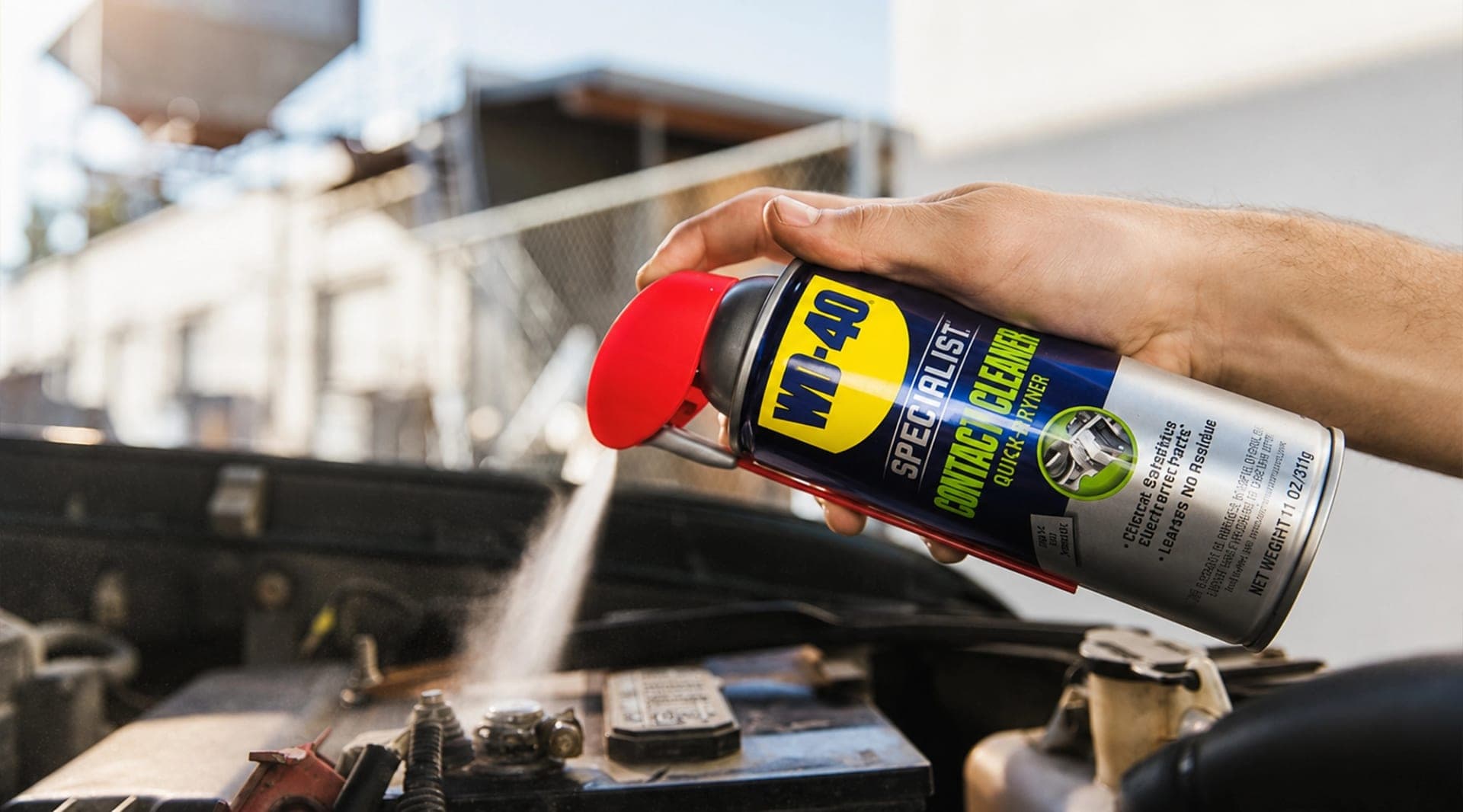
Every keyless fob sold in Europe carries a mechanical blade inside it, released by a slider or a small catch on the back. It fits exactly one lock, the driver's door, and on most cars built in the last fifteen years you cannot see that lock at all, because it sits behind a plastic cap on or beside the handle. The blade is also the tool for levering that cap off, which is neater than it sounds and completely baffling if you are discovering it in the rain. Two things follow from this. The first is that a cylinder which has not turned since the car left the factory can be stiff or seized, and freeing a lock is one of the narrow set of jobs that aerosol is genuinely formulated for, given that WD-40 is not a lubricant. The second is that all of this assumes you have the original key rather than a cheap aftermarket copy, and ideally both of them, because a second key is worth real money at handover and the private sale does not end when the buyer drives away for the seller who promised two and produced one.
The alarm going off is the system working, not a second fault
Open a locked car with the blade and the alarm will very probably sound, and this is the part that panics people into abandoning the whole attempt. The car has registered a door opening without ever having received an unlock signal, which from the inside is indistinguishable from a forced entry, so it does what it was designed to do. It stops the moment you sit down and hold the key against the reader, because that is the point at which the vehicle finally identifies you as the owner and disarms itself. Knowing this in advance is most of the value of it, since the instinctive reaction in a full car park is to assume you have broken something and stop, which leaves you standing next to a car that is now unlocked and shouting. Modern European cars are full of behaviour that reads as a fault and is not, which is why every new car in Europe beeps at you now and why the answer is almost never to ignore it.
A flat key battery and a flat car battery look nothing alike
This distinction is worth making before you need it, because the fix for one does precisely nothing for the other. A flat key battery leaves the car otherwise completely normal: the interior lights come on when you open the door with the blade, the dashboard wakes when you press the start button, and the only silent component is the key in your hand. A flat 12 volt battery leaves the whole car inert, and no amount of holding the fob anywhere will change that, because the reader coil needs the car's own power to energise anything. The distinction catches out electric car owners in particular, since a traction battery at eighty percent and a dead 12 volt battery coexist perfectly happily, and a handful of EVs have no external lock cylinder at all, relying instead on a card or a phone. If yours is one of those, look up the manufacturer's documented backup today rather than on the day you need it, because there will be one and it will not be where you would guess.
What to actually do
All of this is worth ten minutes on a dry afternoon, because every single step becomes impossible to look up at the moment you need it.
Find your car's emergency reader position now and remember it as a place, not a page number. Steering column, cupholder or a marked storage compartment covers almost everything sold in Europe.
Stop ignoring the key battery warning. It is one of the very few dashboard messages that gives you weeks of notice and costs a couple of euros to clear.
Check which cell your key takes before you need one. CR2032, CR2025, CR2450 and CR1620 look almost identical in a shop and are not interchangeable in practice.
Open the fob once while nothing is wrong. Some need a coin, some a small screwdriver, and a few use the mechanical blade itself as the lever.
Locate the blade and its release catch, usually a slider or small button on the back of the fob, and pull it out once so you know how much force it wants.
Find the hidden lock cylinder on the driver's door. If there is no visible keyhole, look for the plastic cap on or beside the handle that the blade is shaped to lever off.
Expect the alarm and let it sound. Get in, hold the key to the reader, press start with the brake down, and it stops on its own.
Keep the spare key somewhere other than the drawer holding the first one, and put a fresh cell in it too. A spare with a five year old battery is not really a spare.
If the car is completely dead rather than just the key, stop trying the fob against the reader. That is a 12 volt battery and it needs jump leads or a callout, not a coin cell.
Frequently asked questions
Can you start a car if the key fob battery is dead?
Yes, on essentially every keyless car sold in Europe. The chip that authorises the start is a passive transponder with no battery of its own, and the car powers it by induction when you hold the key against a specific spot in the cabin. Press the brake, hold the key there, press the start button, and the engine starts normally.
Where exactly do I hold the key if the battery is flat?
It depends on the brand. Volkswagen uses a marked spot to the right of the steering column on older models and the front cupholder or storage tray on newer ones. BMW marks the steering column. Mercedes has you place the key in a designated storage compartment. Toyota, Lexus and several other Japanese brands want you to press the start button with the fob itself rather than your finger.
Will the alarm go off if I unlock the door with the emergency key?
Very probably, and that is correct behaviour rather than a fault. The car has seen a door open without receiving an unlock signal, which looks exactly like a break-in. It stops as soon as you hold the key against the reader inside and the car identifies you.
How long does a car key battery last?
Two to four years is typical, and workshops generally suggest replacing it preventively every year or two rather than waiting. Cold weather shortens whatever life is left in a tired cell, so before winter and before a long trip are the sensible moments.
Which battery does my car key take?
CR2032 is the most common across Europe, newer Volkswagen and Mercedes keys often use CR2025, BMW keyless fobs generally take CR2450, and older Renaults use CR1620. Open the key and read the old cell rather than guessing, because a CR2025 will physically fit a CR2032 slot and then fail early.
My car will not respond to anything at all. Is that the key?
No. If the interior lights, the dashboard and the door locks are all dead, the problem is the 12 volt battery rather than the key, and the emergency reader will not work either because it draws its power from the car. That applies to electric cars too, which have a separate 12 volt battery that can fail while the traction battery is nearly full.