BYD's flash charging network hit 10,000 stations. A third of users drive rivals
Every day since April, BYD has switched on another 34 megawatt chargers
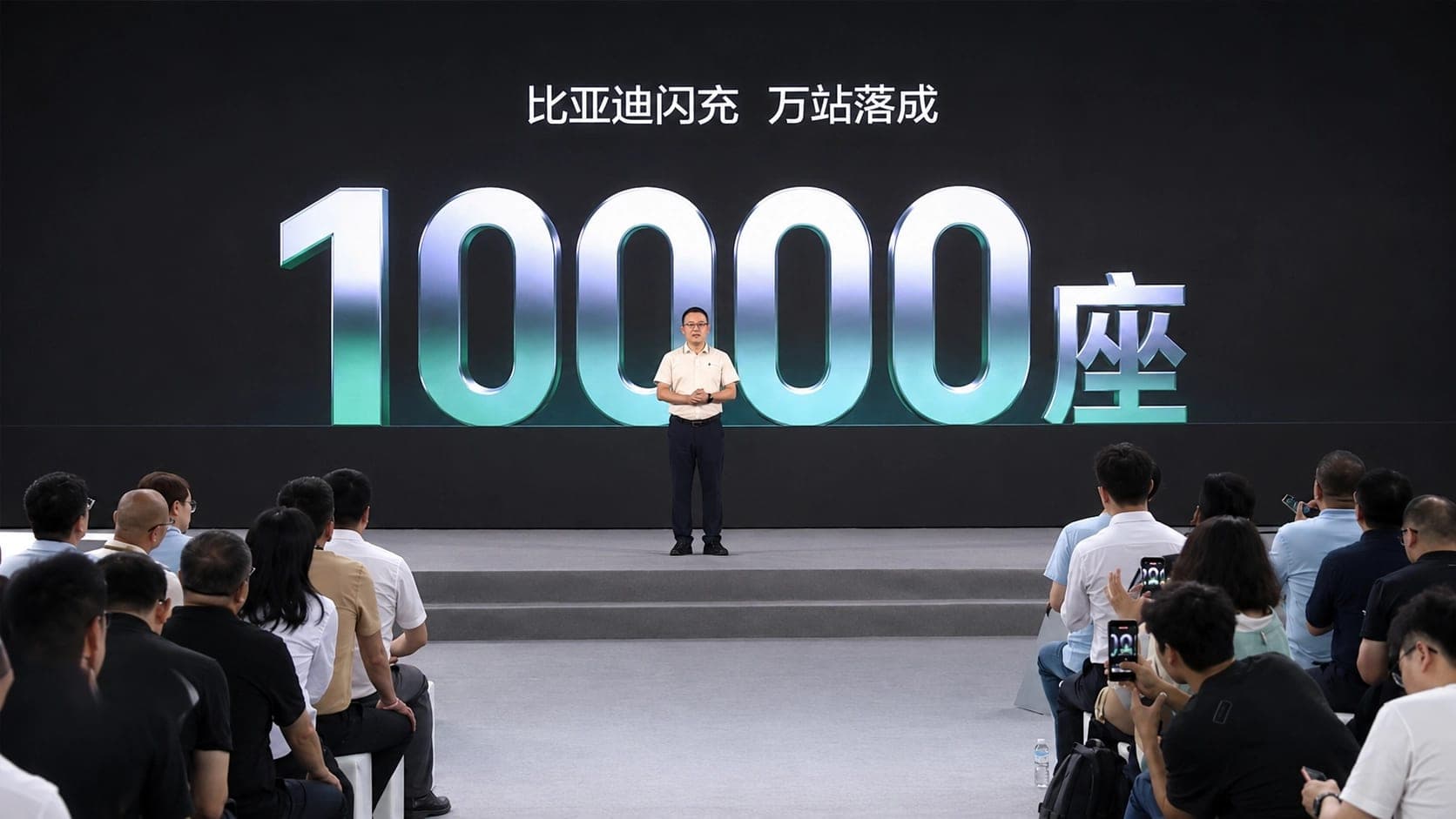
BYD opened its 10,000th flash charging station on 28 August at its flagship site in Shenzhen's Longhua district, five months after the 5,000th went live on 1 April. That is roughly 34 new stations a day, each rated at 1,500 kW through a single connector and spread across more than 300 Chinese cities. The company now wants 20,000 open by 31 December, and the arithmetic behind that target is worth doing in public.
Sinopec, PetroChina and JD.com are building 18,000 of the 20,000 stations
BYD is not putting up most of this network itself. Under its plan, 18,000 of the 20,000 stations go up alongside partners including Sinopec, PetroChina, CNOOC, Teld and JD.com, and only 2,000 are BYD's own motorway sites. Handing nine tenths of the build to oil majors and a logistics giant is what makes the pace arithmetically plausible at all: they already hold the land, the forecourts and the depots that a charging site needs.
Nearly a third of the 1.83 million users plug in something that is not a BYD
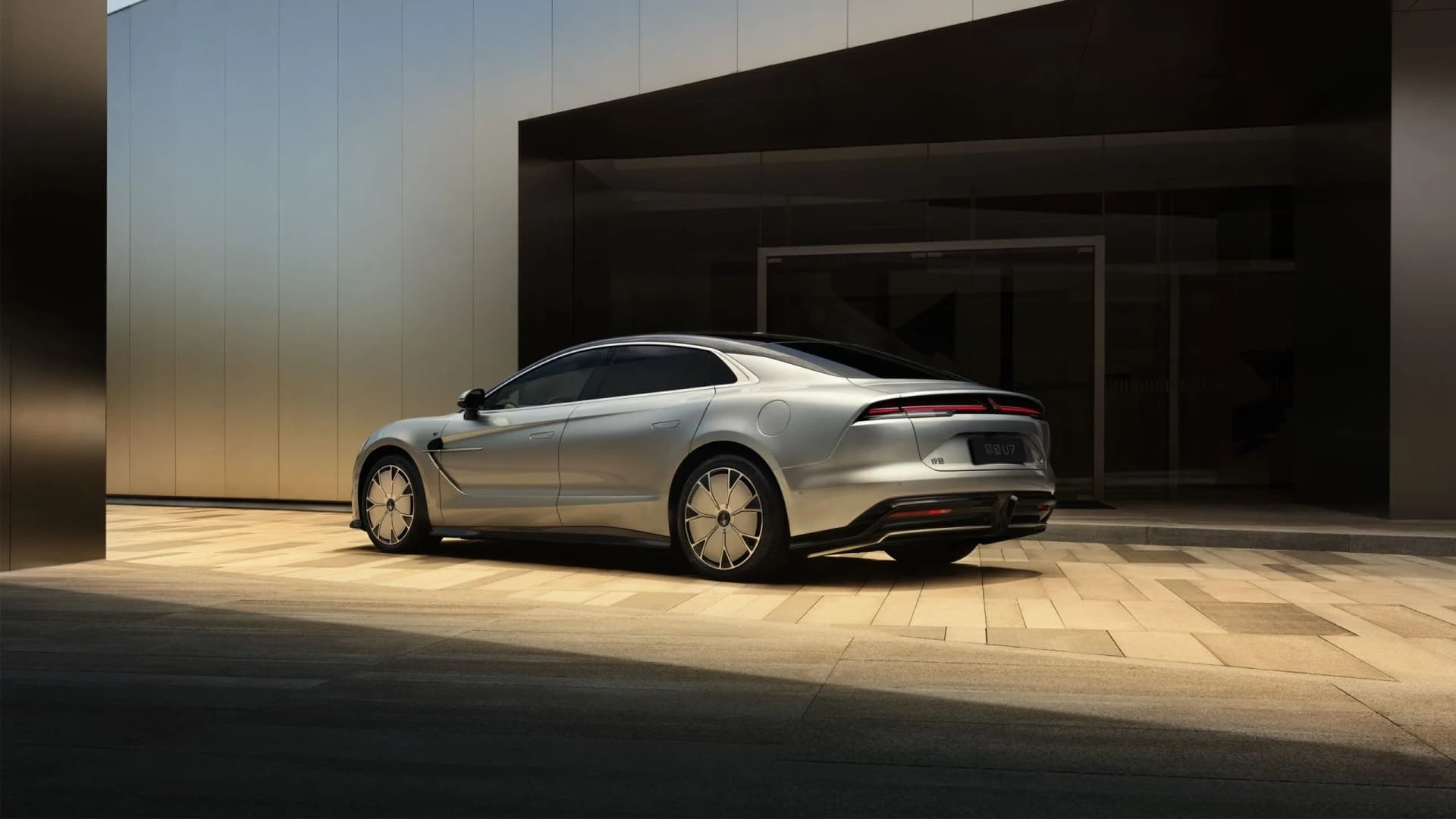
The Chinese network takes other brands, and they are showing up. BYD says its stations have delivered 210 million kWh to more than 1.83 million drivers in under six months, and that close to a third of those drivers were in another badge. Those cars draw whatever their own battery permits rather than 1,500 kW, which makes the share more telling rather than less. BYD has quietly become a charging operator that also happens to sell cars, and it leans on the same hardware for its own testing: the 30,000 km it put on a Yangwang U7 in nine days ran through these chargers.
Each charger stores 370 kWh on site and can draw as little as 100 kW from the grid
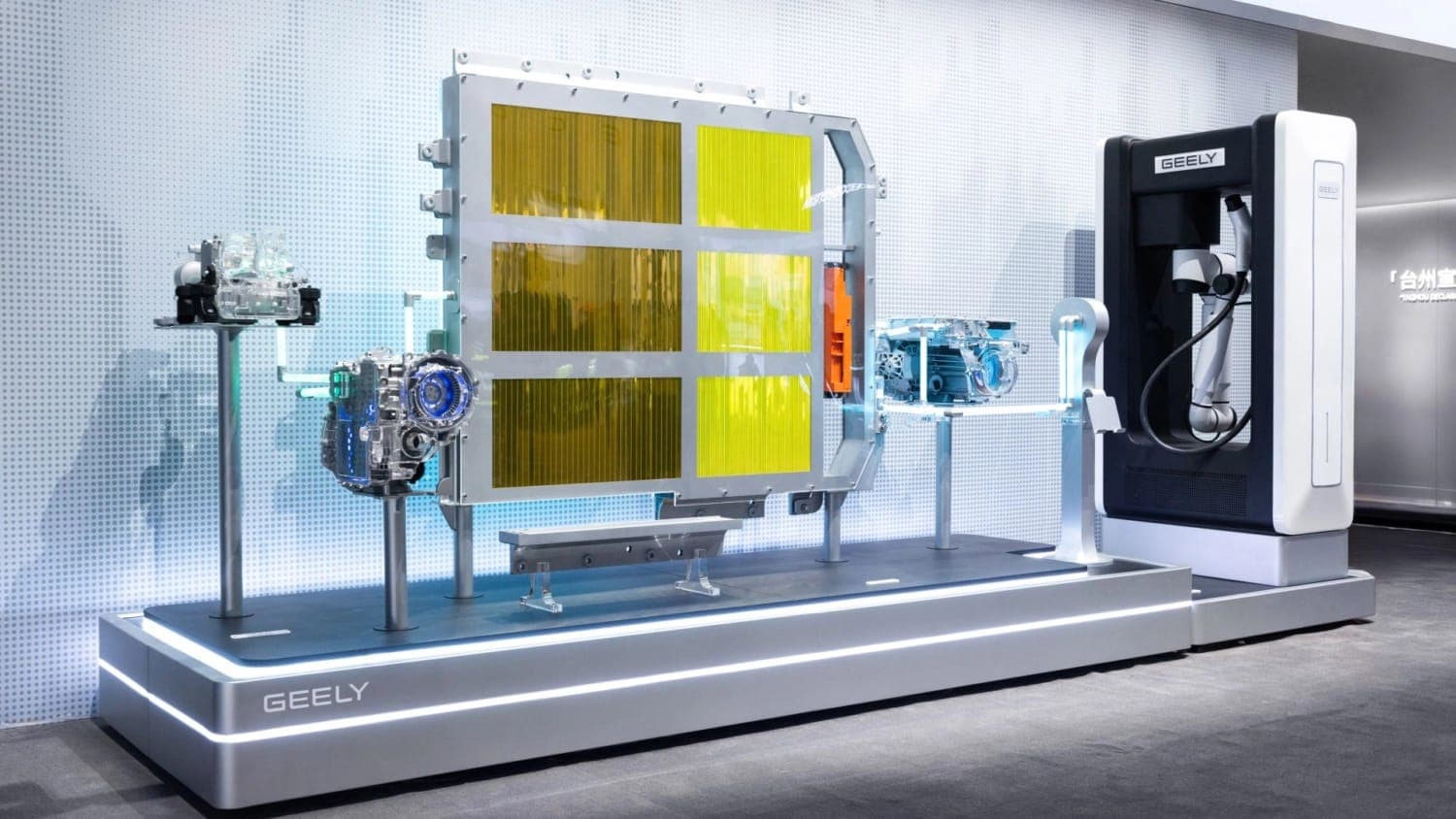
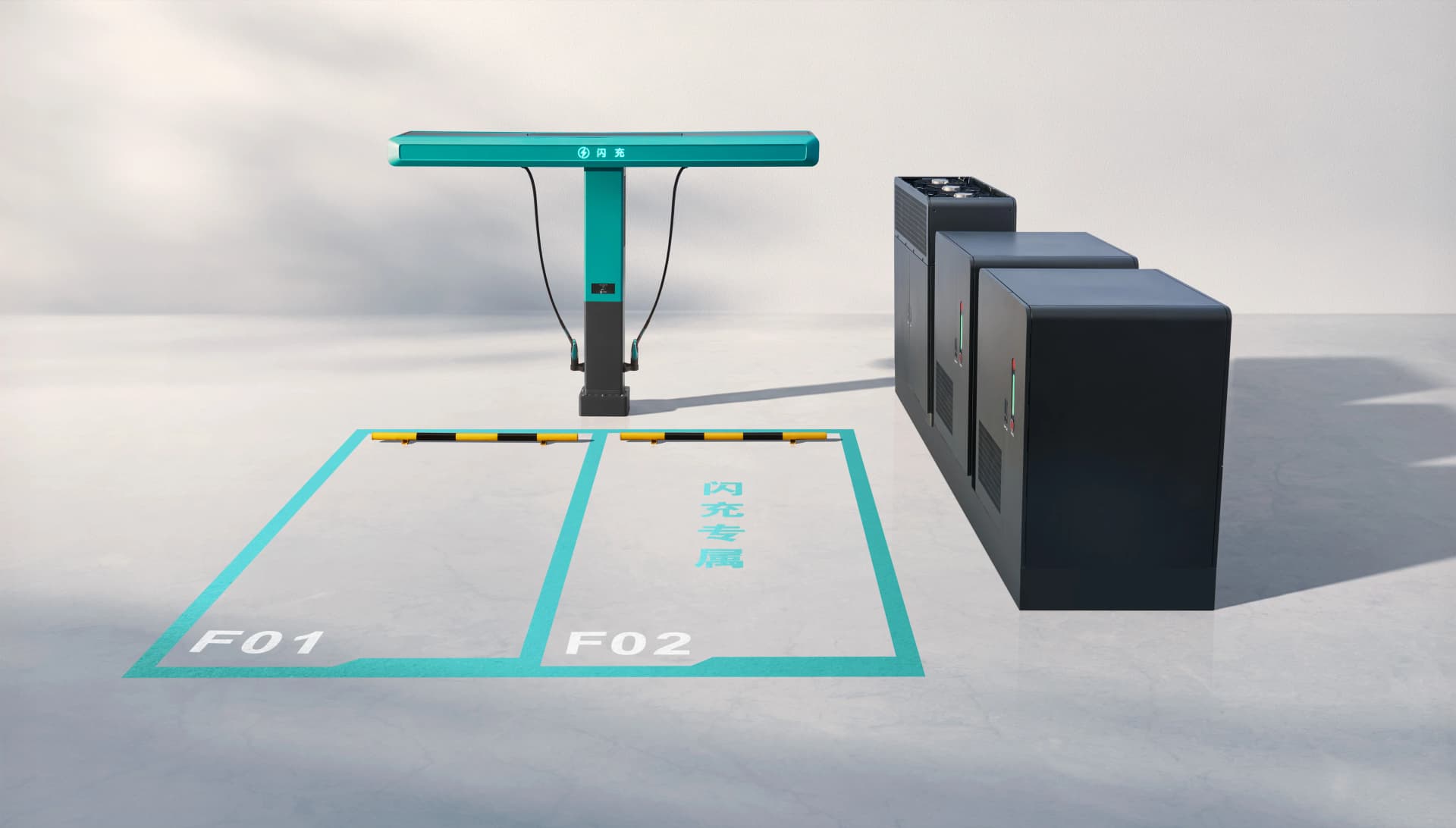
This is the part Europe should be reading. Every Flash charger carries two 185 kWh batteries, 370 kWh in total, and pulls somewhere between roughly 100 kW and 560 kW from the local grid depending on what the connection allows. The buffer supplies the rest, releasing up to 1,500 kW in short bursts through one connector, or up to 1,000 kW each when two cars are plugged in at once. A site that would otherwise need an industrial grid connection can run on something far more ordinary.
Europe is promised 3,000 stations by 2027, and Britain gets 300 inside a year
The first 1,500 kW station on European soil went live in Germany in June, and BYD has set a target of 3,000 across the continent by 2027. Britain is next: 300 chargers over twelve months, beginning at BYD and Denza dealers before spreading to motorway services and existing hubs, with rooftop and carport solar feeding the on-site batteries at the larger locations. Every one of them accepts a CCS2 plug, and the smaller urban sites run on certified renewable electricity bought in.
The only UK car that can use the full 1,500 kW costs £105,000
No BYD-badged car in the British line-up can take the headline speed today. The first model that can is the Denza Z9 GT, listed from £105,000, followed by the Denza Z; BYD says some of its own European models will gain compatibility later. What unlocks it is the second-generation Blade Battery, which peaks at 10C and takes a compatible car from 10 to 97 percent in nine minutes, or from 20 to 97 percent in twelve minutes at minus 30 degrees.
AutoNext Take
The figure everyone repeats is 1,500 kW, and it is the least transferable thing here. Europe is not short of charger hardware. It is short of grid capacity at the specific junctions and forecourts where high-power chargers need to stand, which is why so many European sites open at 150 kW and stay there. BYD's answer is 370 kWh of batteries bolted to every unit, so the site sips a modest steady load and spends it in ninety-second bursts. Nothing about that is uniquely Chinese. It is a design choice any European operator could copy, and the British rollout is about to test it on British connections.
So here is the testable part. BYD will not have 20,000 stations open on 31 December. Doubling again in four months means about 80 a day against a proven 34, in a half year when net profit fell 20.54 percent to 12.33 billion yuan on revenue down 7.13 percent, and when research and development alone absorbed 28.9 billion yuan, roughly 2.3 times what the company earned. Watch the British number instead: 300 chargers whose only fully compatible car costs £105,000, on a network open to every CCS2 plug in the country. If the 20,000 lands by New Year's Eve, this reading is wrong, and European operators have a problem far larger than charging speed.