New EU safety tech is mandatory in every new car from today, and we've mixed feelings
Fewer road deaths is the goal, but a camera watching your face is the catch
If you buy a brand-new car in Europe from today, it comes with some extra kit whether you asked for it or not. From 7 July, a new wave of EU safety features is mandatory on all newly registered cars and vans, and while the goal is fewer deaths on the road, some of it does not sit entirely comfortably with us.
What's now mandatory
Under the EU's General Safety Regulation, every new passenger car and van registered from 7 July 2026 must now include a fresh batch of features. Those are advanced emergency braking able to detect cyclists and pedestrians, an advanced driver-distraction warning system, improved forward visibility for the driver, new testing requirements for worn tyres, and expanded areas of safety glass to better protect pedestrians in a collision. On paper, most of that is sensible, hard-to-argue-with safety kit.
The camera that watches you
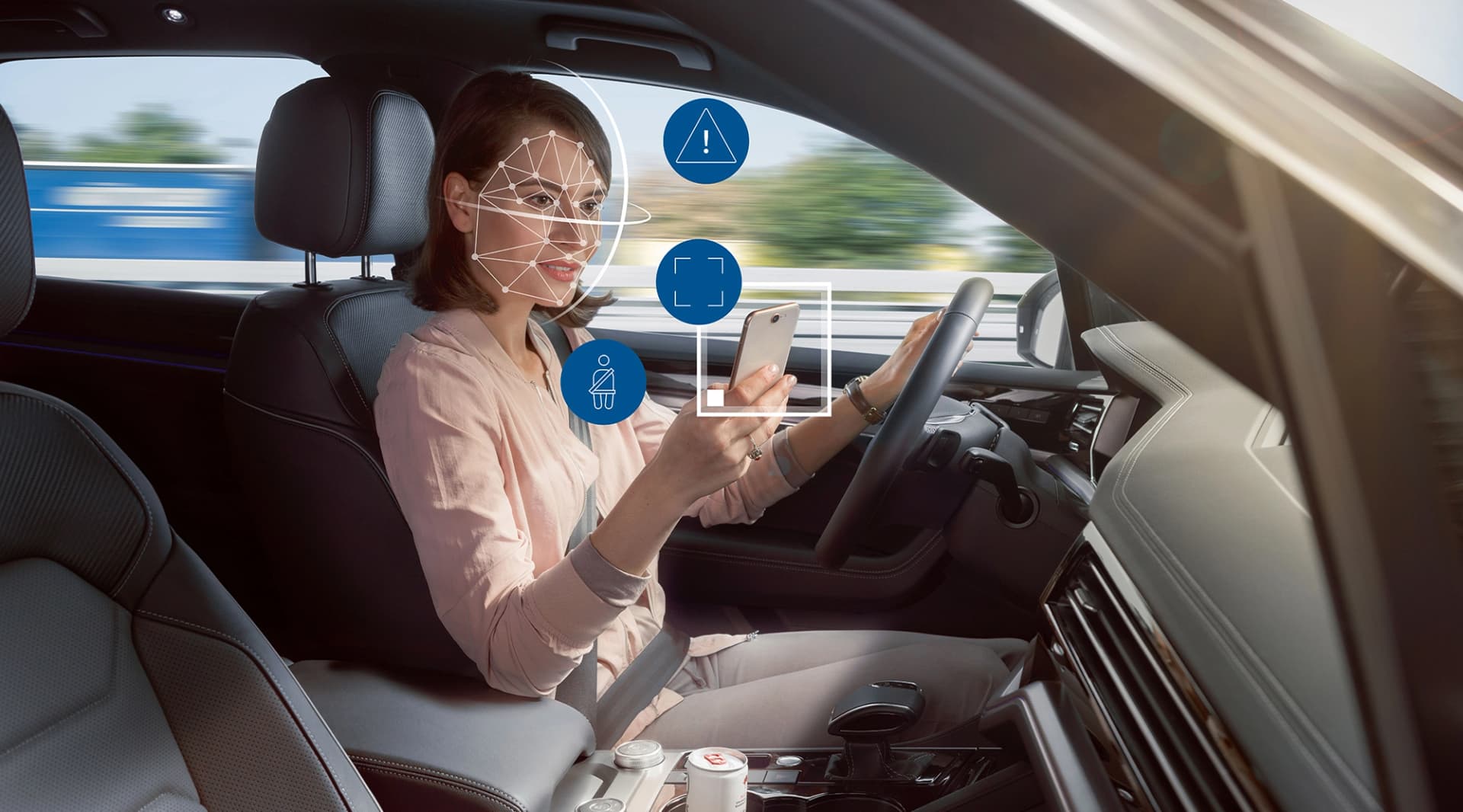
The one that raises eyebrows is the driver-distraction system. It uses infrared cameras pointed at the driver to analyse behaviour, tracking eye movement, blinking, where you are looking and even yawning, to spot when your attention drifts. The intent, catching drowsy or distracted drivers, is genuinely worthwhile, and distraction plays a role in a meaningful share of fatal crashes. But an always-on camera studying your face is exactly the kind of thing that makes people uneasy, especially given the technology could in future be tied to alcohol detection and ignition interlocks.
Who it affects, and the pushback
Crucially, the rules are not retroactive: your existing car is completely unaffected, and this only applies to newly registered vehicles. Cars built after the date without the kit cannot be legally registered. The backlash online has centred on two things: cost, with buyers frustrated that yet more mandatory tech pushes up already-high new-car prices, and surveillance, with drivers uneasy about being monitored around the clock. The EU points to the safety case, noting that alcohol is involved in roughly a quarter of fatal European crashes and speeding in around 30 percent.
AutoNext Take
We are genuinely torn on this one. Better pedestrian and cyclist emergency braking, tougher tyre testing and improved visibility are all good, sensible things that will save lives, and we will not pretend otherwise. What we are far less enthusiastic about is the steady creep of cameras and monitoring inside our cars, and the ever-rising cost that comes with mandating more and more tech onto every new model. There is a fine line between a car that helps you and a car that watches you, and this nudges us closer to the latter. Coming so soon after Brussels floated cars that brake themselves when you speed, it all points one way, and it only deepens our love for simple, analogue cars like the Ariel Atom 4RR. Safer roads, yes, but not at any cost to freedom or your wallet, which is already feeling the higher Belgian traffic fines.