Ford's Kuga PHEV fix keeps the battery and cuts 12% of range
Ford's Kuga PHEV recall fix ends with a smaller battery, not a new one
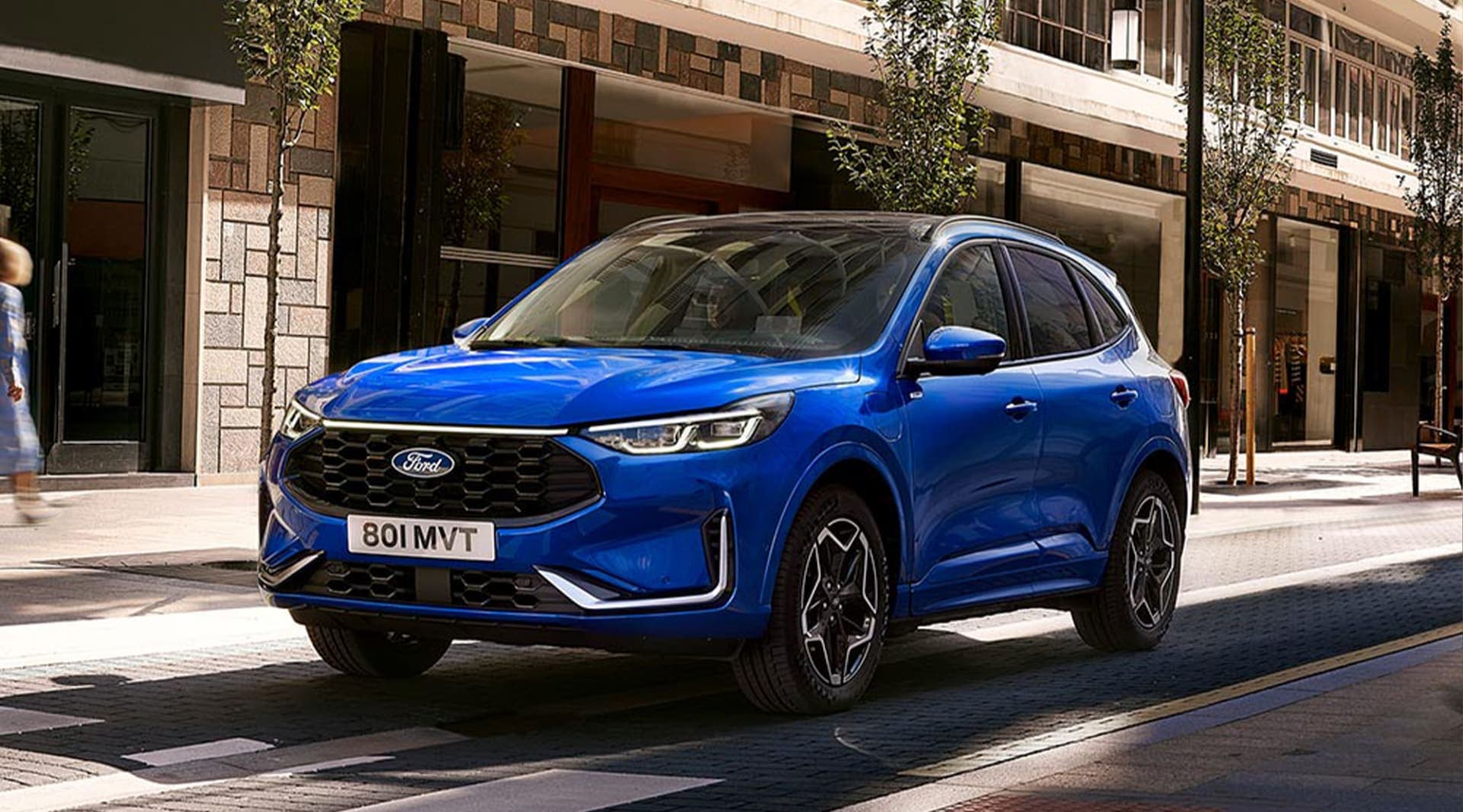
Ford has started installing recall 25SC4 on the Kuga PHEV, its answer to battery cells that can short-circuit and set the car on fire. The remedy is not a new pack. It is a software update that caps how much of the 14.4 kWh battery the car may use, and Ford's own letter to owners puts the resulting range loss at about 12 percent on average. Owners measuring their charging sessions report more.
Recall 25SC4 keeps the suspect cells and rewrites the battery software
Recall 25SC4 changes the battery energy control module and nothing else. The cells that Ford's own recall filing says may have a damaged separator stay in the car, and the module now holds back a larger buffer of capacity as the pack ages, which is where the 12 percent comes from. It is installed at the dealer, not over the air. In its letter to owners Ford calls the figure an estimated fleet average and says individual cars can lose more or less, depending on the conditions of each charging session and on the natural degradation of a five- or six-year-old pack. The car still shows 100 percent after charging. What has shrunk is what 100 percent means.
Kuga owners on the Tweakers forum measure 20 to 30 percent, not 12
Kuga PHEV drivers on the Dutch Tweakers forum have been logging the energy their wallbox delivers before and after the update, and the table shows losses of 20 percent as the common case and 30 percent at the far end, with a few cars showing little or no change. Dr. Stoll & Sauer, the German law firm suing Ford over the Kuga, says its clients report usable capacity of around 80 percent or lower after 25SC4, longer charging times and a range display that falls faster than before. Ford's reply to both is the same: the effect cannot be read from one or a handful of sessions, and 12 percent is the average across the fleet.
A 56 km Kuga PHEV keeps 49 km on Ford's number and 39 km on the owners'
The affected cars are the pre-facelift Kuga PHEV, 225 hp, with a WLTP electric range of 56 km from its 14.4 kWh pack. Take 12 percent off and the sticker figure becomes 49 km; take the 30 percent some owners measure and it is 39 km, before winter or a motorway does its own subtracting. The facelifted car, 243 hp and up to 69 km, is not in the recall, because the affected build window closes on 28 November 2023. A Kuga bought for a 50 km commute in 2022 was a plug-in hybrid. After the update it is a plug-in hybrid for the first half of the day.
166,989 cars, ten recalls in six years and a ten-year battery warranty
Recall 25SC4 closes the KBA-supervised campaign opened on 4 February 2026 for 166,989 Kuga PHEVs worldwide, 56,040 of them in Germany, built between 2 August 2019 and 28 November 2023, with seven thermal incidents reported and no injuries. It is the third battery campaign on the same car. In 2020 Ford replaced every pack, more than 30,000 of them by mid-2022, and handed German owners €500 fuel vouchers. In March 2025 it told 196,489 owners not to charge at all, paid Dutch owners €120 for the petrol, then shipped early-warning software and extended the high-voltage warranty to ten years or 240,000 km across Europe. Counting engine, transmission and software campaigns as well, the Kuga PHEV has now been recalled ten times in six years. In the United States the Escape and Lincoln Corsair are on their third recall for the same Samsung SDI cells, with Ford estimating that about 1 percent of packs carry the defect.
Europe's best-selling plug-in hybrid of 2021, 2022 and 2023 is the car in question
The Kuga PHEV was Europe's best-selling plug-in hybrid in 2021, 2022 and 2023 and second in 2024, so the affected cars are a large part of the used plug-in stock in Germany, the Netherlands and Belgium. In February 2026 Ford said a solution would arrive by mid-year; 25SC4 began reaching dealers in late August, two months late and without the pack swap many owners had assumed was coming. The remaining path to a new battery is the early-warning software from 2025, which orders a replacement only when it detects a cell anomaly, and the ten-year warranty that pays for it. Everyone else keeps the original cells and the smaller number. Whether a remedy that shrinks the product counts as a repair is a question a Stuttgart court has already answered once, against Mercedes and its park-outside advice for the EQA.
AutoNext Take
Ford replaced more than 30,000 Kuga batteries for the 2020 defect and is replacing none for the 2026 one. The difference is not the fault, which in both cases is a cell that can short and burn. It is the population, more than five times larger, and a 14.4 kWh pack for each car. A software cap costs Ford a dealer visit per car and costs the owner about 7 km of range per charge. That trade is being made on the owner's side of the ledger, and the owner was not asked.
The Tweakers table is now the only public dataset on 25SC4, and Ford has not published one of its own. That is the gap to watch. If Ford releases a measured before-and-after capacity figure for the fleet before the end of 2026, the 12 percent will hold and ageing will explain the forum numbers. If it does not, the German courts already hearing Kuga buyback claims will treat 20 percent as the number, and a recall remedy that shrinks the product becomes a defect of its own.