Mercedes EQS steer-by-wire costs €2,975, 30 years after the F200
Half a turn of the wheel now takes the EQS from lock to lock
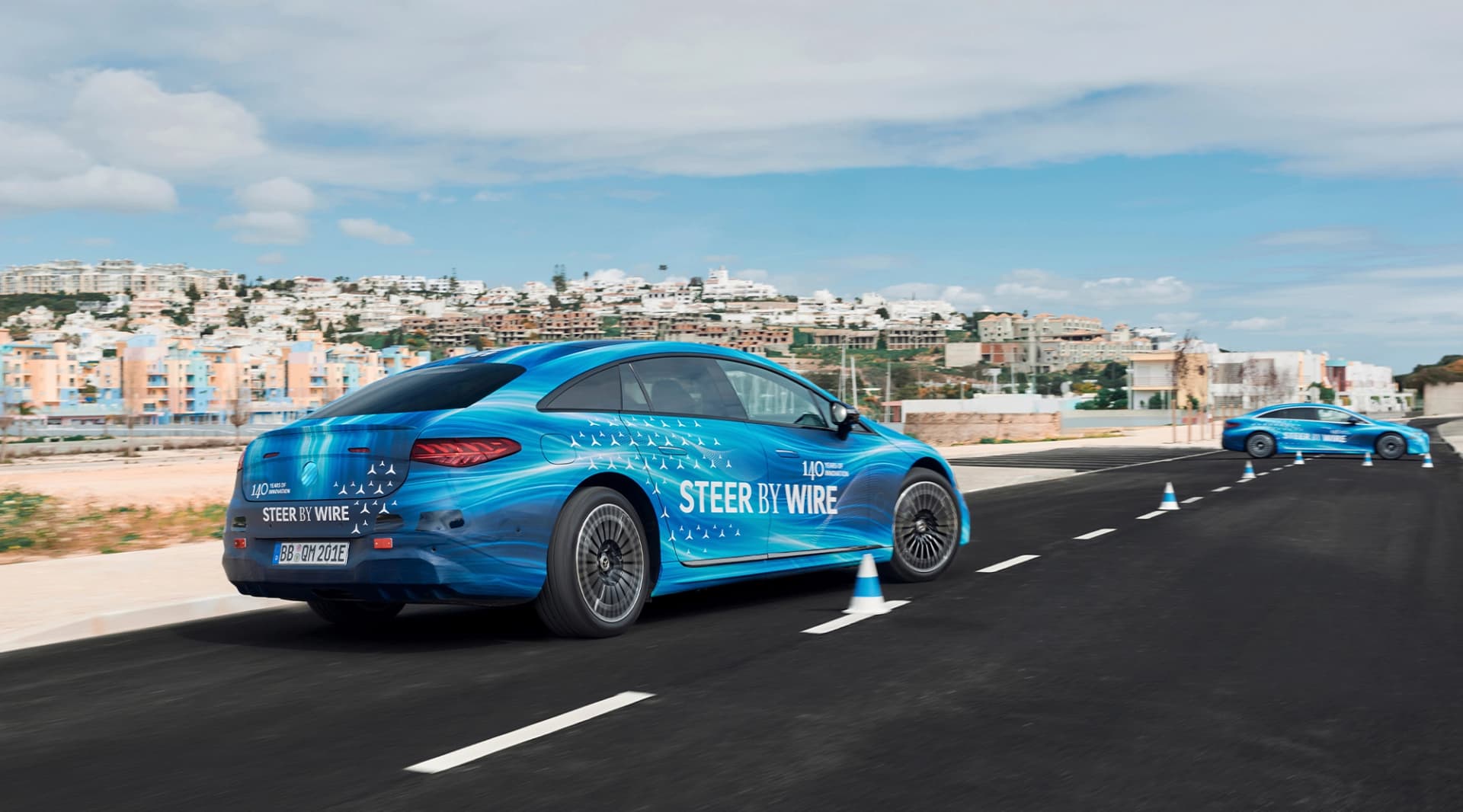
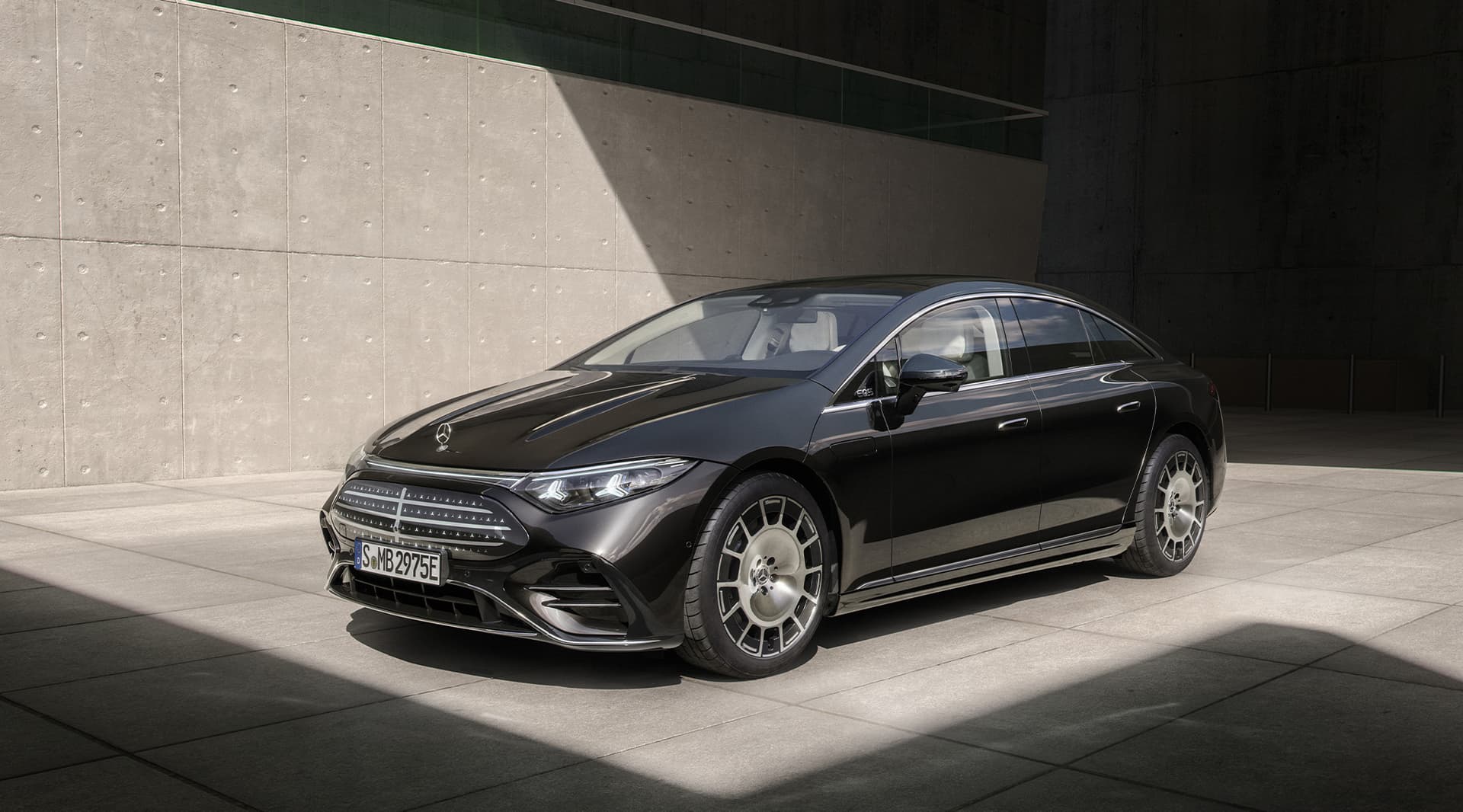
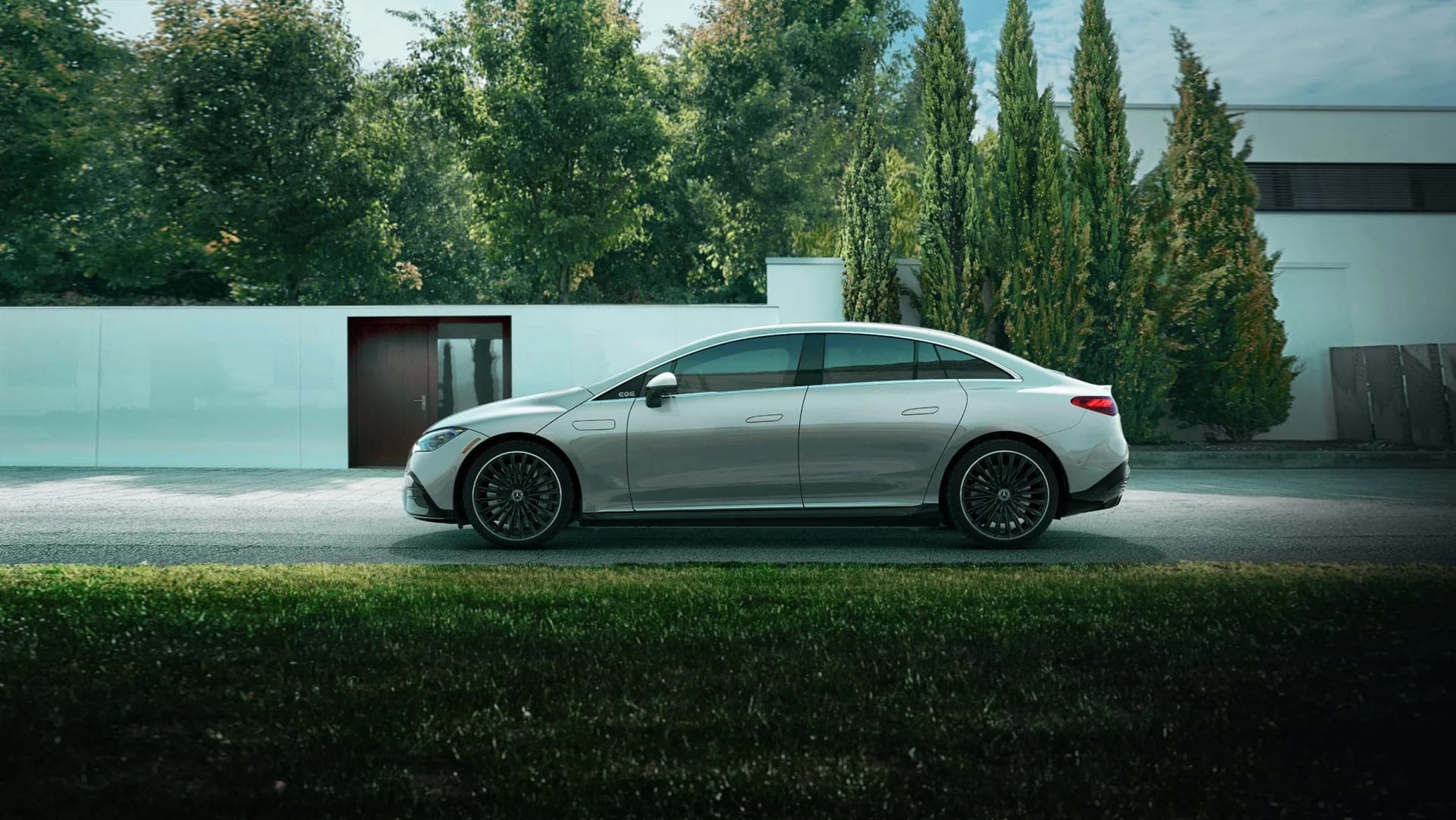
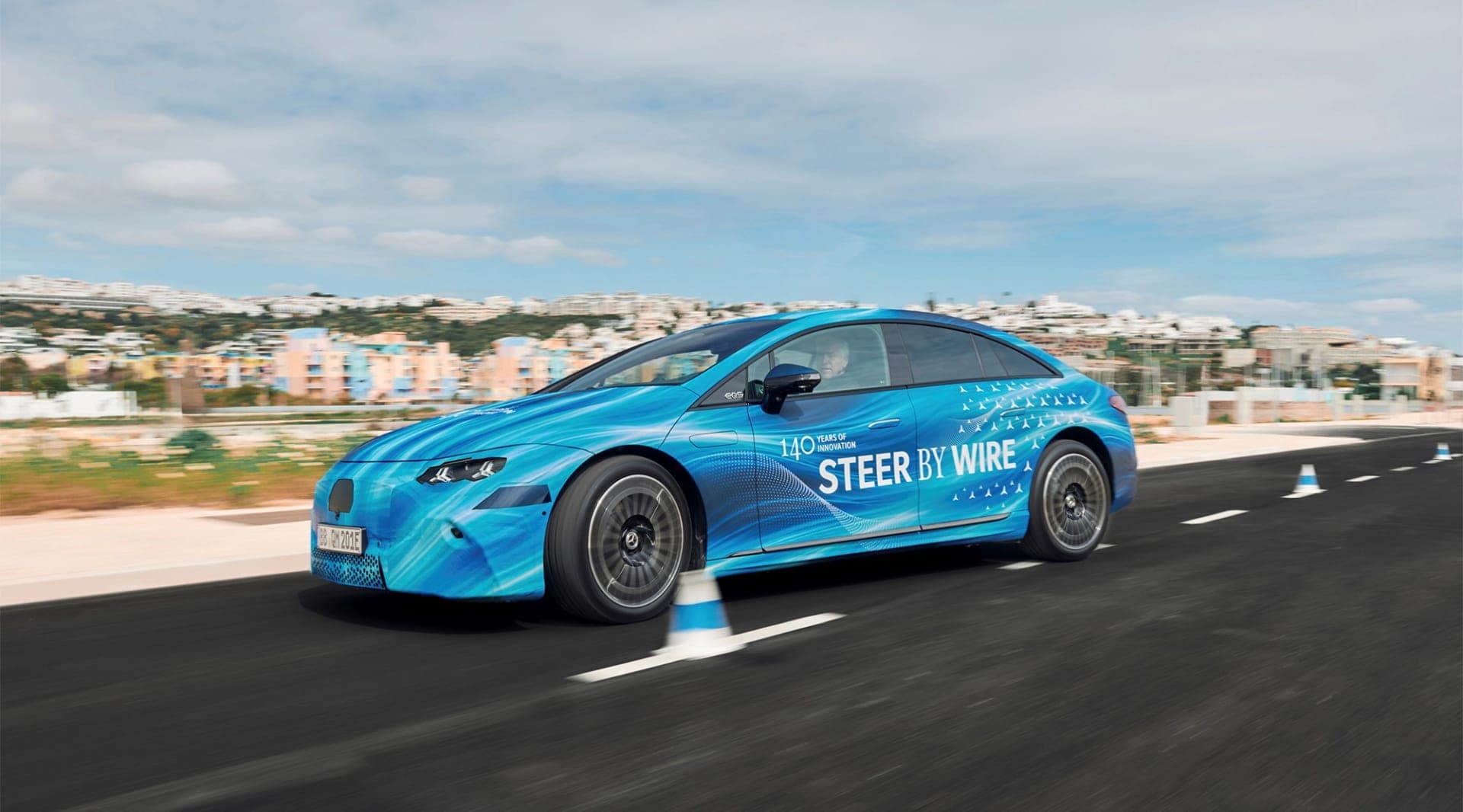
Mercedes-Benz has opened orders for steer-by-wire on the EQS saloon, making it the first German carmaker to sell a production car with no mechanical link between the steering wheel and the front wheels. The option costs €2,975 in Germany and €3,025 in the Netherlands, and it is available from this week in every market that sells the EQS.
Mercedes charges €2,975 for steer-by-wire and 10-degree rear steering
The €2,975 German price, €2,500 before VAT, buys three things at once: steer-by-wire on the front axle, rear-axle steering that turns the back wheels by up to 10 degrees, and a flatter steering wheel with a newly designed airbag. The Dutch price list asks €3,025. The wheel comes in black or, with some interiors, beige. For now the updated EQS saloon is the only Mercedes that offers it; the EQS SUV and every other model keep a steering column.
EQS steering needs 170 degrees from lock to lock, about half a turn
The EQS now needs only 170 degrees of wheel movement from full left to full right, roughly half a turn, so parking and tight junctions no longer call for hand-over-hand steering. Sensors read the driver's input and an actuator on the front axle turns the wheels, with a ratio that changes with speed. Without a column, bumps and vibrations from the road surface can be filtered out before they reach the rim. Mercedes first detailed the system in April and has since let journalists drive it on public roads.
Rear-axle steering and ESP braking back up a total EQS system failure
Mercedes builds the steering on redundant sensors, control units and independent signal paths, so a single fault does not cut the driver off from the wheels. In a complete failure, which Mercedes calls highly unlikely, the 10-degree rear axle and individual-wheel braking through ESP take over lateral control. That is a different philosophy from the first production steer-by-wire car, the 2013 Infiniti Q50, which kept a clutch that could reconnect a conventional steering column if the electronics failed.
Lexus RZ brought column-free steering to Europe before Mercedes
Mercedes is first among German brands, not first in Europe. The Lexus RZ already sells here with steer-by-wire, standard on the RZ 550e F Sport and optional on the RZ 500e Luxury. Tesla's Cybertruck also steers by wire, but it is not sold in Europe. Both European systems pair the technology with a wheel that has no full rim, yet Mercedes asks for less movement: 170 degrees in total, against up to 200 degrees either way in the Lexus.
Mercedes F200 Imagination steered by joystick in Paris in 1996
Mercedes first showed a car without a steering column 30 years ago, when the F200 Imagination coupé appeared at the 1996 Paris Motor Show with two sidesticks in place of a wheel. Most of that concept has since reached production: its window airbags arrived in the 1998 S-Class and its Active Body Control suspension in the 1999 CL. The drive-by-wire controls were the piece left behind, and steer-by-wire on the EQS is that last promise arriving, with a wheel instead of a joystick.
AutoNext Take
Mercedes has introduced the most radical idea from the F200 in the most cautious way possible, and that is the right call. Half a turn from lock to lock matters most in a car more than five metres long like the EQS, where three-point turns and multi-storey car parks are the daily irritation. Making it a €2,975 option rather than standard equipment lets buyers who want a mechanical link keep one, a choice Tesla never gave Cybertruck owners.
Mercedes should publish how many EQS buyers tick the box by October 2027, a year after orders opened. If more than half of them do, the next S-Class has no reason to keep a steering column, and the Paris idea of 1996 becomes the Mercedes default. If take-up stays small, steer-by-wire will remain an EQS curiosity, the way Infiniti's version became a footnote.