Tesla lets drivers flee a Supercharger plugged in, but not in Europe
A shooting in Idaho pushed Tesla to let its cars tear free of a charger
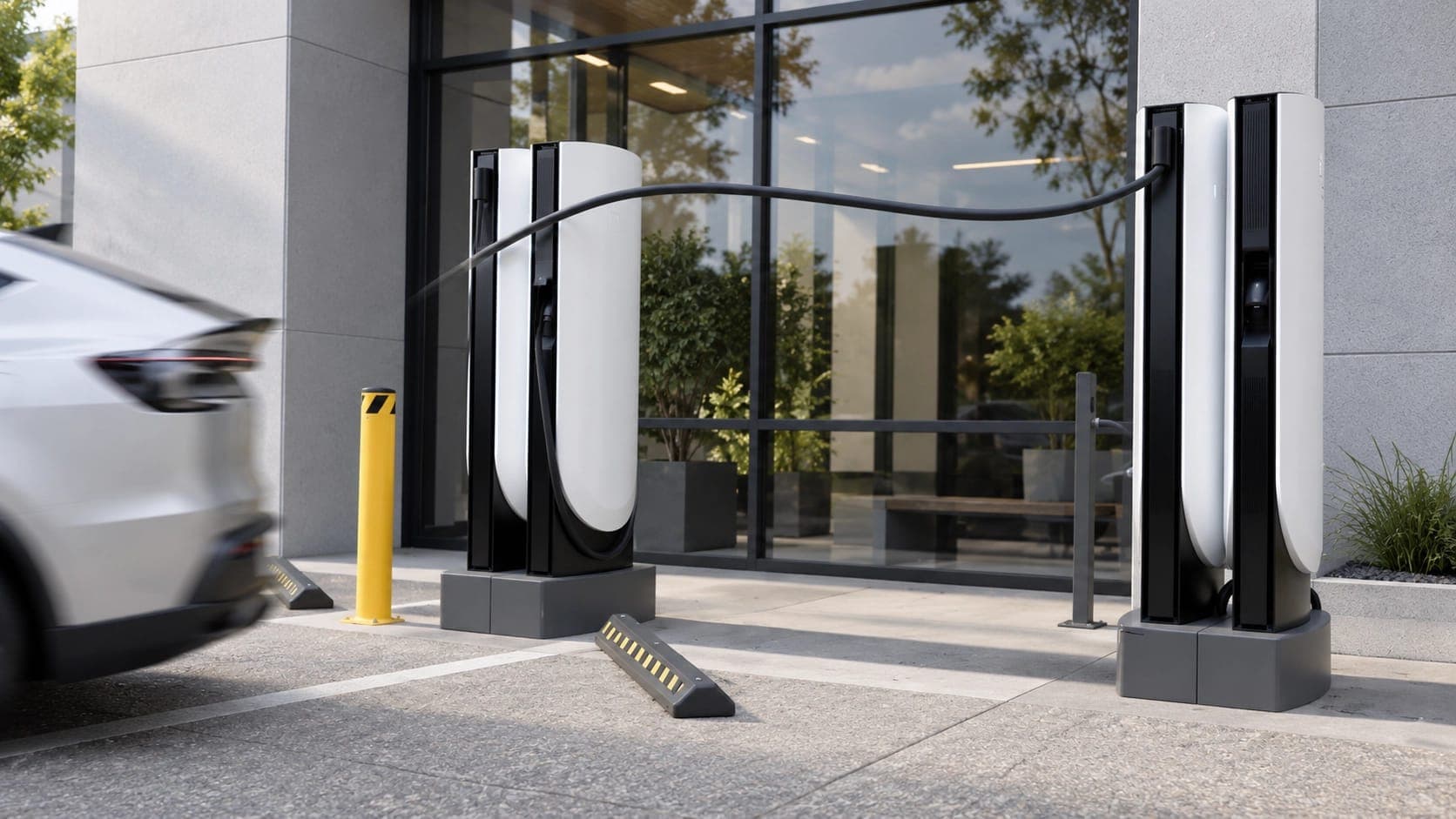
Tesla is rolling out Emergency Drive Away, a software feature that lets a car shift into Drive and leave while still plugged into a Supercharger. It needs software version 2026.38.3, works only at Superchargers in the United States and excludes Model S and Model X built before 2021. The trigger was a shooting at a Supercharger site in Twin Falls, Idaho.
Emergency Drive Away damages both the Tesla and the Supercharger
Emergency Drive Away is a deliberate break: the driver selects Drive, confirms a warning on the touchscreen and pulls away, and the connector tears loose from the car. Tesla's own demonstration shows a piece of the plug falling to the ground. The company says plainly that the feature is for emergencies only, that it will damage the vehicle and the Supercharger, and that deliberate misuse can bring additional penalties. Like the recent Model 3 airbag fix, it arrives as a download rather than a workshop visit, so eligible American cars gain it overnight.
The Twin Falls attack left Tesla drivers latched to a cable
On 1 August, a gunman opened fire outside a newly opened In-N-Out restaurant in Twin Falls, Idaho, where a Supercharger shares the car park. Three people were killed and several were injured, among them a taxi driver who was charging a Tesla and survived. The detail that alarmed owners was mechanical: during a charging session the plug locks into the inlet, and leaving normally means tapping an unlock button or pulling a manual release first. That latch is not a Tesla quirk. Every car on a DC fast charger is held the same way, so the plug cannot be yanked out under high voltage.
Tesla went to court over the $299 EVject breakaway plug in 2024
Within days of the shooting, owners were recommending the EVject, an aftermarket adapter costing $299 that sits between the Supercharger cable and the car and separates when the car drives off. Tesla had sued over that very product in 2024, arguing in a California court that it could reach surface temperatures of 100°C after 30 minutes of high-current charging and lacked over-temperature protection. EVject added thermal protection and Tesla dropped the case. Emergency Drive Away gives owners the same escape without a third-party part in the high-voltage path, with the car itself deciding when the connector lets go.
UN Regulation 100 says a plugged-in electric car must not move
UN Regulation 100, the electric powertrain safety rule that European type approval applies, is explicit in its functional safety section, paragraph 5.3. If the battery can be charged externally, movement under the car's own power “shall be impossible” as long as the charging connector is physically connected to the inlet. That clause exists to stop drivers dragging a live cable across a forecourt, and it has served that purpose well. It binds well beyond the EU too, since the United Kingdom and Japan type-approve electric cars to the same UN text. Tesla has not said whether Emergency Drive Away will come to Europe. As written, the rule leaves a European Tesla no legal way to do what an American one now can.
AutoNext Take
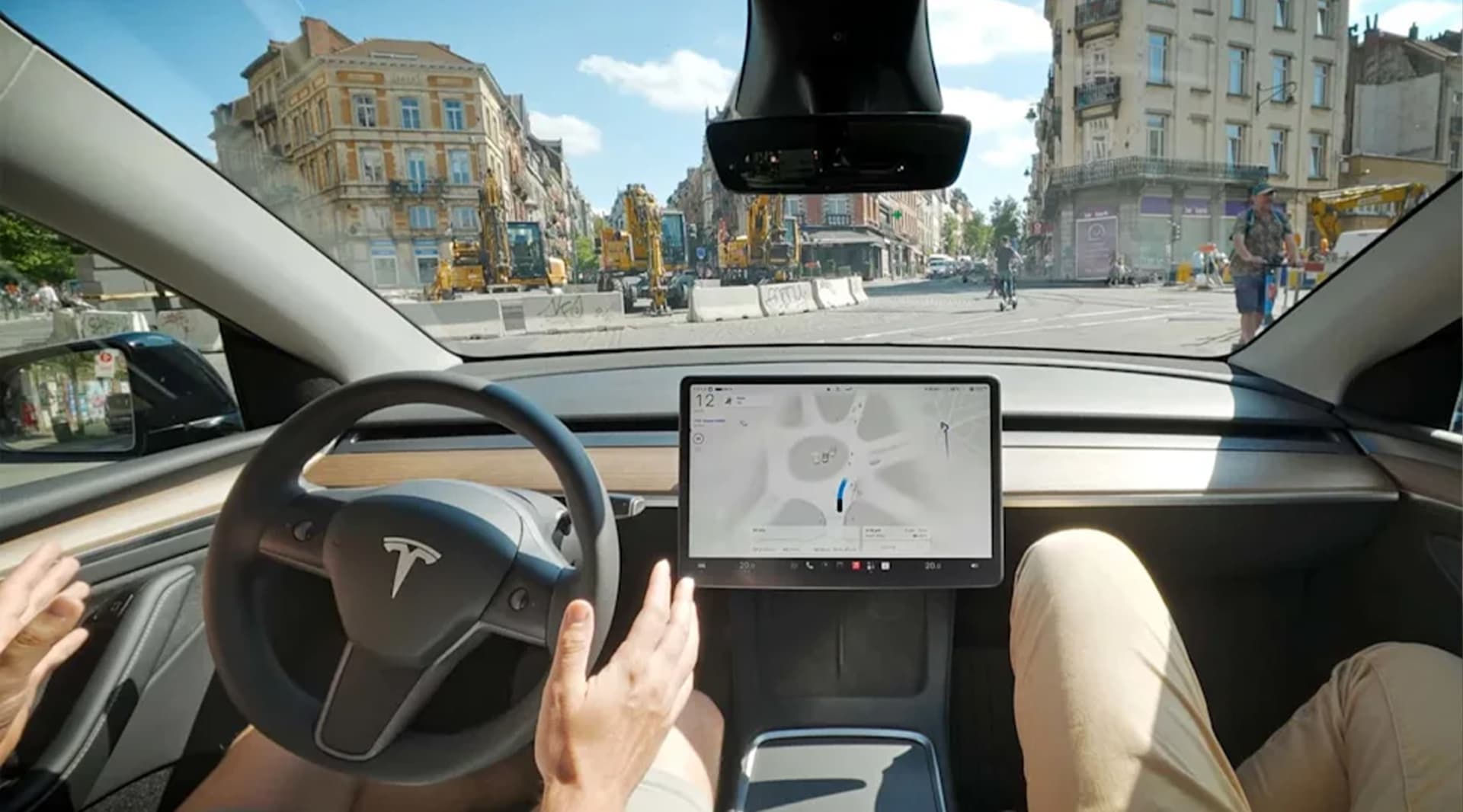
Europe's rulebook was written for a different emergency. Paragraph 5.3 assumes the danger is the car rolling away with a live cable, and it was right to. Twin Falls showed that the danger can come from outside the car, and Tesla's answer is the sensible version of the fix: a factory feature with a warning screen, a stated cost in damage and a penalty for abuse, instead of a $299 adapter its own lawyers once called a fire risk. As with the FSD speed-sign episode in Brussels, the software moved faster than the regulation.
Europe should follow, and it will have to do so in Geneva rather than in a software build. If a European Tesla gains Emergency Drive Away before the end of 2027, it will be because the UNECE amended paragraph 5.3 to allow a controlled emergency release, not because Tesla found a gap in the current wording.