Tesla's FSD has six EU approvals worth nine percent of the vote
Slovenia's yes is worth 2.1 million of the 292 million Tesla needs
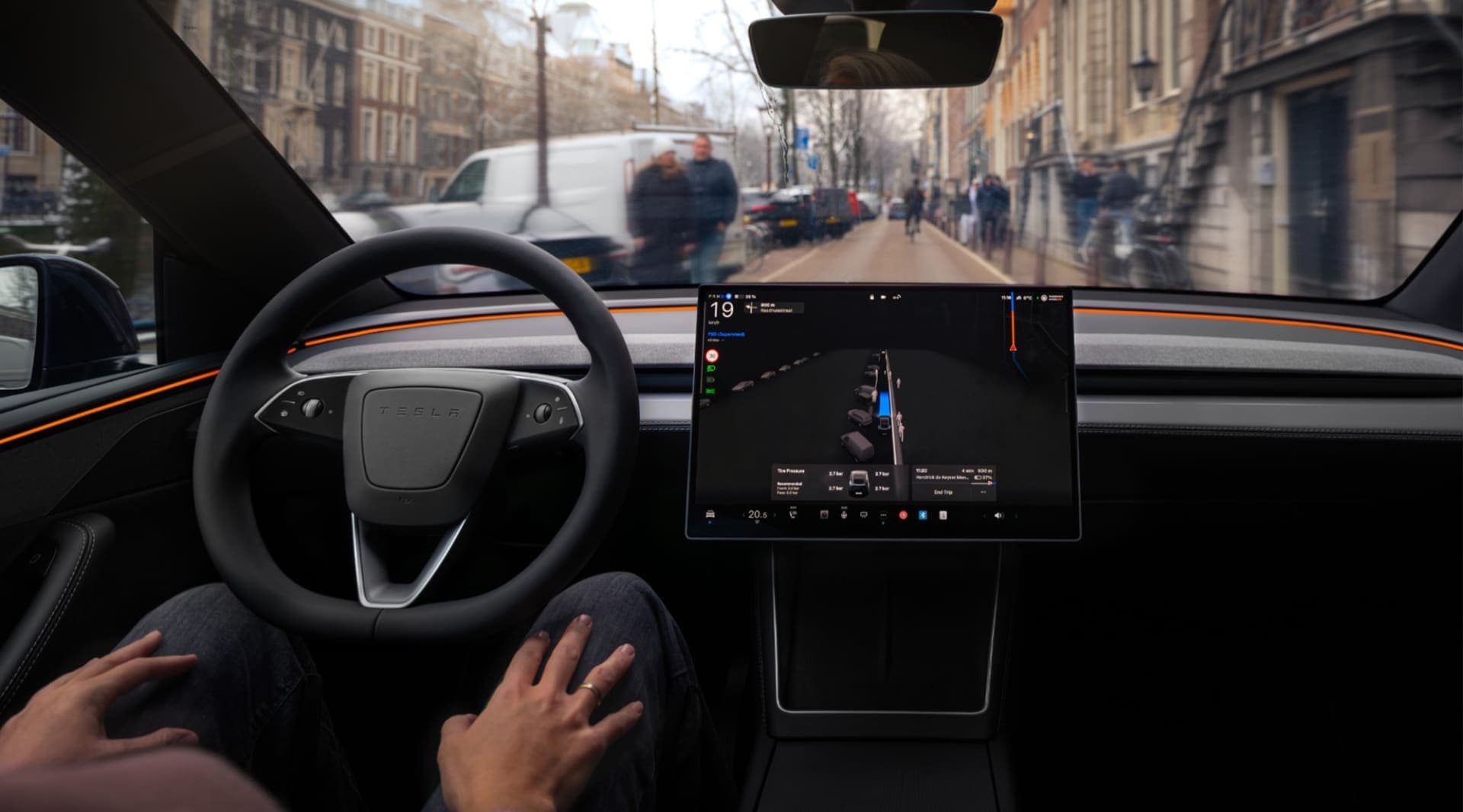
Slovenia cleared Tesla's FSD Supervised for public roads on 8 September, the sixth European Union member state to do so since the Dutch approval in April. Tesla says the vote that would extend that approval to all 27 countries could come as soon as 6 October. The six member states that have said yes hold about 42 million people between them. The bar that vote has to clear is 292 million.
Six approvals in five months, all built on one Dutch file
The cascade started on 10 April, when Dutch vehicle authority RDW became the first EU regulator to type-approve FSD Supervised, under UN Regulation 171 and an Article 39 exemption in EU Regulation 2018/858. Lithuania followed on 20 May, Estonia on 29 May, Denmark on 9 June and Belgium on 10 June, where Flemish mobility minister Annick De Ridder signed and the country's federal structure made that valid nationwide. None of the five had to repeat the Dutch testing, and the Dutch file itself has never been published.
The six approvals cover 42 million of the EU's 450 million people
Those six countries are worth roughly nine percent of the European Union's population, and the committee vote needs 65 percent: 15 of the 27 member states, together holding about 292 million people. Run the arithmetic on the 21 states that have not approved anything and the shape of the problem is plain. Without Germany, the rest of the bloc has to deliver more than three quarters of its population. Without Germany and France, it needs very nearly every other country in the Union. When the Netherlands went first in April, the assumption was that the rest of the bloc would follow it quickly.
Sweden has a written no on file over Tesla's Speed Offset
The Swedish Transport Administration wrote to the Technical Committee on Motor Vehicles on 30 April, in a letter obtained by Reuters, warning that letting automated systems "systematically exceed legal speed limits" undermines both the legal framework and the safety case for automation. The demand attached to it is blunt and specific: remove the Speed Offset, the setting that lets an FSD car hold a driver-chosen margin above the posted limit, or Sweden's representative votes against. The agency confirmed in June that its position had not moved.
France is road-testing two FSD cars before it decides its vote
France has issued no national authorisation and says it will wait for the committee. Transport minister Philippe Tabarot said on 22 July that the safety trade-offs were not yet sufficient to authorise the system as it stands, citing the speed ceiling and driver monitoring at intersections and roundabouts. After a video call with Elon Musk on 2 September, France put two FSD cars on public roads and officials say no blocking issues have surfaced. Tesla's answer to the holdouts has been data: on 1 September it published a European set covering 100 million kilometres driven by more than 70,000 customers, claiming FSD Supervised is 4.1 times less likely to end in a crash than a Tesla driven by hand.
The six countries form four separate patches, not a corridor
The approved map is not a growing zone. It is four disconnected pieces. The Netherlands and Belgium share a border and are the only pair on the list that does. Denmark's single land neighbour is Germany. Lithuania and Estonia are held apart by Latvia. Slovenia is ringed by Italy, Austria, Hungary and Croatia. None of those countries has approved FSD, so the system hands control back, with advance warning, at almost every border a European driver would realistically cross.
AutoNext Take
Counting approvals is the wrong scoreboard. Six member states have said yes and the running total is still 42 million people against a bar of 292 million. Outside Germany, France, Italy, Spain and Poland, no country left on the list is worth even five percent of the population, which means the cascade could collect yeses for another year without moving the vote at all. A win on 6 October needs the large economies, and Germany, Italy and Spain have committed to nothing.
That makes the Speed Offset a strange hill to defend. It is a menu setting rather than a technology, and it is the single named reason Sweden has a no in writing and France has a public reservation. Volkswagen wrote off a self-driving programme worth billions rather than fight for it, while Tesla holds a working approval in six countries and is risking the bloc-wide version of it over the right to let the car run 70 in a 50 zone. If the setting is still in the menu on 6 October, the vote slips again or it fails, and FSD stays a feature that switches itself off at the Belgian border.