Toyota's hydrogen Dakar Hilux is built in Brussels, with no range yet
Toyota's fuel cell Dakar truck has a livery, four partners and no range figure
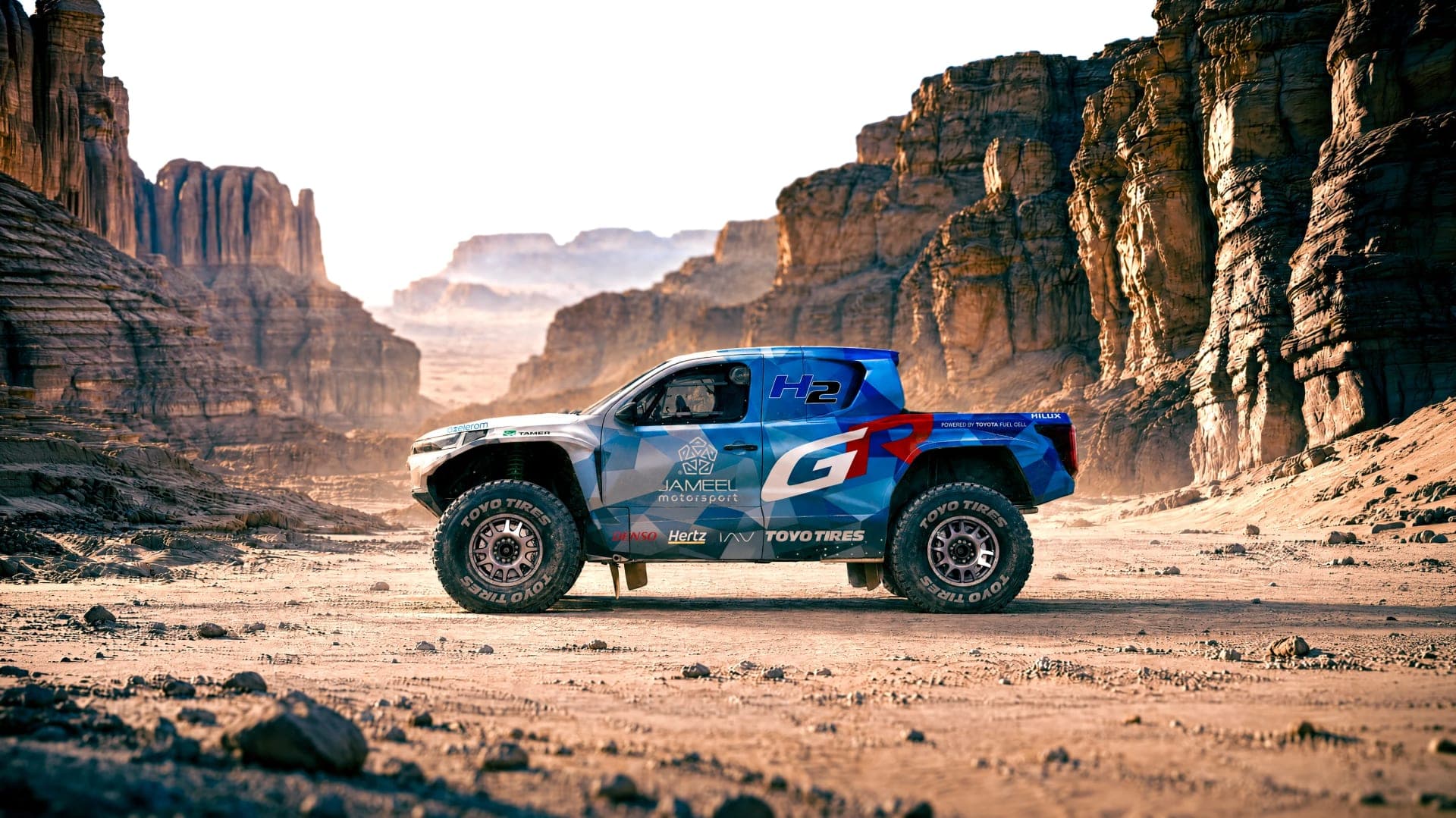
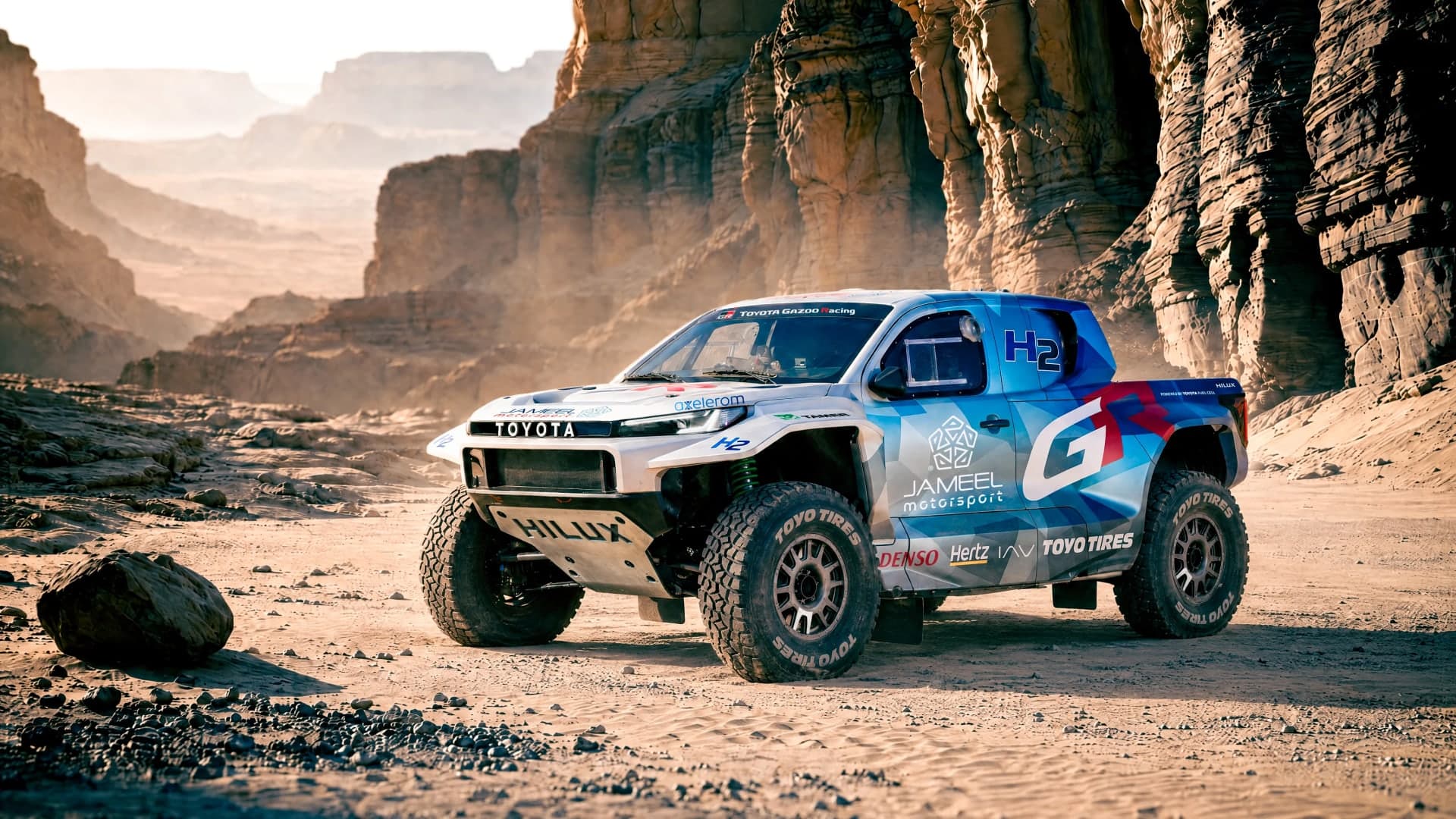
Toyota Gazoo Racing shows the DKR GR FC Hilux in its white-and-blue race livery for the first time and names Jameel Motorsport, Denso, Toyo Tires and IAV as official partners for the Dakar Rally, which runs in Saudi Arabia from 1 to 15 January 2027. The fuel cell truck is being finished at Toyota's European headquarters in Brussels. Two announcements in, Toyota has still not said how far it goes.
Mission 1000 is 1,000 km over 13 stages, the main Dakar is 5,320 km
The DKR GR FC Hilux enters Dakar Future Mission 1000, the organiser ASO's class for low-emission experimental vehicles since 2024, and it will cover 1,000 competitive kilometres over 13 stages. The main field faces 5,320 timed kilometres on the 2027 route, the longest since the rally moved to Saudi Arabia, so the hydrogen truck does under a fifth of the distance and averages below 80 km a day where the T1+ cars average around 400. Toyota knows the class: the HySE consortium, in which it sits alongside Honda, Kawasaki, Suzuki and Yamaha, ran hydrogen combustion buggies in Mission 1000 in 2024 and 2025 and finished second in class last year. ASO has said the 2027 format is revised to push the entries toward performance and competitiveness.
A T1+ Hilux body with Toyota's fuel cell system where the twin-turbo V6 sits
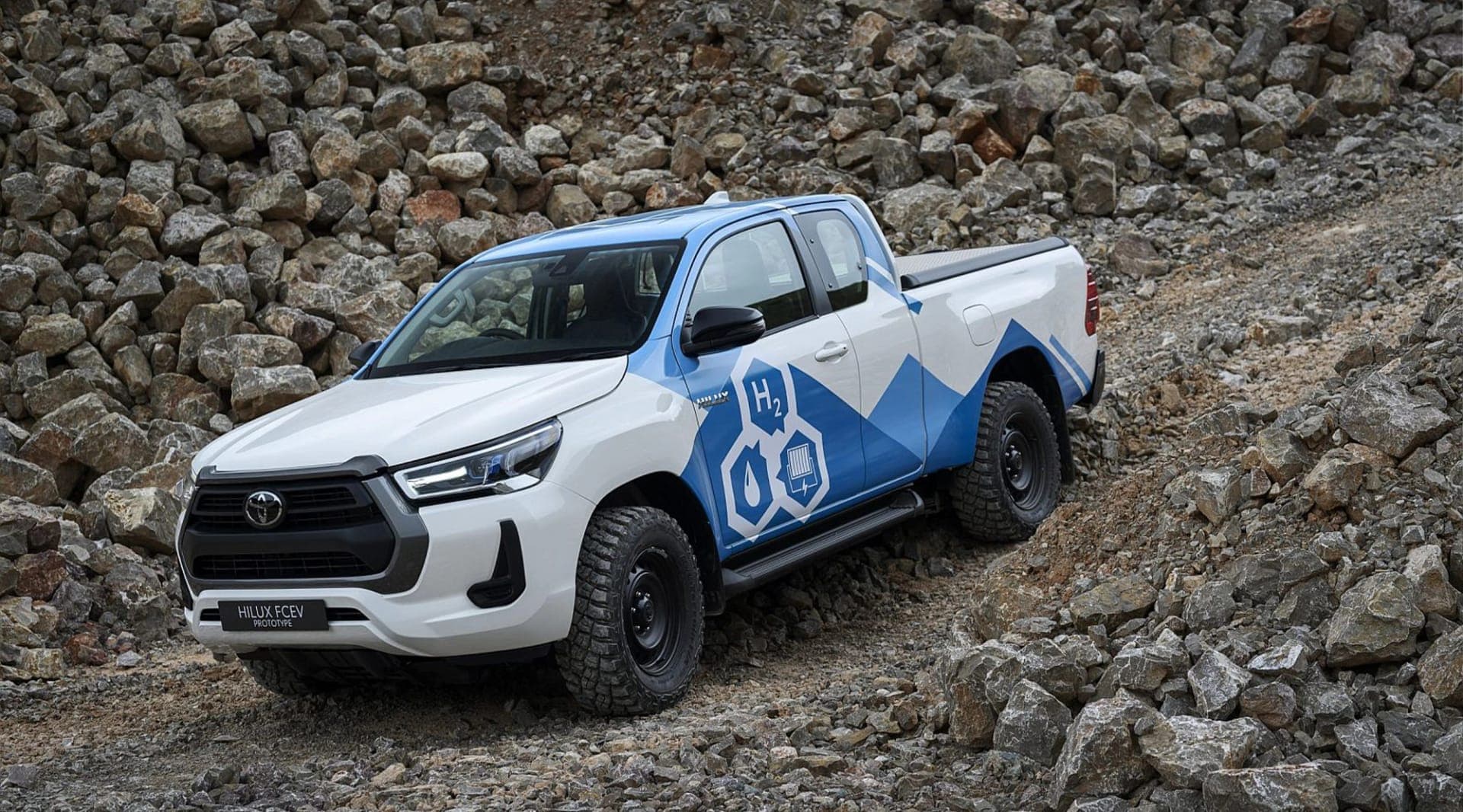
The FC Hilux keeps the chassis, bodywork and long-travel suspension of the DKR GR Hilux EVO T1+, and the Hilux has won the Dakar four times, in 2019, 2022, 2023 and 2025. The twin-turbo petrol V6 gives way to Toyota's fuel cell system and an electric drive. Toyota's stated aims are performance, safety and reliability over the 13 stages, with the focus on fuel cell downsizing, cooling, durability and energy management. What it said neither in July nor this week: the motor output, the hydrogen capacity, the tank pressure or the distance between refuelling stops. It is Toyota's first fuel cell racer; its hydrogen motorsport so far burned the gas in engines, from the GR Yaris H2 to the liquid-hydrogen prototype it showed at Le Mans.
The truck is developed at Zaventem and assembled at Toyota's European headquarters
The DKR GR FC Hilux is a Belgian build. Toyota says the prototype is developed at its European research and development centre at Zaventem, near Brussels, and that final assembly is under way at Toyota Motor Europe's headquarters in the city, ahead of a pre-Dakar test programme in Belgium. The V6 Hilux that will chase the outright win in January is built in Kyalami, South Africa.
Jameel Motorsport, Denso, Toyo Tires and IAV: one of the four partners is Toyota's Saudi distributor
Jameel Motorsport is the motorsport arm of Abdul Latif Jameel, Toyota's distributor in Saudi Arabia, and its managing director Munir Khoja framed the deal in the words of Saudi Vision 2030, saying hydrogen 'has a vital role to play alongside other zero-emission solutions in the motorsport arena'. Denso International Europe supplies components, IAV contributes its Dragoon control unit and the software that runs the fuel cell drive, and Toyo Tires provides its Open Country M/T-R rally-raid tyre. None of the four supplies the hydrogen, and Toyota has not said who does.
The Dakar starts on 1 January in a country Toyota's rally team cannot currently visit
The 2027 route presented in May loops from King Abdullah Economic City north along the Red Sea through Yanbu and AlUla, then inland and south before finishing back on the coast. This month Toyota and Hyundai told the FIA that company travel policies bar their staff from the Middle East, which ended the WRC season in Sardinia, and missiles struck Aramco's facility at Yanbu earlier in September. ASO is expected to rule on the January start within days. The road-going Hilux FCEV promised for 2028, with more than 400 km of WLTP range and 2,500 kg of towing, is the product the truck is meant to serve; the Dacia Sandrider that won the 2026 Dakar is the car the V6 Hilux is meant to beat.
AutoNext Take
A truck entered in the one Dakar class built around covering distance on new energy has been announced twice without a distance. The class dimensions explain the hole: Mission 1000 asks for under 80 km a day, and a Mirai carries 5.6 kg of hydrogen for 650 km on the WLTP cycle, of which a two-tonne rally body at competition pace would keep a fraction. The programme is sized to the tank, not the other way round, and that is a legitimate engineering choice. Presenting it as a Dakar entry alongside a truck that will run 5,320 km is the part that flatters.
Toyota's own numbers will settle it. The road Hilux FCEV is promised for 2028 with more than 400 km; if the Dakar truck cannot post a between-refuel figure within reach of that, the desert validated cooling and vibration for a stack the road car may not even use, because Toyota has not said which generation sits in the truck. The truck tests in Belgium this autumn and starts at King Abdullah Economic City on 1 January. We expect Toyota to publish a hydrogen capacity and a stage range before then, and we expect that range to be closer to 150 km than to 400, which makes Mission 1000 the right class and 'Dakar' the generous word.