Volkswagen's first electric California has no kitchen and no pop-up roof
Europe has been asking for this van since the ID. Buzz arrived
Volkswagen picked Caravan Salon in Dusseldorf, the largest camping and motorhome show in the world, to put the California badge on an electric van for the first time. The ID. California Cruise opens at €60,761 and reaches the first customers in early 2027.
It is the product everybody has been circling since the ID. Buzz went on sale. The van looked like a camper, was shaped like a camper and was priced like one, and yet you could not sleep in it. Now you can. What Volkswagen has actually built, though, is narrower than the badge on the tailgate suggests.
What €60,761 actually buys
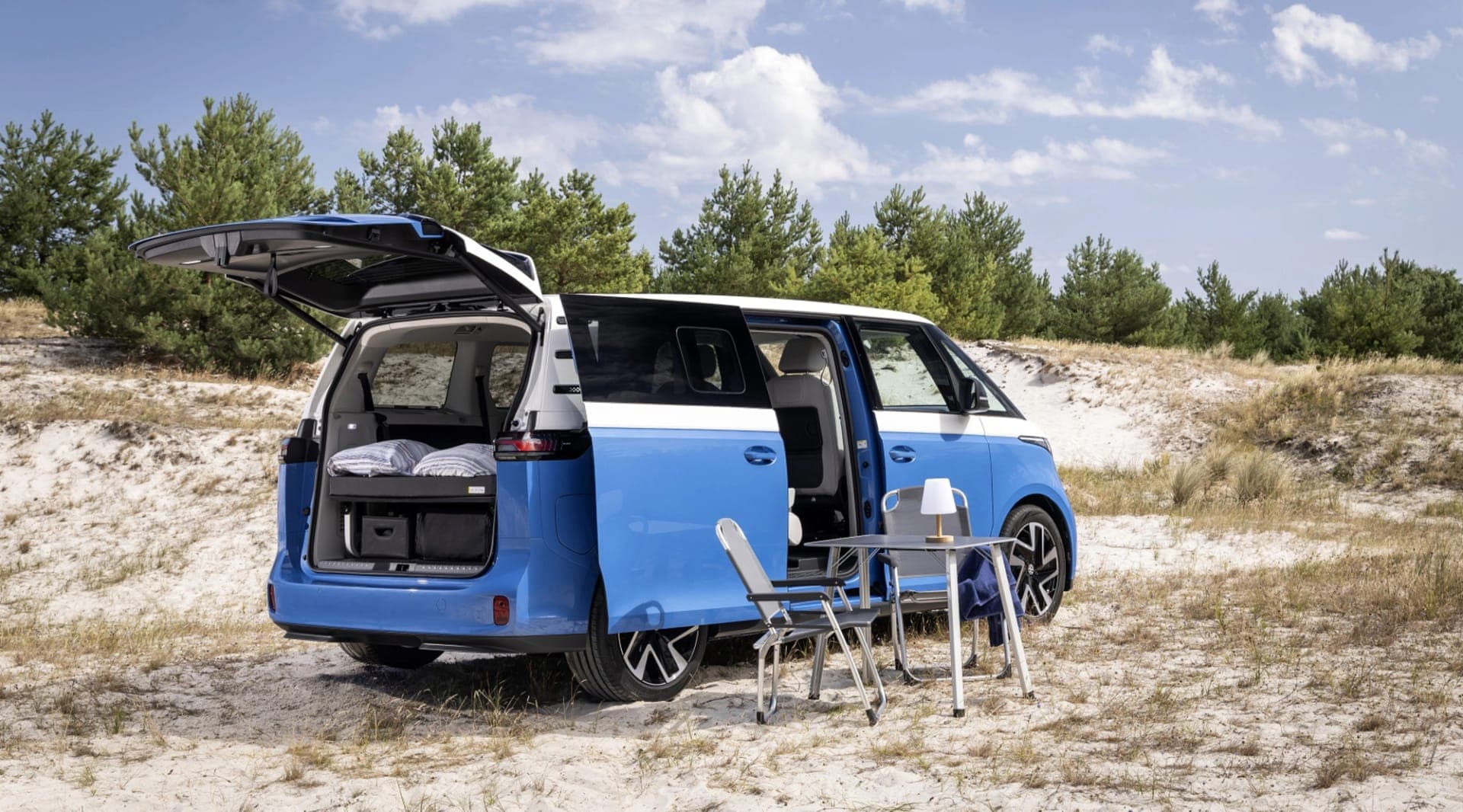
The Cruise is a package rather than a conversion. A mattress of 2.03 by 1.20 metres folds out over the rear bench and stows in its own dedicated compartment when it is not in use. Two folding chairs and a table are included, with fixed places to put them. Blackout covers seal the windscreen, the side glass and the panoramic roof where it is fitted, and there are tailored ventilation grilles so you can leave a window cracked overnight.
There is no kitchen. There is no pop-up roof. There is no second bed above your head. The layout that made the California a European institution, the sink and the two-burner hob and the fridge and four berths, does not exist on this car. Volkswagen has built a very good place to spend a night in a van. It has not built a van you can live out of for a fortnight.
California Mode is the bit that genuinely needs a battery
Underneath sits the ID. Buzz Pro: one rear-mounted motor, 210 kW, rear-wheel drive. The short-wheelbase version carries a 79 kWh battery and the long one 86 kWh, charging at up to 175 kW and 200 kW respectively, with the standard Buzz managing between 460 and 498 km on the WLTP cycle.
The new part is California Mode, which will run the climate control, the interior lighting and the USB sockets for up to 48 hours without leaving you stranded in the morning. Vehicle-to-load supplies 2 kW continuously and 3.6 kW at peak, enough for an induction plate, a coffee machine or a compressor fridge you bring yourself. That is the honest advantage of an electric camper: heat or cool a van all night with no idling engine, no gas bottle and no diesel heater ticking away under the seat.
Electric vans are not a hopeful bet in Europe any more, either. Kia's PV5 has been outselling every other small electric van on the continent, and a quarter of all new cars sold in Europe are now electric. The market Volkswagen is aiming this thing at already exists.
The cleverest camper on the stand is the inflatable one
Next to the Cruise, Volkswagen showed a California Beach concept built around modules from Stuff Bubble. The headline piece is an inflatable camping kitchen that weighs under ten kilograms, runs a closed water circuit, works inside or outside the van, clips into the existing luggage shelf mounts and can be set up by one person in minutes. There is an inflatable bed module too, roughly 200 by 134 centimetres, switchable between single and double and weighing six or twelve kilograms depending on how you configure it.
Laugh at a blow-up kitchen if you want, but it answers the electric camper problem better than bolted-in cabinetry does. Every kilogram of plywood and steel costs range, and range is the entire argument for buying an electric van in the first place. Volkswagen says further California models follow through 2028, which tells you the Cruise is the opening move rather than the finished thought.
AutoNext Take
Charging over €60,000 for a van with a mattress and two camping chairs invites a laugh, and the laugh holds right up to the moment you price a diesel T7 California and find it asking more while burning fuel to keep you warm. The Cruise is priced as an ID. Buzz Pro with a sleeping package because that is exactly what it is, and Volkswagen, whose chief executive called the company's own situation more than critical this month, is not in a mood to leave margin on the table. The real test is whether the proper California follows: kitchen, pop-up roof, four berths, without the added weight eating the range that makes the whole idea work.
For now this is an expensive way to sleep in a car park. It is also, finally, the right car park. Volkswagen has the badge, the van and 48 hours of heat. It just has not built the camper yet.