A drug trafficker's Audi RS3 was seized, and now the gendarmerie drives it instead
A 400 hp Audi RS3 built for outrunning police is now one of the French gendarmerie's own intervention cars. It was confiscated from a drug trafficker in 2022, and the unit that got it says it doubles their intervention capacity
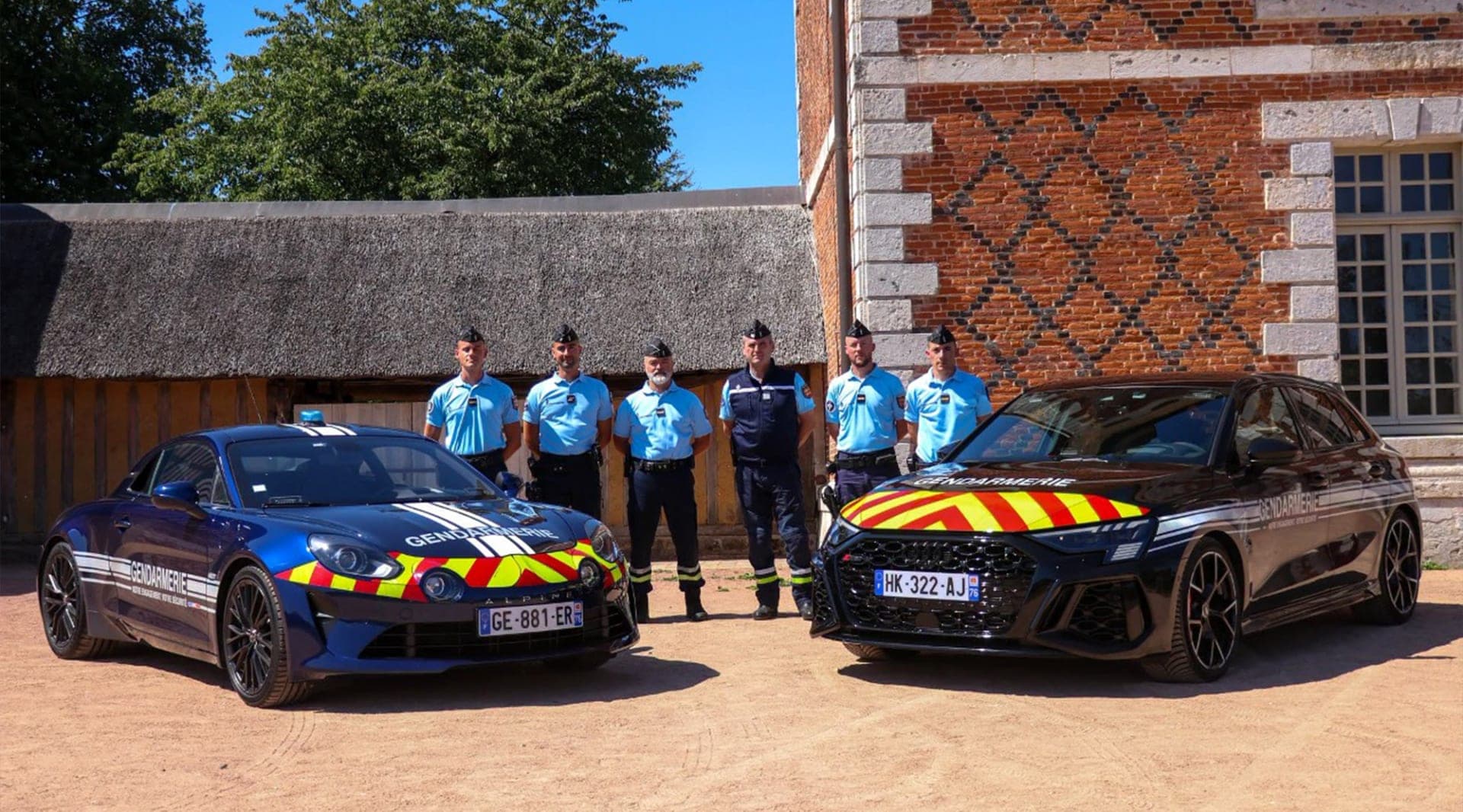
The Gendarmerie nationale's Équipe rapide d'intervention, part of the motorised platoon based in Écalles-Alix, Seine-Maritime, has put a seized Audi RS3 Sportback into active service for highway interceptions in Normandy. The car, a 400 hp, 2.5-litre turbocharged five-cylinder with quattro all-wheel drive and a 250 km/h top speed, was confiscated from a drug trafficker in September 2022 following an organised crime investigation, then reassigned from judicial custody to the gendarmerie under French laws that allow confiscated criminal assets to be repurposed for law enforcement rather than sold off. Refitting it with police markings and warning lights cost around €1,500, and the unit says it now doubles its intervention capacity, particularly for the high-speed "go-fast" pursuits traffickers use to move illegal goods along the region's motorways.
From evidence locker to the fastest car the unit has ever driven
The RS3 supplements an existing Alpine A110 in the unit's small fleet and is reportedly the most powerful car the ERI has ever operated, surpassing a previous Seat Leon Cupra used for the same role. Its five seats give the crew a practical edge the two-seat Alpine cannot offer, letting the team drop off an operator mid-intervention rather than working the whole stop from inside the car.
Why a seized car makes more sense than a bought one
French law allows seized criminal assets to be reassigned directly to law enforcement instead of being auctioned off, which is exactly how a rural motorised unit ends up running a car it could never have justified buying new. The gendarmerie's only real outlay here was the roughly €1,500 needed for livery and warning lights, a fraction of what a comparable performance car would cost through normal procurement, and a difficult purchase to defend politically even if the budget existed.
The job it is actually built for
Go-fast operations, the term French police use for criminal convoys moving drugs or other illegal goods at high speed along the country's motorways, are common along routes linking major ports like Le Havre to the rest of France. Rapid intervention teams need cars capable of closing the gap on a fleeing vehicle without turning the pursuit itself into the danger, and standard patrol cars rarely have the power to do that safely. It is why gendarmerie and police units around France have leaned on hot hatches and small sports cars, from the Alpine A110 to Renault Méganes and Seat Leon Cupras, for exactly this kind of work.
AutoNext Take
The poetic irony of a trafficker's own getaway car ending up hunting other traffickers is the easy headline, but the more interesting part is how sound the underlying logic actually is. Turning confiscated performance cars into interception vehicles gives cash-strapped rural units access to genuinely capable equipment they would otherwise never see, at a cost that barely registers next to a new purchase.
It is also a quiet data point about what criminal networks are actually buying to move product. If the same handful of quick, all-wheel-drive performance cars keep turning up both in trafficking investigations and in the police fleets built to catch them, that says something about where the real demand for this kind of car sits, and it is not always where the manufacturers expect it.